Pascua de Resurrección

  BIBLIA – LA PALABRA DE DIOS DEL DÍA PASCUA DE RESURRECCIÓN Comentarios del Evangelio del día. Por Ricardo Rovira, sacerdote. Audios originales en español 07/05/2026 – Jueves de la 5ª semana de Pascua, feria. 06/05/2026 – Miércoles de la 5ª semana de Pascua, feria. 05/05/2026 – Martes de la 5ª semana de Pascua, feria.… Continue reading Pascua de Resurrección

Acts – Chapter 5

The Bible – New Testament Acts Index 1. 2. 3. 4. 5. 6. 7. 8. 9. 10. 11. 12. 13. 14. 15. 16. 17. 18. 19. 20. 21. 22. 23. 24. 25. 26. 27. 28. Chapter 5 1 1 A man named Ananias, however, with his wife Sapphira, sold a piece of property. 2 He retained… Continue reading Acts – Chapter 5

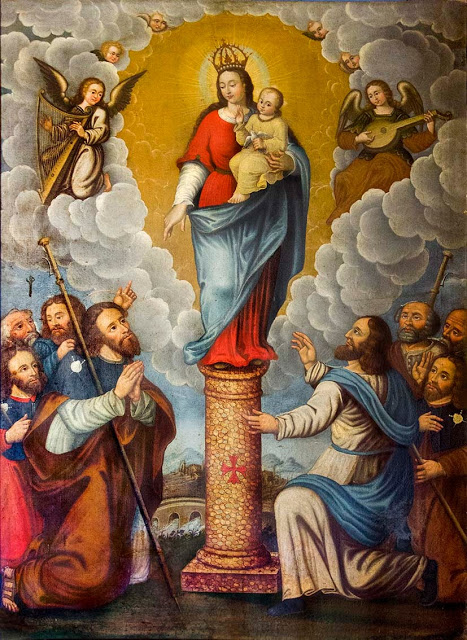
Domingo. Bienaventurada Virgen María del Pilar, fiesta

12/10/2025 – Domingo. Bienaventurada Virgen María del Pilar, fiesta   PRIMERA LECTURA Llevaron el Arca de Dios y la colocaron en el centro de la tienda que David le había preparado. Lectura del primer libro de las Crónicas 15, 3-4. 15-16; 16, 1-2 En aquellos días, David congregó en Jerusalén a todo Israel, para subir… Continue reading Domingo. Bienaventurada Virgen María del Pilar, fiesta

14/09/2025 – Domingo de la 24ª semana de Tiempo Ordinario. La Exaltación de la Santa Cruz.

14/09/2025 – Domingo de la 24ª semana de Tiempo Ordinario. La Exaltación de la Santa Cruz.   PRIMERA LECTURA Cuando una serpiente mordía a alguien, este miraba a la serpiente de bronce y salvaba la vida. Lectura del libro de los Números 21, 4b-9 En aquellos días, el pueblo ese cansó de caminar y habló… Continue reading 14/09/2025 – Domingo de la 24ª semana de Tiempo Ordinario. La Exaltación de la Santa Cruz.

08/09/2025 – Lunes de la 23ª semana de Tiempo Ordinario. La Natividad de la Santísima Virgen.

08/09/2025 – Lunes de la 23ª semana de Tiempo Ordinario. La Natividad de la Santísima Virgen. PRIMERA LECTURA Dé a luz la que debe dar a luz. Lectura de la profecía de Miqueas 5, 1-4a Esto dice el Señor: «Y tú, Belén de Efrata, pequeña entre los clanes de Judá, de ti voy a sacar… Continue reading 08/09/2025 – Lunes de la 23ª semana de Tiempo Ordinario. La Natividad de la Santísima Virgen.

The Bible – New Testament

Saint John

Index

1. 2. 3. 4. 5. 6. 7. 8. 9. 10. 11. 12.
13. 14. 15. 16. 17. 18. 19. 20. 21.

Chapter 20

1

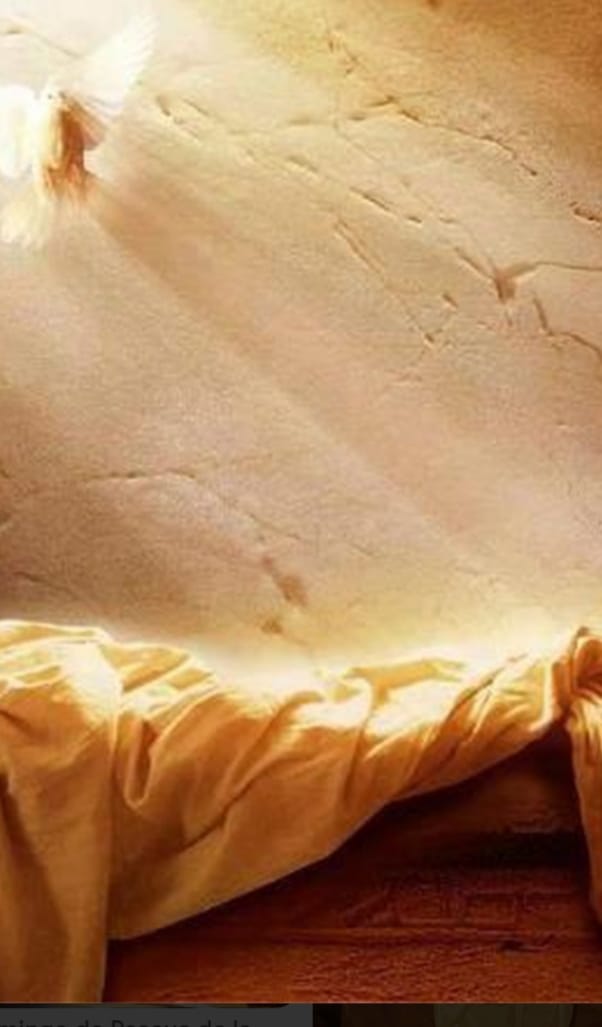
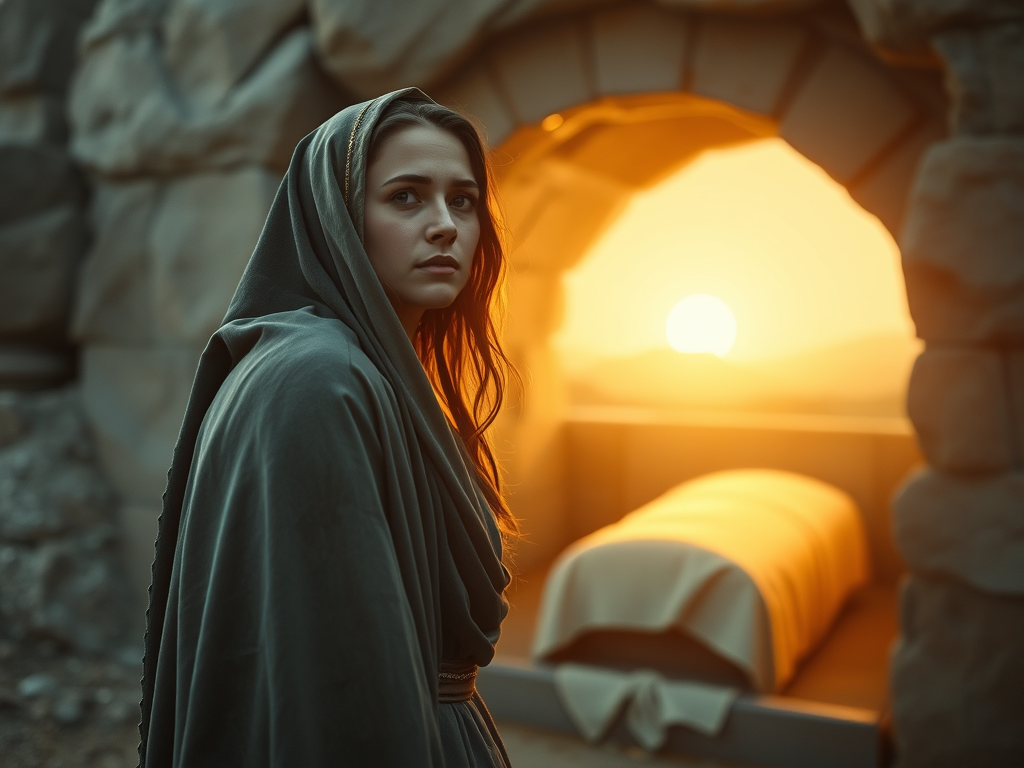
1 2 3 On the first day of the week, Mary of Magdala came to the tomb early in the morning, while it was still dark, and saw the stone removed from the tomb.

2

So she ran 4 and went to Simon Peter and to the other disciple whom Jesus loved, and told them, “They have taken the Lord from the tomb, and we don’t know where they put him.”

3

5 So Peter and the other disciple went out and came to the tomb.

4

They both ran, but the other disciple ran faster than Peter and arrived at the tomb first;

5

he bent down and saw the burial cloths there, but did not go in.

6

When Simon Peter arrived after him, he went into the tomb and saw the burial cloths 6 there,

7

and the cloth that had covered his head, not with the burial cloths but rolled up in a separate place.

8

Then the other disciple also went in, the one who had arrived at the tomb first, and he saw and believed.

9

7 For they did not yet understand the scripture that he had to rise from the dead.

10

Then the disciples returned home.

11

8 But Mary stayed outside the tomb weeping. And as she wept, she bent over into the tomb

12

and saw two angels in white sitting there, one at the head and one at the feet where the body of Jesus had been.

13

And they said to her, “Woman, why are you weeping?” She said to them, “They have taken my Lord, and I don’t know where they laid him.”

14

When she had said this, she turned around and saw Jesus there, but did not know it was Jesus.

15

Jesus said to her, “Woman, why are you weeping? Whom are you looking for?” She thought it was the gardener and said to him, “Sir, if you carried him away, tell me where you laid him, and I will take him.”

16

Jesus said to her, “Mary!” She turned and said to him in Hebrew, “Rabbouni,” 9 which means Teacher.

17

Jesus said to her, “Stop holding on to me, 10 for I have not yet ascended to the Father. But go to my brothers and tell them, ‘I am going to my Father and your Father, to my God and your God.'”

18

Mary of Magdala went and announced to the disciples, “I have seen the Lord,” and what he told her.

19

11 12 On the evening of that first day of the week, when the doors were locked, where the disciples were, for fear of the Jews, Jesus came and stood in their midst and said to them, “Peace be with you.”

20

When he had said this, he showed them his hands and his side. 13 The disciples rejoiced when they saw the Lord.

21

14 (Jesus) said to them again, “Peace be with you. As the Father has sent me, so I send you.”

22

15 And when he had said this, he breathed on them and said to them, “Receive the holy Spirit.

23

16 Whose sins you forgive are forgiven them, and whose sins you retain are retained.”

24

Thomas, called Didymus, one of the Twelve, was not with them when Jesus came.

25

So the other disciples said to him, “We have seen the Lord.” But he said to them, “Unless I see the mark of the nails in his hands and put my finger into the nailmarks and put my hand into his side, I will not believe.”

26

Now a week later his disciples were again inside and Thomas was with them. Jesus came, although the doors were locked, and stood in their midst and said, “Peace be with you.”

27

Then he said to Thomas, “Put your finger here and see my hands, and bring your hand and put it into my side, and do not be unbelieving, but believe.”

28

17 Thomas answered and said to him, “My Lord and my God!”

29

18 Jesus said to him, “Have you come to believe because you have seen me? Blessed are those who have not seen and have believed.”

30

19 Now Jesus did many other signs in the presence of (his) disciples that are not written in this book.

31

But these are written that you may (come to) believe that Jesus is the Messiah, the Son of God, and that through this belief you may have life in his name.

1 [1-31] The risen Jesus reveals his glory and confers the Spirit. This story fulfills the basic need for testimony to the resurrection. What we have here is not a record but a series of single stories.
2 [1-10] The story of the empty tomb is found in both the Matthean and the Lucan traditions; John’s version seems to be a fusion of the two.
3 [1] Still dark: according to Mark the sun had risen, Matthew describes it as “dawning,” and Luke refers to early dawn. Mary sees the stone removed, not the empty tomb.
4 [2] Mary runs away, not directed by an angel/young man as in the synoptic accounts. The plural “we” in the second part of her statement might reflect a tradition of more women going to the tomb.
5 [3-10] The basic narrative is told of Peter alone in ⇒ Luke 24:12, a verse missing in important manuscripts and which may be borrowed from tradition similar to John. Cf also ⇒ Luke 24:24.
6 [6-8] Some special feature about the state of the burial cloths caused the beloved disciple to believe. Perhaps the details emphasized that the grave had not been robbed.
7 [9] Probably a general reference to the scriptures is intended, as in ⇒ Luke 24:26 and ⇒ 1 Cor 15:4. Some individual Old Testament passages suggested are ⇒ Psalm 16:10; ⇒ Hosea 6:2; ⇒ Jonah 2:1, 2, ⇒ 10.
8 [11-18] This appearance to Mary is found only in John, but cf ⇒ Matthew 28:8-10 and ⇒ Mark 16:9-11.
9 [16] Rabbouni: Hebrew or Aramaic for “my master.”
10 [17] Stop holding on to me: see ⇒ Matthew 28:9, where the women take hold of his feet. I have not yet ascended: for John and many of the New Testament writers, the ascension in the theological sense of going to the Father to be glorified took place with the resurrection as one action. This scene in John dramatizes such an understanding, for by Easter night Jesus is glorified and can give the Spirit. Therefore his ascension takes place immediately after he has talked to Mary. In such a view, the ascension after forty days described in ⇒ Acts 1:1-11 would be simply a termination of earthly appearances or, perhaps better, an introduction to the conferral of the Spirit upon the early church, modeled on Elisha’s being able to have a (double) share in the spirit of Elijah if he saw him being taken up (same verb as ascending) into heaven (⇒ 2 Kings 2:9-12). To my Father and your Father, to my God and your God: this echoes ⇒ Ruth 1:16: “Your people shall be my people, and your God my God.” The Father of Jesus will now become the Father of the disciples because, once ascended, Jesus can give them the Spirit that comes from the Father and they can be reborn as God’s children (⇒ John 3:5). That is why he calls them my brothers.
11 [19-29] The appearances to the disciples, without or with Thomas (cf ⇒ John 11:16; ⇒ 14:5), have rough parallels in the other gospels only for ⇒ John 20:19-23; cf ⇒ Luke 24:36-39; ⇒ Mark 16:14-18.
12 [19] The disciples: by implication from ⇒ John 20:24 this means ten of the Twelve, presumably in Jerusalem. Peace be with you: although this could be an ordinary greeting, John intends here to echo ⇒ John 14:27. The theme of rejoicing in ⇒ John 20:20 echoes ⇒ John 16:22.
13 [20] Hands and . . . side: ⇒ Luke 24:39-40 mentions “hands and feet,” based on ⇒ Psalm 22:17.
14 [21] By means of this sending, the Eleven were made apostles, that is, “those sent” (cf ⇒ John 17:18), though John does not use the noun in reference to them (see the note on ⇒ John 13:16). A solemn mission or “sending” is also the subject of the post-resurrection appearances to the Eleven in ⇒ Matthew 28:19; ⇒ Luke 24:47; ⇒ Mark 16:15.
15 [22] This action recalls ⇒ Genesis 2:7, where God breathed on the first man and gave him life; just as Adam’s life came from God, so now the disciples’ new spiritual life comes from Jesus. Cf also the revivification of the dry bones in Ezekial 37. This is the author’s version of Pentecost. Cf also the note on ⇒ John 19:30.
16 [23] The Council of Trent defined that this power to forgive sins is exercised in the sacrament of penance. See ⇒ Matthew 16:19; ⇒ Matthew 18:18.
17 [28] My Lord and my God: this forms a literary inclusion with the first verse of the gospel: “and the Word was God.”
18 [29] This verse is a beatitude on future generations; faith, not sight, matters.
19 [30-31] These verses are clearly a conclusion to the gospel and express its purpose. While many manuscripts read come to believe, possibly implying a missionary purpose for John’s gospel, a small number of quite early ones read “continue to believe,” suggesting that the audience consists of Christians whose faith is to be deepened by the book; cf ⇒ John 19:35.

The Bible – New Testament

Saint John

Index 

1. 2. 3. 4. 5. 6. 7. 8.

9. 10. 11. 12. 13. 14. 15.

16. 17. 18. 19. 20. 21.

The Bible – Old Testament

Psalms

Index

Int. 1. 2. 3.14. 15. 16.149. 150.

Psalms

Chapter 15

1

1 2 A psalm of David. LORD, who may abide in your tent? Who may dwell on your holy mountain?

2

IWhoever walks without blame, doing what is right, speaking truth from the heart;

3

Who does not slander a neighbor, does no harm to another, never defames a friend;

4

Who disdains the wicked, but honors those who fear the LORD; Who keeps an oath despite the cost,

5

3 lends no money at interest, accepts no bribe against the innocent. III Whoever acts like this shall never be shaken.

Amanecer-2-X

1 [Psalm 15] The psalm records a liturgical scrutiny at the entrance to the temple court (cf ⇒ Psalm 24:3-6; ⇒ Isaiah 33:14b-16). The Israelite wishing to be admitted had to ask the temple official what conduct was appropriate to God’s precincts. Note the emphasis on virtues relating to one’s neighbor.
2 [1] Your tent . . . your holy mountain: the temple could be referred to as “tent” (⇒ Psalm 61:5; ⇒ Isaiah 33:20), a reference to the tent of the wilderness period and the tent of David (⇒ 2 Sam 6:17; ⇒ 7:2), predecessors of the temple. Holy mountain: a venerable designation of the divine abode (⇒ Psalm 2:6; ⇒ 3:5; ⇒ 43:3; ⇒ 48:2 etc.).
3 [5] Lends no money at interest: lending money in the Old Testament was often seen as assistance to the poor in their distress, not as an investment; making money off the poor by charging interest was thus forbidden (⇒ Exodus 22:24; ⇒ Lev 25:36-37; ⇒ Deut 23:20).

Amanecer-2-X

The Bible – Old Testament

Psalms

Index

Int. 1. 2. 3.14. 15. 16.149. 150.

Amanecer-2-X

Word of the day

01/06/2025

Solemnity of the Ascension of the Lord

Reading of the day

A reading from the Acts of the Apostlesa
Acts 1:1-11

In the first book, Theophilus,
I dealt with all that Jesus did and taught
until the day he was taken up,
after giving instructions through the Holy Spirit
to the apostles whom he had chosen.
He presented himself alive to them
by many proofs after he had suffered,
appearing to them during forty days
and speaking about the kingdom of God.
While meeting with them,
he enjoined them not to depart from Jerusalem,
but to wait for “the promise of the Father
about which you have heard me speak;
for John baptized with water,
but in a few days you will be baptized with the Holy Spirit.”

When they had gathered together they asked him,
“Lord, are you at this time going to restore the kingdom to Israel?”
He answered them, “It is not for you to know the times or seasons
that the Father has established by his own authority.
But you will receive power when the Holy Spirit comes upon you,
and you will be my witnesses in Jerusalem,
throughout Judea and Samaria,
and to the ends of the earth.”
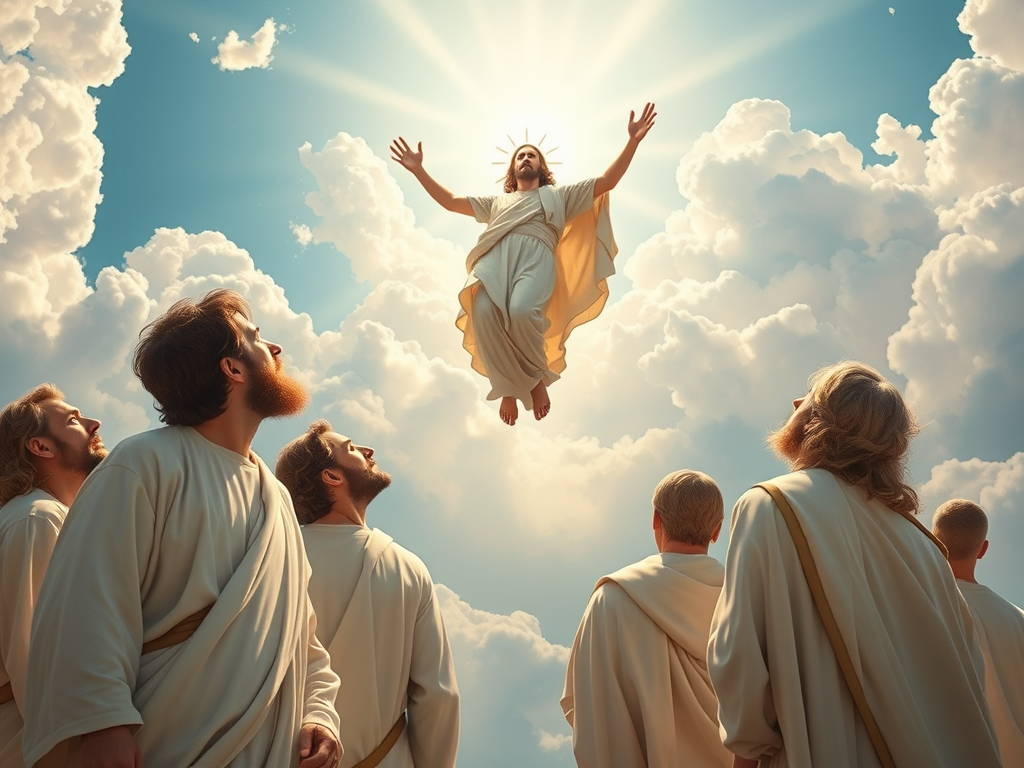
When he had said this, as they were looking on,
he was lifted up, and a cloud took him from their sight.
While they were looking intently at the sky as he was going,
suddenly two men dressed in white garments stood beside them.
They said, “Men of Galilee,
why are you standing there looking at the sky?
This Jesus who has been taken up from you into heaven
will return in the same way as you have seen him going into heaven.”

A reading from the Letter to the Hebrews
Heb 9:24-28; 10:19-23

Christ did not enter into a sanctuary made by hands,
a copy of the true one, but heaven itself,
that he might now appear before God on our behalf.
Not that he might offer himself repeatedly,
as the high priest enters each year into the sanctuary
with blood that is not his own;
if that were so, he would have had to suffer repeatedly
from the foundation of the world.
But now once for all he has appeared at the end of the ages
to take away sin by his sacrifice.
Just as it is appointed that men and women die once,
and after this the judgment, so also Christ,
offered once to take away the sins of many,
will appear a second time, not to take away sin
but to bring salvation to those who eagerly await him.

Therefore, brothers and sisters, since through the blood of Jesus
we have confidence of entrance into the sanctuary
by the new and living way he opened for us through the veil,
that is, his flesh,
and since we have “a great priest over the house of God,”
let us approach with a sincere heart and in absolute trust,
with our hearts sprinkled clean from an evil conscience
and our bodies washed in pure water.
Let us hold unwaveringly to our confession that gives us hope,
for he who made the promise is trustworthy.

Gospel of the day

From the Gospel according to Luke
24:46-53

Jesus said to his disciples:
“Thus it is written that the Christ would suffer
and rise from the dead on the third day
and that repentance, for the forgiveness of sins,
would be preached in his name
to all the nations, beginning from Jerusalem.
You are witnesses of these things.
And behold I am sending the promise of my Father upon you;
but stay in the city
until you are clothed with power from on high.”

Then he led them out as far as Bethany,
raised his hands, and blessed them.
As he blessed them he parted from them
and was taken up to heaven.
They did him homage
and then returned to Jerusalem with great joy,
and they were continually in the temple praising God.

The words of the Popes

The Ascension does not point to Jesus’ absence, but tells us that he is alive in our midst in a new way. He is no longer in a specific place in the world as he was before the Ascension. He is now in the lordship of God, present in every space and time, close to each one of us. In our life we are never alone: we have this Advocate who awaits us, who defends us. We are never alone: the Crucified and Risen Lord guides us. We have with us a multitude of brothers and sisters who, in silence and concealment, in their family life and at work, in their problems and hardships, in their joys and hopes, live faith daily and together with us bring the world the lordship of God’s love, in the Risen Jesus Christ, ascended into Heaven, our own Advocate. (Pope Francis, General Audience, 17 April 2013)

Genesis – Chapter 22

The Bible – Old Testament  Genesis Chapter 22 1 1 Some time after these events, God put Abraham to the test. He called to him, “Abraham!” “Ready!” he replied. 2 2 Then God said: “Take your son Isaac, your only one, whom you love, and go to the land of Moriah. There you shall offer him up… Continue reading Genesis – Chapter 22

Free open Bible inside church

14/02/2024 – Miércoles de Ceniza – Tiempo de Cuaresma, feria.

PRIMERA LECTURA
Rasgad vuestros corazones, no vuestros vestidos.
Lectura de la profecía de Joel 2, 12-18

Ahora – oráculo del Señor convertíos a mí de todo corazón con ayuno, con llanto, con luto; rasgad vuestros corazones, no vuestros vestidos; y convertíos al Señor vuestro Dios, un Dios compasivo y misericordioso, lento a la cólera y rico en amor que se arrepiente del castigo.

¡Quién sabe si cambiará y se arrepentirá dejando tras de sí la bendición, ofrenda y liberación para el Señor, vuestro Dios!

Tocad la trompeta en Sión, proclamad un ayuno santo, convocad a la asamblea, reunid a la gente, santificad a la comunidad, llamad a los ancianos; congregad a muchachos y niños de pecho; salga el esposo de la alcoba, la esposa del tálamo.

Entre el atrio y el altar lloren los sacerdotes, servidores del Señor, y digan:

«Ten compasión de tu pueblo, Señor no entregues tu heredad al oprobio, ni a las burlas de los pueblos».

¿Por qué van a decir las gentes: «Dónde está su Dios»?

Entonces se encendió el celo de Dios por su tierra y perdonó a su pueblo.

Palabra de Dios.

Sal 50, 3-4. 5-6a. 12-13. 14 y 17
R. Misericordia, Señor: hemos pecado.

Misericordia, Dios mío, por tu bondad,
por tu inmensa compasión borra mi culpa;
lava del todo mi delito,
limpia mi pecado. R.

R. Misericordia, Señor: hemos pecado.

Pues yo reconozco mi culpa,
tengo siempre presente mi pecado:
contra ti, contra ti sólo pequé,
cometí la maldad en tu presencia. R.

R. Misericordia, Señor: hemos pecado.

Oh, Dios, crea en mí un corazón puro,
renuévame por dentro con espíritu firme.
No me arrojes lejos de tu rostro,
no me quites tu santo espíritu. R.

R. Misericordia, Señor: hemos pecado.

Devuélveme la alegría de tu salvación,
afiánzame con espíritu generoso.
Señor, me abrirás los labios,
y mi boca proclamará tu alabanza. R.

R. Misericordia, Señor: hemos pecado.

SEGUNDA LECTURA
Reconciliaos con Dios: ahora es tiempo favorable.
Lectura de la segunda carta del apóstol san Pablo a los Corintios 5, 20-6,2

Hermanos.

Actuamos como enviados de Cristo, y es como si Dios mismo exhortara por medio de nosotros. En nombre de Cristo os pedimos que os reconciliéis con Dios.

Al que no conocía el pecado, lo hizo pecado en favor nuestro, para que nosotros llegáramos a ser justicia de Dios en él.

Y como cooperadores suyos, os exhortamos a no echar en saco roto la gracia de Dios. Pues dice:

«En el tiempo favorable te escuché, en el día de la salvación te ayudé».

Pues mirad: ahora es tiempo favorable, ahora es el día de la salvación.

Versículo Sal 94, 8a. 7d
R. Alabanza y honor a ti, Señor Jesús.

No endurezcáis hoy vuestro corazón;
escuchad la voz del Señor.

EVANGELIO
Tu Padre, que ve en lo secreto, te recompensará.
Lectura del santo Evangelio según san Mateo 6, 1-6.16-18

En aquel tiempo, dijo Jesús a sus discípulos:

«Cuidad de no practicar vuestra justicia delante de los hombres para ser vistos por ellos; de lo contrario, no tenéis recompensa de vuestro Padre celestial.

Por tanto, cuando hagas limosna, no mandes tocar la trompeta ante ti, como hacen los hipócritas en las sinagogas y por las calles para ser honrados por la gente; en verdad os digo que ya han recibido su recompensa.

Tú, en cambio, cuando hagas limosna, que no sepa tu mano izquierda lo que hace tu derecha; así tu limosna quedará en secreto y tu Padre, que ve en lo secreto, te recompensará.

Cuando recéis, no seáis como los hipócritas, a quienes les gusta orar de pie en las sinagogas y en las esquinas de las plazas, para que los vean los hombres. En verdad os digo que ya han recibido su recompensa.

Tú, en cambio, cuando ores, entra en tu cuarto, cierra la puerta y ora a tu Padre, que está en lo secreto, y tu Padre, que ve en lo secreto, te lo recompensará.

Cuando ayunéis, no pongáis cara triste, como los hipócritas que desfiguran sus rostros para hacer ver a los hombres que ayunan. En verdad os digo que ya han recibido su paga.

Tú, en cambio, cuando ayunes, perfúmate la cabeza y lávate la cara, para que tu ayuno lo note, no los hombres, sino tu Padre, que está en lo escondido; y tu Padre, que ve en lo escondido, te recompensará». 

Palabra del Señor.

Invocarán mi nombre sobre los hijos de Israel, y yo los bendeciré
Lectura del libro de los Números 6. 22-27

El Señor habló a Moisés:

«Di a Aarón y a sus hijos, esta es la fórmula con que bendeciréis a los hijos de Israel:

«El Señor te bendiga y te proteja, ilumine su rostro sobre ti y te conceda su favor. El Señor te muestre su rostro y te conceda la paz».

Así invocarán mi nombre sobre los hijos de Israel, y yo los bendeciré».

Palabra de Dios.

Sal 66, 2-3. 5. 6 y 8
R. Que Dios tenga piedad y nos bendiga.

Que Dios tenga piedad y nos bendiga,
ilumine su rostro sobre nosotros;
conozca la tierra tus caminos,
todos los pueblos tu salvación. R.

R. Que Dios tenga piedad y nos bendiga.

Que canten de alegría las naciones,
porque riges el mundo con justicia,
riges los pueblos con rectitud
y gobiernas las naciones de la tierra. R.

R. Que Dios tenga piedad y nos bendiga.

Oh Dios, que te alaben los pueblos,
que todos los pueblos te alaben.
Que Dios nos bendiga; que le teman
hasta los confines del orbe. R.

R. Que Dios tenga piedad y nos bendiga.

SEGUNDA LECTURA
Envió Dios a su Hijo, nacido de mujer
Lectura de la carta del apóstol san Pablo a los Gálatas 4, 4-7

Hermanos:

Cuando llegó la plenitud del tiempo, envió Dios a su Hijo, nacido de mujer, nacido bajo la ley, para rescatar a los que estaban bajo la Ley, para que recibiéramos la adopción filial.

Como sois hijos, Dios envió a nuestros corazones el Espíritu de su Hijo que clama: «¡Abba! Padre». Así que ya no eres esclavo, sino hijo; y si eres hijo, eres también heredero por voluntad de Dios.

Palabra de Dios.

Aleluya Heb 1, 1-2
R. Aleluya, aleluya, aleluya.

V. En muchas ocasiones habló Dios antiguamente
a los padres por los profetas.
En esta etapa final, nos ha hablado por el Hijo. R.

EVANGELIO
Encontraron a María y a José, y al niño. Y a los ocho días, le pusieron por nombre Jesús
Lectura del santo Evangelio según san Lucas 2, 16-21

En aquel tiempo, los pastores fueron corriendo hacía Belén y encontraron a María y a José, y al niño acostado en el pesebre. Al verlo, contaron lo que se les había dicho de aquel niño.

Todos los que lo oían se admiraban de lo que les habían dicho los pastores. María, por su parte, conservaba todas estas cosas, meditándolas en su corazón.

Y se volvieron los pastores dando gloria y alabanza a Dios por todo lo que habían oído y visto; conforme a lo que se les había dicho.

Cuando se cumplieron los ocho días para circuncidar al niño, le pusieron por nombre Jesús, como lo había llamado el ángel antes de su concepción.

Palabra del Señor.

21/05/2023 – Solemnidad de la Ascensión del Señor

PALABRA DEL DÍA 21/05/2023 Solemnidad de la Ascensión del Señor LECTURA DEL DÍA Primera lectura Lectura del libro de los Hechos de los apóstoles Hch 1, 1-11 . En mi primer libro, querido Teófilo, escribí acerca de todo lo que Jesús hizo y enseñó, hasta el día en que ascendió al cielo, después de dar… Continue reading 21/05/2023 – Solemnidad de la Ascensión del Señor

error: Content is protected !!