Saint Matthew – Chapter 3

The Bible – New Testament Saint Matthew Index 1. 2. 3. 4. 5. 6. 7. 8. 9. 10. 11. 12. 13. 14. 15. 16. 17. 18. 19. 20. 21. 22. 23. 24. 25. 26. 27. 28. Chapter 3 1 1 2 In those days John the Baptist appeared, preaching in the desert of Judea 2 (and) saying, “Repent, 3 for the kingdom of heaven is at hand!” 3 4 It… Continue reading Saint Matthew – Chapter 3

Saint Matthew – Chapter 10

The Bible – New Testament Saint Matthew Index 1. 2. 3. 4. 5. 6. 7. 8. 9. 10. 11. 12. 13. 14. 15. 16. 17. 18. 19. 20. 21. 22. 23. 24. 25. 26. 27. 28. Chapter 10 1 1 Then he summoned his twelve disciples 2 and gave them authority over unclean spirits to drive them out and to cure every disease and every illness. 2 The… Continue reading Saint Matthew – Chapter 10

The Bible – New Testament

Saint Matthew

Amanecer-2-X

Amanecer-2-X

Index

1. 2. 3. 4. 5. 6. 7. 8. 9. 10. 11. 12. 13. 14. 15. 16.

17. 18. 19. 2021. 22. 23. 24. 25. 26. 27. 28.

Amanecer-2-X

Chapter 11

1

When Jesus finished giving these commands to his twelve disciples, 1 he went away from that place to teach and to preach in their towns.

2

2 When John heard in prison 3 of the works of the Messiah, he sent his disciples to him

3

4 with this question, “Are you the one who is to come, or should we look for another?”

4

Jesus said to them in reply, “Go and tell John what you hear and see:

5

5 the blind regain their sight, the lame walk, lepers are cleansed, the deaf hear, the dead are raised, and the poor have the good news proclaimed to them.

6

And blessed is the one who takes no offense at me.”

7

6 As they were going off, Jesus began to speak to the crowds about John, “What did you go out to the desert to see? A reed swayed by the wind?

8

Then what did you go out to see? Someone dressed in fine clothing? Those who wear fine clothing are in royal palaces.

9

Then why did you go out? To see a prophet? 7 Yes, I tell you, and more than a prophet.

10

This is the one about whom it is written: ‘Behold, I am sending my messenger ahead of you; he will prepare your way before you.’

11

Amen, I say to you, among those born of women there has been none greater than John the Baptist; yet the least in the kingdom of heaven is greater than he. 8

12

From the days of John the Baptist until now, the kingdom of heaven suffers violence, 9 and the violent are taking it by force.

13

All the prophets and the law 10 prophesied up to the time of John.

14

And if you are willing to accept it, he is Elijah, the one who is to come.

15

Whoever has ears ought to hear.

16

“To what shall I compare this generation? 11 It is like children who sit in marketplaces and call to one another,

17

‘We played the flute for you, but you did not dance, we sang a dirge but you did not mourn.’

18

For John came neither eating nor drinking, and they said, ‘He is possessed by a demon.’

19

The Son of Man came eating and drinking and they said, ‘Look, he is a glutton and a drunkard, a friend of tax collectors and sinners.’ But wisdom is vindicated by her works.”

20

Then he began to reproach the towns where most of his mighty deeds had been done, since they had not repented.

21

“Woe to you, Chorazin! Woe to you, Bethsaida! For if the mighty deeds done in your midst had been done in Tyre and Sidon, 12 they would long ago have repented in sackcloth and ashes.

22

But I tell you, it will be more tolerable for Tyre and Sidon on the day of judgment than for you.

23

And as for you, Capernaum: ‘Will you be exalted to heaven? You will go down to the netherworld.’ 13 For if the mighty deeds done in your midst had been done in Sodom, it would have remained until this day.

24

But I tell you, it will be more tolerable for the land of Sodom on the day of judgment than for you.”

25

At that time Jesus said in reply, 14 “I give praise to you, Father, Lord of heaven and earth, for although you have hidden these things from the wise and the learned you have revealed them to the childlike.

26

Yes, Father, such has been your gracious will.

27

All things have been handed over to me by my Father. No one knows the Son except the Father, and no one knows the Father except the Son and anyone to whom the Son wishes to reveal him.

28

15 “Come to me, all you who labor and are burdened, 16 and I will give you rest.

29

17 Take my yoke upon you and learn from me, for I am meek and humble of heart; and you will find rest for your selves.

30

For my yoke is easy, and my burden light.”

Amanecer-2-X

1 [1] The closing formula of the discourse refers back to the original addressees, the Twelve.
2 [⇒ 11:2-⇒ 12:50] The narrative section of the third book deals with the growing opposition to Jesus. It is largely devoted to disputes and attacks relating to faith and discipleship and thus contains much sayings-material, drawn in large part from Q.
3 [2] In prison: see ⇒ Matthew 4:12; ⇒ 14:1-12. The works of the Messiah: the deeds of Matthew 8-9.
4 [3] The question probably expresses a doubt of the Baptist that Jesus is the one who is to come (cf ⇒ Malachi 3:1) because his mission has not been one of fiery judgment as John had expected (⇒ Matthew 3:2).
5 [5-6] Jesus’ response is taken from passages of Isaiah (⇒ Isaiah 26:19; ⇒ 29:18-19; ⇒ 35:5-6; ⇒ 61:1) that picture the time of salvation as marked by deeds such as those that Jesus is doing. The beatitude is a warning to the Baptist not to disbelieve because his expectations have not been met.
6 [7-19] Jesus’ rebuke of John is counterbalanced by a reminder of the greatness of the Baptist’s function (⇒ Matthew 11:7-15) that is followed by a complaint about those who have heeded neither John nor Jesus (⇒ Matthew 11:16-19).
7 [9-10] In common Jewish belief there had been no prophecy in Israel since the last of the Old Testament prophets, Malachi. The coming of a new prophet was eagerly awaited, and Jesus agrees that John was such. Yet he was more than a prophet, for he was the precursor of the one who would bring in the new and final age. The Old Testament quotation is a combination of ⇒ Malachi 3:1; ⇒ Exodus 23:20 with the significant change that the before me of Malachi becomes before you. The messenger now precedes not God, as in the original, but Jesus.
8 [11] John’s preeminent greatness lies in his function of announcing the imminence of the kingdom (⇒ Matthew 3:1). But to be in the kingdom is so great a privilege that the least who has it is greater than the Baptist.
9 [12] The meaning of this difficult saying is probably that the opponents of Jesus are trying to prevent people from accepting the kingdom and to snatch it away from those who have received it.
10 [13] All the prophets and the law: Matthew inverts the usual order, “law and prophets,” and says that both have prophesied. This emphasis on the prophetic character of the law points to its fulfillment in the teaching of Jesus and to the transitory nature of some of its commandments (see the note on ⇒ Matthew 5:17-20).
11 [16-19] See ⇒ Luke 7:31-35. The meaning of the parable (⇒ Matthew 11:16-17) and its explanation (⇒ Matthew 11:18-19b) is much disputed. A plausible view is that the children of the parable are two groups, one of which proposes different entertainments to the other that will not agree with either proposal. The first represents John, Jesus, and their disciples; the second those who reject John for his asceticism and Jesus for his table association with those despised by the religiously observant. ⇒ Matthew 11:19c (her works) forms an inclusion with ⇒ Matthew 11:2 (“the works of the Messiah”). The original form of the saying is better preserved in ⇒ Luke 7:35 “. . . wisdom is vindicated by all her children.” There John and Jesus are the children of Wisdom; here the works of Jesus the Messiah are those of divine Wisdom, of which he is the embodiment. Some important textual witnesses, however, have essentially the same reading as in Luke.
12 [21] Tyre and Sidon were pagan cities denounced for their wickedness in the Old Testament; cf ⇒ Joel 3:4-7.
13 [23] Capernaum’s pride and punishment are described in language taken from the taunt song against the king of Babylon (⇒ Isaiah 14:13-15).
14 [25-27] This Q saying, identical with ⇒ Luke 10:21-22 except for minor variations, introduces a joyous note into this section, so dominated by the theme of unbelief. While the wise and the learned, the scribes and Pharisees, have rejected Jesus’ preaching and the significance of his mighty deeds, the childlike have accepted them. Acceptance depends upon the Father’s revelation, but this is granted to those who are open to receive it and refused to the arrogant. Jesus can speak of all mysteries because he is the Son and there is perfect reciprocity of knowledge between him and the Father; what has been handed over to him is revealed only to those whom he wishes.
15 [28-29] These verses are peculiar to Matthew and are similar to Ben Sirach’s invitation to learn wisdom and submit to her yoke (⇒ Sirach 51:23, ⇒ 26).
16 [28] Who labor and are burdened: burdened by the law as expounded by the scribes and Pharisees (⇒ Matthew 23:4).
17 [29] In place of the yoke of the law, complicated by scribal interpretation, Jesus invites the burdened to take the yoke of obedience to his word, under which they will find rest; cf ⇒ Jeremiah 6:16.

Amanecer-2-X

Amanecer-2-X

Index

1. 2. 3. 4. 5. 6. 7. 8. 9. 10. 11.

12. 13. 14. 15. 16. 17. 18. 19. 20

21. 22. 23. 24. 25. 26. 27. 28.

Amanecer-2-X

Saint Matthew – Chapter 9

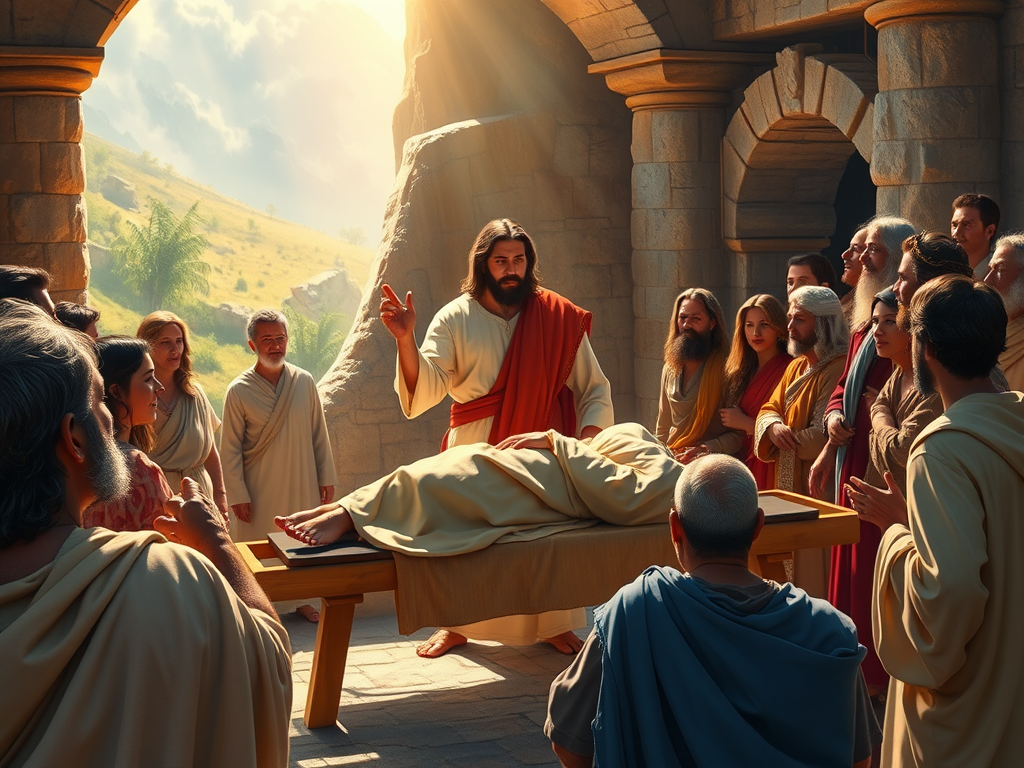
The Bible – New Testament Saint Matthew Index 1. 2. 3. 4. 5. 6. 7. 8. 9. 10. 11. 12. 13. 14. 15. 16. 17. 18. 19. 20. 21. 22. 23. 24. 25. 26. 27. 28. Chapter 9 1 1 He entered a boat, made the crossing, and came into his own town. 2 And there people brought to him a paralytic lying on a stretcher.… Continue reading Saint Matthew – Chapter 9

The Bible – New Testament

Saint Matthew

Index

1. 2. 3. 4. 5. 6. 7. 8. 9. 10. 11. 12. 13. 14. 15. 16.

17. 18. 19. 2021. 22. 23. 24. 25. 26. 27. 28.

Chapter 7

1

1 2 “Stop judging, that you may not be judged.

2

For as you judge, so will you be judged, and the measure with which you measure will be measured out to you.

3

Why do you notice the splinter in your brother’s eye, but do not perceive the wooden beam in your own eye?

4

How can you say to your brother, ‘Let me remove that splinter from your eye,’ while the wooden beam is in your eye?

5

You hypocrite, 3 remove the wooden beam from your eye first; then you will see clearly to remove the splinter from your brother’s eye.

6

“Do not give what is holy to dogs, 4 or throw your pearls before swine, lest they trample them underfoot, and turn and tear you to pieces.

7

“Ask and it will be given to you; seek and you will find; knock and the door will be opened to you.

8

For everyone who asks, receives; and the one who seeks, finds; and to the one who knocks, the door will be opened.

9

Which one of you would hand his son a stone when he asks for a loaf of bread, 5

10

or a snake when he asks for a fish?

11

If you then, who are wicked, know how to give good gifts to your children, how much more will your heavenly Father give good things to those who ask him.

12

6 “Do to others whatever you would have them do to you. This is the law and the prophets.

13

7 8 “Enter through the narrow gate; for the gate is wide and the road broad that leads to destruction, and those who enter through it are many.

14

How narrow the gate and constricted the road that leads to life. And those who find it are few.

15

9 “Beware of false prophets, who come to you in sheep’s clothing, but underneath are ravenous wolves.

16

By their fruits you will know them. Do people pick grapes from thornbushes, or figs from thistles?

17

Just so, every good tree bears good fruit, and a rotten tree bears bad fruit.

18

A good tree cannot bear bad fruit, nor can a rotten tree bear good fruit.

19

Every tree that does not bear good fruit will be cut down and thrown into the fire.

20

So by their fruits you will know them.

21

“Not everyone who says to me, ‘Lord, Lord,’ will enter the kingdom of heaven, 10 but only the one who does the will of my Father in heaven.

22

Many will say to me on that day, ‘Lord, Lord, did we not prophesy in your name? Did we not drive out demons in your name? Did we not do mighty deeds in your name?’

23

Then I will declare to them solemnly, ‘I never knew you. 11 Depart from me, you evildoers.’

24

12 “Everyone who listens to these words of mine and acts on them will be like a wise man who built his house on rock.

25

The rain fell, the floods came, and the winds blew and buffeted the house. But it did not collapse; it had been set solidly on rock.

26

And everyone who listens to these words of mine but does not act on them will be like a fool who built his house on sand.

27

The rain fell, the floods came, and the winds blew and buffeted the house. And it collapsed and was completely ruined.”

28

13 When Jesus finished these words, the crowds were astonished at his teaching,

29

14 for he taught them as one having authority, and not as their scribes.

1 [1-12] In ⇒ Matthew 7:1 Matthew returns to the basic traditional material of the sermon (⇒ Luke 6:37-38, ⇒ 41-42). The governing thought is the correspondence between conduct toward one’s fellows and God’s conduct toward the one so acting.
2 [1] This is not a prohibition against recognizing the faults of others, which would be hardly compatible with ⇒ Matthew 7:5, 6 but against passing judgment in a spirit of arrogance, forgetful of one’s own faults.
3 [5] Hypocrite: the designation previously given to the scribes and Pharisees is here given to the Christian disciple who is concerned with the faults of another and ignores his own more serious offenses.
4 [6] Dogs and swine were Jewish terms of contempt for Gentiles. This saying may originally have derived from a Jewish Christian community opposed to preaching the gospel (what is holy, pearls) to Gentiles. In the light of ⇒ Matthew 28:19 that can hardly be Matthew’s meaning. He may have taken the saying as applying to a Christian dealing with an obstinately impenitent fellow Christian (⇒ Matthew 18:17).
5 [9-10] There is a resemblance between a stone and a round loaf of bread and between a serpent and the scaleless fish called barbut.
6 [12] See ⇒ Luke 6:31. This saying, known since the eighteenth century as the “Golden Rule,” is found in both positive and negative form in pagan and Jewish sources, both earlier and later than the gospel. This is the law and the prophets is an addition probably due to the evangelist.
7 [13-28] The final section of the discourse is composed of a series of antitheses, contrasting two kinds of life within the Christian community, that of those who obey the words of Jesus and that of those who do not. Most of the sayings are from Q and are found also in Luke.
8 [13-14] The metaphor of the “two ways” was common in pagan philosophy and in the Old Testament. In Christian literature it is found also in the Didache (1-6) and the Epistle of Barnabas (18-20).
9 [15-20] Christian disciples who claimed to speak in the name of God are called prophets (⇒ Matthew 7:15) in ⇒ Matthew 10:41; ⇒ Matthew 23:34. They were presumably an important group within the church of Matthew. As in the case of the Old Testament prophets, there were both true and false ones, and for Matthew the difference could be recognized by the quality of their deeds, the fruits (⇒ Matthew 7:16). The mention of fruits leads to the comparison with trees, some producing good fruit, others bad.
10 [21-23] The attack on the false prophets is continued, but is broadened to include those disciples who perform works of healing and exorcism in the name of Jesus (Lord) but live evil lives. Entrance into the kingdom is only for those who do the will of the Father. On the day of judgment (on that day) the morally corrupt prophets and miracle workers will be rejected by Jesus.
11 [23] I never knew you: cf ⇒ Matthew 10:33. Depart from me, you evildoers: cf ⇒ Psalm 6:8.
12 [24-27] The conclusion of the discourse (cf ⇒ Luke 6:47-49). Here the relation is not between saying and doing as in ⇒ Matthew 7:15-23 but between hearing and doing, and the words of Jesus are applied to every Christian (everyone who listens).
13 [28-29] When Jesus finished these words: this or a similar formula is used by Matthew to conclude each of the five great discourses of Jesus (cf ⇒ Matthew 11:1; ⇒ 13:53; ⇒ 19:1; ⇒ 26:1).
14 [29] Not as their scribes: scribal instruction was a faithful handing down of the traditions of earlier teachers; Jesus’ teaching is based on his own authority. Their scribes: for the implications of their, see the note on ⇒ Matthew 4:23.

The Bible – New Testament

Saint Matthew

Index

1. 2. 3. 4. 5. 6. 7. 8. 9. 10. 11.

12. 13. 14. 15. 16. 17. 18. 19. 20

21. 22. 23. 24. 25. 26. 27. 28.

Saint Matthew – Chapter 15

The Bible – New Testament Saint Matthew Index 1. 2. 3. 4. 5. 6. 7. 8. 9. 10. 11. 12. 13. 14. 15. 16. 17. 18. 19. 20. 21. 22. 23. 24. 25. 26. 27. 28. Chapter 15 1 1 Then Pharisees and scribes came to Jesus from Jerusalem and said, 2 “Why do your disciples break the tradition of the elders? 2 They do not wash (their)… Continue reading Saint Matthew – Chapter 15

Saint Matthew – Chapter 24

The Bible – New Testament Saint Matthew  Index 1. 2. 3. 4. 5. 6. 7. 8. 9. 10. 11. 12. 13. 14. 15. 16. 17. 18. 19. 20. 21. 22. 23. 24. 25. 26. 27. 28. Chapter 24 1 1 Jesus left the temple area and was going away, when his disciples approached him to point out the temple buildings. 2 2 He said to them in… Continue reading Saint Matthew – Chapter 24

Saint Matthew – Chapter 8

The Bible – New Testament Saint Matthew Index 1. 2. 3. 4. 5. 6. 7. 8. 9. 10. 11. 12. 13. 14. 15. 16. 17. 18. 19. 20. 21. 22. 23. 24. 25. 26. 27. 28. Chapter 8 1 1 When Jesus came down from the mountain, great crowds followed him. 2 And then a leper 2 approached, did him homage, and said, “Lord, if you wish, you… Continue reading Saint Matthew – Chapter 8

Saint Matthew – Chapter 14

The Bible – New Testament Saint Matthew Index 1. 2. 3. 4. 5. 6. 7. 8. 9. 10. 11. 12. 13. 14. 15. 16. 17. 18. 19. 20. 21. 22. 23. 24. 25. 26. 27. 28. Chapter 14 1 1 2 At that time Herod the tetrarch heard of the reputation of Jesus 2 and said to his servants, “This man is John the Baptist. He has… Continue reading Saint Matthew – Chapter 14

error: Content is protected !!