The Bible – New Testament

Saint Luke

Index

1. 2. 3. 4. 5. 6. 7. 8. 9. 10. 11. 12. 13.
14. 15. 16. 17. 18. 19. 2021. 22. 23. 24. 

Chapter 24

1

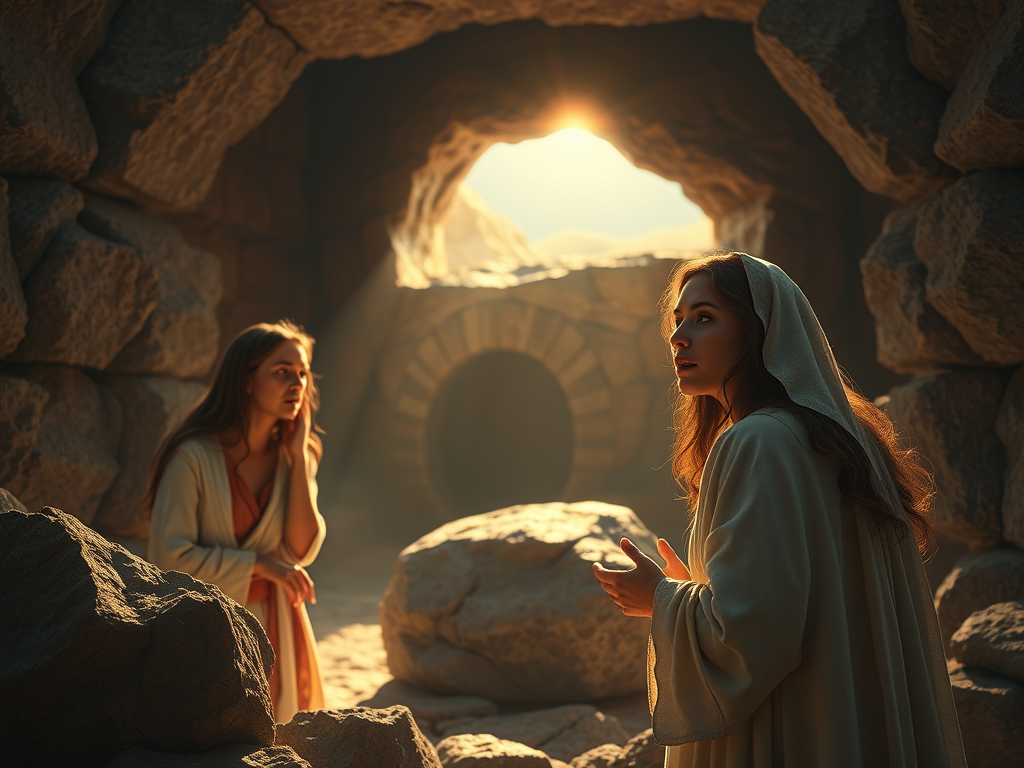
1 But at daybreak on the first day of the week they took the spices they had prepared and went to the tomb.

2

They found the stone rolled away from the tomb;

3

but when they entered, they did not find the body of the Lord Jesus.

4

While they were puzzling over this, behold, two men in dazzling garments appeared to them.

5

They were terrified and bowed their faces to the ground. They said to them, “Why do you seek the living one among the dead?

6

He is not here, but he has been raised. 2 Remember what he said to you while he was still in Galilee,

7

that the Son of Man must be handed over to sinners and be crucified, and rise on the third day.”

8

And they remembered his words.

9

3 Then they returned from the tomb and announced all these things to the eleven and to all the others.

10

The women were Mary Magdalene, Joanna, and Mary the mother of James; the others who accompanied them also told this to the apostles,

11

but their story seemed like nonsense and they did not believe them.

12

4 But Peter got up and ran to the tomb, bent down, and saw the burial cloths alone; then he went home amazed at what had happened.

13

5 6 Now that very day two of them were going to a village seven miles from Jerusalem called Emmaus,

14

and they were conversing about all the things that had occurred.

15

And it happened that while they were conversing and debating, Jesus himself drew near and walked with them,

16

7 but their eyes were prevented from recognizing him.

17

He asked them, “What are you discussing as you walk along?” They stopped, looking downcast.

18

One of them, named Cleopas, said to him in reply, “Are you the only visitor to Jerusalem who does not know of the things that have taken place there in these days?”

19

And he replied to them, “What sort of things?” They said to him, “The things that happened to Jesus the Nazarene, who was a prophet mighty in deed and word before God and all the people,

20

how our chief priests and rulers both handed him over to a sentence of death and crucified him.

21

But we were hoping that he would be the one to redeem Israel; and besides all this, it is now the third day since this took place.

22

Some women from our group, however, have astounded us: they were at the tomb early in the morning

23

and did not find his body; they came back and reported that they had indeed seen a vision of angels who announced that he was alive.

24

Then some of those with us went to the tomb and found things just as the women had described, but him they did not see.”

25

And he said to them, “Oh, how foolish you are! How slow of heart to believe all that the prophets spoke!

26

Was it not necessary that the Messiah should suffer 8 these things and enter into his glory?”

27

Then beginning with Moses and all the prophets, he interpreted to them what referred to him in all the scriptures.

28

As they approached the village to which they were going, he gave the impression that he was going on farther.

29

But they urged him, “Stay with us, for it is nearly evening and the day is almost over.” So he went in to stay with them.

30

And it happened that, while he was with them at table, he took bread, said the blessing, broke it, and gave it to them.

31

With that their eyes were opened and they recognized him, but he vanished from their sight.

32

Then they said to each other, “Were not our hearts burning (within us) while he spoke to us on the way and opened the scriptures to us?”

33

So they set out at once and returned to Jerusalem where they found gathered together the eleven and those with them

34

who were saying, “The Lord has truly been raised and has appeared to Simon!”

35

Then the two recounted what had taken place on the way and how he was made known to them in the breaking of the bread.

36

9 While they were still speaking about this, he stood in their midst and said to them, “Peace be with you.”

37

But they were startled and terrified and thought that they were seeing a ghost.

38

Then he said to them, “Why are you troubled? And why do questions arise in your hearts?

39

10 Look at my hands and my feet, that it is I myself. Touch me and see, because a ghost does not have flesh and bones as you can see I have.”

40

And as he said this, he showed them his hands and his feet.

41

While they were still incredulous for joy and were amazed, he asked them, “Have you anything here to eat?”

42

They gave him a piece of baked fish;

43

he took it and ate it in front of them.

44

He said to them, “These are my words that I spoke to you while I was still with you, that everything written about me in the law of Moses and in the prophets and psalms must be fulfilled.”

45

Then he opened their minds to understand the scriptures.

46

11 And he said to them, “Thus it is written that the Messiah would suffer and rise from the dead on the third day

47

and that repentance, for the forgiveness of sins, would be preached in his name to all the nations, beginning from Jerusalem.

48

You are witnesses of these things.

49

And (behold) I am sending the promise of my Father 12 upon you; but stay in the city until you are clothed with power from on high.”

50

13 Then he led them (out) as far as Bethany, raised his hands, and blessed them.

51

As he blessed them he parted from them and was taken up to heaven.

52

They did him homage and then returned to Jerusalem with great joy,

53

and they were continually in the temple praising God. 14

1 [1-53] The resurrection narrative in Luke consists of five sec tions: (1) the women at the empty tomb (⇒ Luke 23:56b-⇒ 24:12); (2) the appearance to the two disciples on the way to Emmaus (⇒ Luke 24:13-35); (3) the appearance to the disciples in Jerusalem (⇒ Luke 24:36-43); (4) Jesus’ final instructions (⇒ Luke 24:44-49); (5) the ascension (⇒ Luke 24:50-53). In Luke, all the resurrection appearances take place in and around Jerusalem; moreover, they are all recounted as having taken place on Easter Sunday. A consistent theme throughout the narrative is that the suffering, death, and resurrection of Jesus were accomplished in fulfillment of Old Testament promises and of Jewish hopes (⇒ Luke 24:19a, ⇒ 21, ⇒ 26-27, ⇒ 44, ⇒ 46). In his second volume, Acts, Luke will argue that Christianity is the fulfillment of the hopes of Pharisaic Judaism and its logical development (see ⇒ Acts 24:10-21).
2 [6] He is not here, but he has been raised: this part of the verse is omitted in important representatives of the Western text tradition, but its presence in other text types and the slight difference in wording from ⇒ Matthew 28:6 and ⇒ Mark 16:6 argue for its retention. 
3 [9] The women in this gospel do not flee from the tomb and tell no one, as in ⇒ Mark 16:8 but return and tell the disciples about their experience. The initial reaction to the testimony of the women is disbelief (⇒ Luke 24:11).
4 [12] This verse is missing from the Western textual tradition but is found in the best and oldest manuscripts of other text types.
5 [13-35] This episode focuses on the interpretation of scripture by the risen Jesus and the recognition of him in the breaking of the bread. The references to the quotations of scripture and explanation of it (⇒ Luke 24:25-27), the kerygmatic proclamation (⇒ Luke 24:34), and the liturgical gesture (⇒ Luke 24:30) suggest that the episode is primarily catechetical and liturgical rather than apologetic.
6 [13] Seven miles: literally, “sixty stades.” A stade was 607 feet. Some manuscripts read “160 stades” or more than eighteen miles. The exact location of Emmaus is disputed.
7 [16] A consistent feature of the resurrection stories is that the risen Jesus was different and initially unrecognizable (⇒ Luke 24:37; ⇒ Mark 16:12; ⇒ John 20:14; ⇒ 21:4).
8 [26] That the Messiah should suffer . . . : Luke is the only New Testament writer to speak explicitly of a suffering Messiah (⇒ Luke 24:26, ⇒ 46; ⇒ Acts 3:18; ⇒ 17:3; ⇒ 26:23). The idea of a suffering Messiah is not found in the Old Testament or in other Jewish literature prior to the New Testament period, although the idea is hinted at in ⇒ Mark 8:31-33. See the notes on ⇒ Matthew 26:63 and ⇒ 26:67-68.
9 [36-43,44-49] The Gospel of Luke, like each of the other gospels (⇒ Matthew 28:16-20; ⇒ Mark 16:14-15; ⇒ John 20:19-23), focuses on an important appearance of Jesus to the Twelve in which they are commissioned for their future ministry. As in ⇒ Luke 24:6, ⇒ 12, so in ⇒ Luke 24:36, ⇒ 40 there are omissions in the Western text.
10 [39-42] The apologetic purpose of this story is evident in the concern with the physical details and the report that Jesus ate food.
11 [46] See the note on ⇒ Luke 24:26.
12 [49] The promise of my Father: i.e., the gift of the holy Spirit.
13 [50-53] Luke brings his story about the time of Jesus to a close with the report of the ascension. He will also begin the story of the time of the church with a recounting of the ascension. In the gospel, Luke recounts the ascension of Jesus on Easter Sunday night, thereby closely associating it with the resurrection. In ⇒ Acts 1:3, ⇒ 9-11; ⇒ 13:31 he historicizes the ascension by speaking of a forty-day period between the resurrection and the ascension. The Western text omits some phrases in ⇒ Luke 24:51, ⇒ 52 perhaps to avoid any chronological conflict with Acts 1 about the time of the ascension.
14 [53] The Gospel of Luke ends as it began (⇒ Luke 1:9), in the Jerusalem temple.

The Bible – New Testament

Saint Luke

Index

1. 2. 3. 4. 5. 6. 7. 8. 9.

10. 11. 12. 13. 14. 15. 16.

17. 18. 19. 2021. 22. 23. 24. 

.
.

.
BIBLIA – LA PALABRA DE DIOS DEL DÍA
BIBLIA – ÍNDICES

OLD TESTAMENT –  NEW TESTAMENT

THE GOSPELS

MATTHEW – MARK – LUKE – JOHN

ORACIONES

.

.

WEB OFICIAL CAMINO DE SANTIAGO

INFORMACIÓN GENERAL DEL CAMINO
RUTAS DEL CAMINO DE SANTIAGO
VIDEOS CAMINO DE SANTIAGO

Saint Luke – Chapter 1

The Bible – New Testament Saint Luke Index 1. 2. 3. 4. 5. 6. 7. 8. 9. 10. 11. 12. 13. 14. 15. 16. 17. 18. 19. 20. 21. 22. 23. 24.  Chapter 1 1 1 Since many have undertaken to compile a narrative of the events that have been fulfilled among us, 2 just as those who were eyewitnesses from the… Continue reading Saint Luke – Chapter 1

Published
Categorised as SAINT LUKE

The Bible – New Testament

Saint Luke

Index

1. 2. 3. 4. 5. 6. 7. 8. 9. 10. 11. 12. 13.
14. 15. 16. 17. 18. 19. 2021. 22. 23. 24. 

Chapter 3

1

1 2 In the fifteenth year of the reign of Tiberius Caesar, when Pontius Pilate was governor of Judea, and Herod was tetrarch of Galilee, and his brother Philip tetrarch of the region of Ituraea and Trachonitis, and Lysanias was tetrarch of Abilene,

2

during the high priesthood of Annas and Caiaphas, 3 the word of God came to John the son of Zechariah in the desert.

3

4 He went throughout (the) whole region of the Jordan, proclaiming a baptism of repentance for the forgiveness of sins,

4

5 as it is written in the book of the words of the prophet Isaiah: “A voice of one crying out in the desert: ‘Prepare the way of the Lord, make straight his paths.

5

Every valley shall be filled and every mountain and hill shall be made low. The winding roads shall be made straight, and the rough ways made smooth,

6

and all flesh shall see the salvation of God.'”

7

He said to the crowds who came out to be baptized by him, “You brood of vipers! Who warned you to flee from the coming wrath?

8

Produce good fruits as evidence of your repentance; and do not begin to say to yourselves, ‘We have Abraham as our father,’ for I tell you, God can raise up children to Abraham from these stones.

9

Even now the ax lies at the root of the trees. Therefore every tree that does not produce good fruit will be cut down and thrown into the fire.”

10

And the crowds asked him, “What then should we do?”

11

He said to them in reply, “Whoever has two cloaks should share with the person who has none. And whoever has food should do likewise.”

12

Even tax collectors came to be baptized and they said to him, “Teacher, what should we do?”

13

He answered them, “Stop collecting more than what is prescribed.”

14

Soldiers also asked him, “And what is it that we should do?” He told them, “Do not practice extortion, do not falsely accuse anyone, and be satisfied with your wages.”

15

Now the people were filled with expectation, and all were asking in their hearts whether John might be the Messiah.

16

6 John answered them all, saying, “I am baptizing you with water, but one mightier than I is coming. I am not worthy to loosen the thongs of his sandals. He will baptize you with the holy Spirit and fire.

17

His winnowing fan 7 is in his hand to clear his threshing floor and to gather the wheat into his barn, but the chaff he will burn with unquenchable fire.”

18

Exhorting them in many other ways, he preached good news to the people.

19

8 Now Herod the tetrarch, who had been censured by him because of Herodias, his brother’s wife, and because of all the evil deeds Herod had committed,

20

added still another to these by (also) putting John in prison.

21

9 10 After all the people had been baptized and Jesus also had been baptized and was praying, heaven was opened

22

11 and the holy Spirit descended upon him in bodily form like a dove. And a voice came from heaven, “You are my beloved Son; with you I am well pleased.”

23

12 When Jesus began his ministry he was about thirty years of age. He was the son, as was thought, of Joseph, the son of Heli,

24

the son of Matthat, the son of Levi, the son of Melchi, the son of Jannai, the son of Joseph,

25

the son of Mattathias, the son of Amos, the son of Nahum, the son of Esli, the son of Naggai,

26

the son of Maath, the son of Mattathias, the son of Semein, the son of Josech, the son of Joda,

27

the son of Joanan, the son of Rhesa, the son of Zerubbabel, the son of Shealtiel, the son of Neri,

28

the son of Melchi, the son of Addi, the son of Cosam, the son of Elmadam, the son of Er,

29

the son of Joshua, the son of Eliezer, the son of Jorim, the son of Matthat, the son of Levi,

30

the son of Simeon, the son of Judah, the son of Joseph, the son of Jonam, the son of Eliakim,

31

the son of Melea, the son of Menna, the son of Mattatha, the son of Nathan, the son of David, 13

32

the son of Jesse, the son of Obed, the son of Boaz, the son of Sala, the son of Nahshon,

33

the son of Amminadab, the son of Admin, the son of Arni, the son of Hezron, the son of Perez, the son of Judah,

34

the son of Jacob, the son of Isaac, the son of Abraham, the son of Terah, the son of Nahor,

35

the son of Serug, the son of Reu, the son of Peleg, the son of Eber, the son of Shelah,

36

the son of Cainan, the son of Arphaxad, the son of Shem, the son of Noah, the son of Lamech,

37

the son of Methuselah, the son of Enoch, the son of Jared, the son of Mahalaleel, the son of Cainan,

38

the son of Enos, the son of Seth, the son of Adam, the son of God.

1 [1-20] Although Luke is indebted in this section to his sources, the Gospel of Mark and a collection of sayings of John the Baptist, he has clearly marked this introduction to the ministry of Jesus with his own individual style. Just as the gospel began with a long periodic sentence (⇒ Luke 1:1-4), so too this section (⇒ Luke 3:1-2). He casts the call of John the Baptist in the form of an Old Testament prophetic call (⇒ Luke 3:2) and extends the quotation from Isaiah found in ⇒ Mark 1:3 (⇒ Isaiah 40:3) by the addition of ⇒ Isaiah 40:4-5 in ⇒ Luke 3:5-6. In doing so, he presents his theme of the universality of salvation, which he has announced earlier in the words of Simeon (⇒ Luke 2:30-32). Moreover, in describing the expectation of the people (⇒ Luke 3:15), Luke is characterizing the time of John’s preaching in the same way as he had earlier described the situation of other devout Israelites in the infancy narrative (⇒ Luke 2:25-26, ⇒ 37-38). In ⇒ Luke 3:7-18 Luke presents the preaching of John the Baptist who urges the crowds to reform in view of the coming wrath (⇒ Luke 3:7, 9: eschatological preaching), and who offers the crowds certain standards for reforming social conduct (⇒ Luke 3:10-14: ethical preaching), and who announces to the crowds the coming of one mightier than he (⇒ Luke 3:15-18: messianic preaching).
2 [1] Tiberius Caesar: Tiberius succeeded Augustus as emperor in A.D. 14 and reigned until A.D. 37. The fifteenth year of his reign, depending on the method of calculating his first regnal year, would have fallen between A.D. 27 and 29. Pontius Pilate: prefect of Judea from A.D. 26 to 36. The Jewish historian Josephus describes him as a greedy and ruthless prefect who had little regard for the local Jewish population and their religious practices (see ⇒ Luke 13:1). Herod: i.e., Herod Antipas, the son of Herod the Great. He ruled over Galilee and Perea from 4 B.C. to A.D. 39. His official title tetrarch means literally, “ruler of a quarter,” but came to designate any subordinate prince. Philip: also a son of Herod the Great, tetrarch of the territory to the north and east of the Sea of Galilee from 4 B.C. to A.D. 34. Only two small areas of this territory are mentioned by Luke. Lysanias: nothing is known about this Lysanias who is said here to have been tetrarch of Abilene, a territory northwest of Damascus.
3 [2] During the high priesthood of Annas and Caiaphas: after situating the call of John the Baptist in terms of the civil rulers of the period, Luke now mentions the religious leadership of Palestine (see the note on ⇒ Luke 1:5). Annas had been high priest A.D. 6-15. After being deposed by the Romans in A.D. 15 he was succeeded by various members of his family and eventually by his son-in-law, Caiaphas, who was high priest A.D. 18-36. Luke refers to Annas as high priest at this time (but see ⇒ John 18:13, ⇒ 19), possibly because of the continuing influence of Annas or because the title continued to be used for the ex-high priest. The word of God came to John: Luke is alone among the New Testament writers in associating the preaching of John with a call from God. Luke is thereby identifying John with the prophets whose ministries began with similar calls. In ⇒ Luke 7:26 John will be described as “more than a prophet”; he is also the precursor of Jesus (⇒ Luke 7:27), a transitional figure inaugurating the period of the fulfillment of prophecy and promise.
4 [3] See the note on ⇒ Matthew 3:2.
5 [4] The Essenes from Qumran used the same passage to explain why their community was in the desert studying and observing the law and the prophets (1QS 8:12-15).
6 [16] He will baptize you with the holy Spirit and fire: in contrast to John’s baptism with water, Jesus is said to baptize with the holy Spirit and with fire. From the point of view of the early Christian community, the Spirit and fire must have been understood in the light of the fire symbolism of the pouring out of the Spirit at Pentecost (⇒ Acts 2:1-4); but as part of John’s preaching, the Spirit and fire should be related to their purifying and refining characteristics (⇒ Ezekiel 36:25-27; ⇒ Malachi 3:2-3). See the note on ⇒ Matthew 3:11.
7 [17] Winnowing fan: see the note on ⇒ Matthew 3:12.
8 [19-20] Luke separates the ministry of John the Baptist from that of Jesus by reporting the imprisonment of John before the baptism of Jesus (⇒ Luke 3:21-22). Luke uses this literary device to serve his understanding of the periods of salvation history. With John the Baptist, the time of promise, the period of Israel, comes to an end; with the baptism of Jesus and the descent of the Spirit upon him, the time of fulfillment, the period of Jesus, begins. In his second volume, the Acts of the Apostles, Luke will introduce the third epoch in salvation history, the period of the church.
9 [21-22] This episode in Luke focuses on the heavenly message identifying Jesus as Son and, through the allusion to ⇒ Isaiah 42:1, as Servant of Yahweh. The relationship of Jesus to the Father has already been announced in the infancy narrative (⇒ Luke 1:32, ⇒ 35; ⇒ 2:49); it occurs here at the beginning of Jesus’ Galilean ministry and will reappear in ⇒ Luke 9:35 before another major section of Luke’s gospel, the travel narrative (⇒ Luke 9:51-⇒ 19:27). Elsewhere in Luke’s writings (⇒ Luke 4:18; ⇒ Acts 10:38), this incident will be interpreted as a type of anointing of Jesus.
10 [21] Was praying: Luke regularly presents Jesus at prayer at important points in his ministry: here at his baptism; at the choice of the Twelve (⇒ Luke 6:12); before Peter’s confession (⇒ Luke 9:18); at the transfiguration (⇒ Luke 9:28); when he teaches his disciples to pray (⇒ Luke 11:1); at the Last Supper (⇒ Luke 22:32); on the Mount of Olives (⇒ Luke 22:41); on the cross (⇒ Luke 23:46).
11 [22] You are my beloved Son; with you I am well pleased: this is the best attested reading in the Greek manuscripts. The Western reading, “You are my Son, this day I have begotten you,” is derived from ⇒ Psalm 2:7.
12 [23-38] Whereas ⇒ Matthew 1:2 begins the genealogy of Jesus with Abraham to emphasize Jesus’ bonds with the people of Israel, Luke’s universalism leads him to trace the descent of Jesus beyond Israel to Adam and beyond that to God (⇒ Luke 3:38) to stress again Jesus’ divine sonship.
13 [31] The son of Nathan, the son of David: in keeping with Jesus’ prophetic role in Luke and Acts (e.g., ⇒ Luke 7:16, ⇒ 39; ⇒ 9:8; ⇒ 13:33; ⇒ 24:19; ⇒ Acts 3:22-23; ⇒ 7:37) Luke traces Jesus’ Davidic ancestry through the prophet Nathan (see ⇒ 2 Sam 7:2) rather than through King Solomon, as ⇒ Matthew 1:6-7.

The Bible – New Testament

Saint Luke

Index

1. 2. 3. 4. 5. 6. 7. 8. 9. 10. 11. 12. 13.
14. 15. 16. 17. 18. 19. 2021. 22. 23. 24. 

Saint Luke – Chapter 21

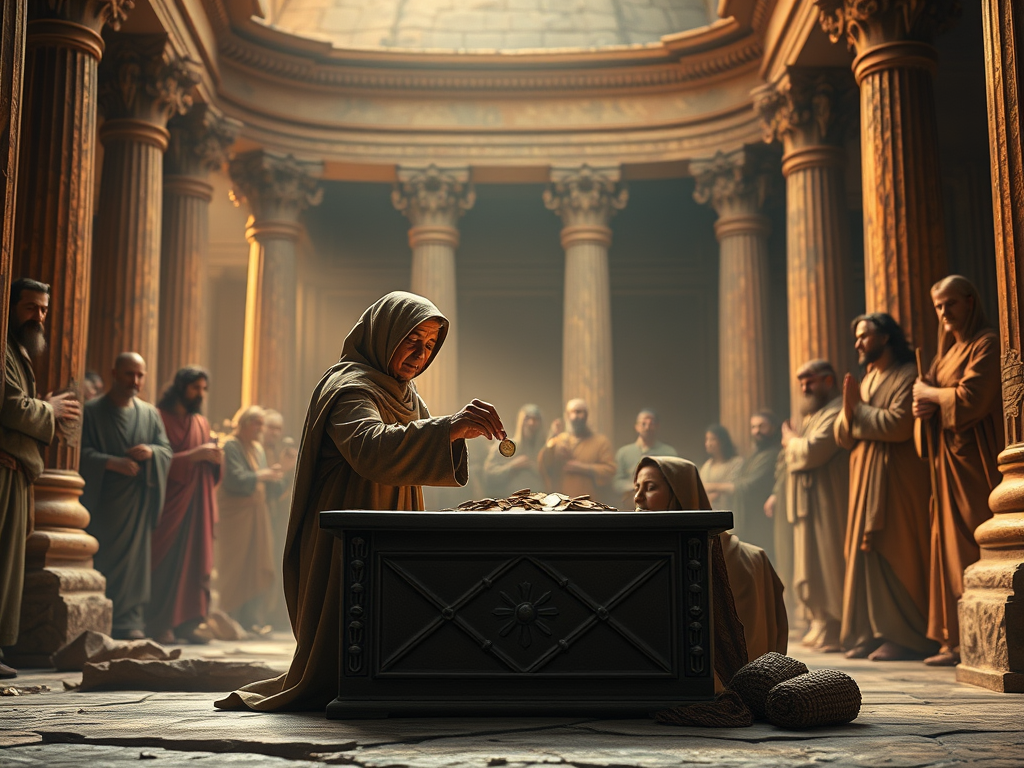
The Bible – New Testament Saint Luke Index 1. 2. 3. 4. 5. 6. 7. 8. 9. 10. 11. 12. 13. 14. 15. 16. 17. 18. 19. 20. 21. 22. 23. 24.  Chapter 21 1 1 When he looked up he saw some wealthy people putting their offerings into the treasury 2 and he noticed a poor widow putting in two small… Continue reading Saint Luke – Chapter 21

Published
Categorised as SAINT LUKE

The Bible – New Testament

Saint Luke

Index

1. 2. 3. 4. 5. 6. 7. 8. 9. 10. 11. 12. 13.
14. 15. 16. 17. 18. 19. 2021. 22. 23. 24. 

Chapter 23

1

1 Then the whole assembly of them arose and brought him before Pilate.

2

They brought charges against him, saying, “We found this man misleading our people; he opposes the payment of taxes to Caesar and maintains that he is the Messiah, a king.”

3

Pilate asked him, “Are you the king of the Jews?” He said to him in reply, “You say so.”

4

Pilate then addressed the chief priests and the crowds, “I find this man not guilty.”

5

But they were adamant and said, “He is inciting the people with his teaching throughout all Judea, from Galilee where he began even to here.”

6

2 On hearing this Pilate asked if the man was a Galilean;

7

and upon learning that he was under Herod’s jurisdiction, he sent him to Herod who was in Jerusalem at that time.

8

Herod was very glad to see Jesus; he had been wanting to see him for a long time, for he had heard about him and had been hoping to see him perform some sign.

9

He questioned him at length, but he gave him no answer.

10

The chief priests and scribes, meanwhile, stood by accusing him harshly.

11

(Even) Herod and his soldiers treated him contemptuously and mocked him, and after clothing him in resplendent garb, he sent him back to Pilate.

12

Herod and Pilate became friends that very day, even though they had been enemies formerly.

13

Pilate then summoned the chief priests, the rulers, and the people

14

and said to them, “You brought this man to me and accused him of inciting the people to revolt. I have conducted my investigation in your presence and have not found this man guilty of the charges you have brought against him,

15

nor did Herod, for he sent him back to us. So no capital crime has been committed by him.

16

Therefore I shall have him flogged and then release him.”

17

3

18

But all together they shouted out, “Away with this man! Release Barabbas to us.”

19

(Now Barabbas had been imprisoned for a rebellion that had taken place in the city and for murder.)

20

Again Pilate addressed them, still wishing to release Jesus,

21

but they continued their shouting, “Crucify him! Crucify him!”

22

Pilate addressed them a third time, “What evil has this man done? I found him guilty of no capital crime. Therefore I shall have him flogged and then release him.”

23

With loud shouts, however, they persisted in calling for his crucifixion, and their voices prevailed.

24

The verdict of Pilate was that their demand should be granted.

25

So he released the man who had been imprisoned for rebellion and murder, for whom they asked, and he handed Jesus over to them to deal with as they wished.

26

4 As they led him away they took hold of a certain Simon, a Cyrenian, who was coming in from the country; and after laying the cross on him, they made him carry it behind Jesus.

27

A large crowd of people followed Jesus, including many women who mourned and lamented him.

28

Jesus turned to them and said, “Daughters of Jerusalem, do not weep for me; weep instead for yourselves and for your children,

29

for indeed, the days are coming when people will say, ‘Blessed are the barren, the wombs that never bore and the breasts that never nursed.’

30

At that time people will say to the mountains, ‘Fall upon us!’ and to the hills, ‘Cover us!’

31

for if these things are done when the wood is green what will happen when it is dry?”

32

Now two others, both criminals, were led away with him to be executed.

33

When they came to the place called the Skull, they crucified him and the criminals there, one on his right, the other on his left.

34

[Then Jesus said, “Father, forgive them, they know not what they do.”] 5 They divided his garments by casting lots.

35

The people stood by and watched; the rulers, meanwhile, sneered at him and said, “He saved others, let him save himself if he is the chosen one, the Messiah of God.”

36

Even the soldiers jeered at him. As they approached to offer him wine

37

they called out, “If you are King of the Jews, save yourself.”

38

Above him there was an inscription that read, “This is the King of the Jews.”

39

6 Now one of the criminals hanging there reviled Jesus, saying, “Are you not the Messiah? Save yourself and us.”

40

The other, however, rebuking him, said in reply, “Have you no fear of God, for you are subject to the same condemnation?

41

And indeed, we have been condemned justly, for the sentence we received corresponds to our crimes, but this man has done nothing criminal.”

42

Then he said, “Jesus, remember me when you come into your kingdom.”

43

He replied to him, “Amen, I say to you, today you will be with me in Paradise.”

44

7 It was now about noon and darkness came over the whole land until three in the afternoon

45

because of an eclipse of the sun. Then the veil of the temple was torn down the middle.

46

Jesus cried out in a loud voice, “Father, into your hands I commend my spirit”; and when he had said this he breathed his last.

47

The centurion who witnessed what had happened glorified God and said, “This man was innocent 8 beyond doubt.”

48

When all the people who had gathered for this spectacle saw what had happened, they returned home beating their breasts;

49

but all his acquaintances stood at a distance, including the women who had followed him from Galilee and saw these events.

50

Now there was a virtuous and righteous man named Joseph who, though he was a member of the council,

51

had not consented to their plan of action. He came from the Jewish town of Arimathea and was awaiting the kingdom of God.

52

He went to Pilate and asked for the body of Jesus.

53

After he had taken the body down, he wrapped it in a linen cloth and laid him in a rock-hewn tomb in which no one had yet been buried.

54

It was the day of preparation, and the sabbath was about to begin.

55

The women who had come from Galilee with him followed behind, and when they had seen the tomb and the way in which his body was laid in it,

56

they returned and prepared spices and perfumed oils. Then they rested on the sabbath according to the commandment.


1 [1-5,13-25] Twice Jesus is brought before Pilate in Luke’s account, and each time Pilate explicitly declares Jesus innocent of any wrongdoing (⇒ Luke 23:4, ⇒ 14, ⇒ 22). This stress on the innocence of Jesus before the Roman authorities is also characteristic of John’s gospel (⇒ John 18:38; ⇒ 19:4, 6). Luke presents the Jerusalem Jewish leaders as the ones who force the hand of the Roman authorities (⇒ Luke 23:1-2, 5, ⇒ 10, ⇒ 13, ⇒ 18, ⇒ 21, ⇒ 23-25).
2 [6-12] The appearance of Jesus before Herod is found only in this gospel. Herod has been an important figure in Luke (⇒ Luke 9:7-9; ⇒ 13:31-33) and has been presented as someone who has been curious about Jesus for a long time. His curiosity goes unrewarded. It is faith in Jesus, not curiosity, that is rewarded (⇒ Luke 7:50; ⇒ 8:48, ⇒ 50; ⇒ 17:19).
3 [17] This verse, “He was obliged to release one prisoner for them at the festival,” is not part of the original text of Luke. It is an explanatory gloss from ⇒ Mark 15:6 (also ⇒ Matthew 27:15) and is not found in many early and important Greek manuscripts. On its historical background, see the notes on ⇒ Matthew 27:15-26.
4 [26-32] An important Lucan theme throughout the gospel has been the need for the Christian disciple to follow in the footsteps of Jesus. Here this theme comes to the fore with the story of Simon of Cyrene who takes up the cross and follows Jesus (see ⇒ Luke 9:23; ⇒ 14:27) and with the large crowd who likewise follow Jesus on the way of the cross. See also the note on ⇒ Mark 15:21.
5 [34] [Then Jesus said, “Father, forgive them, they know not what they do.”]: this portion of ⇒ Luke 23:34 does not occur in the oldest papyrus manuscript of Luke and in other early Greek manuscripts and ancient versions of wide geographical distribution.
6 [39-43] This episode is recounted only in this gospel. The penitent sinner receives salvation through the crucified Jesus. Jesus’ words to the penitent thief reveal Luke’s understanding that the destiny of the Christian is “to be with Jesus.”
7 [44] Noon . . . three in the afternoon: literally, the sixth and ninth hours. See the note on ⇒ Mark 15:25.
8 [47] This man was innocent: or, “This man was righteous.”

The Bible – New Testament

Saint Luke

Index

1. 2. 3. 4. 5. 6. 7. 8. 9. 10. 11. 12. 13.
14. 15. 16. 17. 18. 19. 2021. 22. 23. 24. 

The Bible – New Testament

Saint Luke

Index

1. 2. 3. 4. 5. 6. 7. 8. 9. 10. 11. 12. 13.
14. 15. 16. 17. 18. 19. 2021. 22. 23. 24. 

Chapter 20

1

1 One day as he was teaching the people in the temple area and proclaiming the good news, the chief priests and scribes, together with the elders, approached him

2

and said to him, “Tell us, by what authority are you doing these things? Or who is the one who gave you this authority?”

3

He said to them in reply, “I shall ask you a question. Tell me,

4

was John’s baptism of heavenly or of human origin?”

5

They discussed this among themselves, and said, “If we say, ‘Of heavenly origin,’ he will say, ‘Why did you not believe him?’

6

But if we say, ‘Of human origin,’ then all the people will stone us, for they are convinced that John was a prophet.”

7

So they answered that they did not know from where it came.

8

Then Jesus said to them, “Neither shall I tell you by what authority I do these things.”

9

2 Then he proceeded to tell the people this parable. “(A) man planted a vineyard, leased it to tenant farmers, and then went on a journey for a long time.

10

At harvest time he sent a servant to the tenant farmers to receive some of the produce of the vineyard. But they beat the servant and sent him away empty-handed.

11

So he proceeded to send another servant, but him also they beat and insulted and sent away empty-handed.

12

Then he proceeded to send a third, but this one too they wounded and threw out.

13

The owner of the vineyard said, ‘What shall I do? I shall send my beloved son; maybe they will respect him.’

14

But when the tenant farmers saw him they said to one another, ‘This is the heir. Let us kill him that the inheritance may become ours.’

15

So they threw him out of the vineyard and killed him. 3 What will the owner of the vineyard do to them?

16

He will come and put those tenant farmers to death and turn over the vineyard to others.” When the people heard this, they exclaimed, “Let it not be so!”

17

But he looked at them and asked, “What then does this scripture passage mean: ‘The stone which the builders rejected has become the cornerstone’?

18

Everyone who falls on that stone will be dashed to pieces; and it will crush anyone on whom it falls.”

19

The scribes and chief priests sought to lay their hands on him at that very hour, but they feared the people, for they knew that he had addressed this parable to them.

20

4 They watched him closely and sent agents pretending to be righteous who were to trap him in speech, in order to hand him over to the authority and power of the governor.

21

They posed this question to him, “Teacher, we know that what you say and teach is correct, and you show no partiality, but teach the way of God in accordance with the truth.

22

Is it lawful for us to pay tribute to Caesar or not?” 5

23

Recognizing their craftiness he said to them,

24

“Show me a denarius; 6 whose image and name does it bear?” They replied, “Caesar’s.”

25

So he said to them, “Then repay to Caesar what belongs to Caesar and to God what belongs to God.”

26

They were unable to trap him by something he might say before the people, and so amazed were they at his reply that they fell silent.

27

Some Sadducees, 7 those who deny that there is a resurrection, came forward and put this question to him,

28

8 saying, “Teacher, Moses wrote for us, ‘If someone’s brother dies leaving a wife but no child, his brother must take the wife and raise up descendants for his brother.’

29

Now there were seven brothers; the first married a woman but died childless.

30

Then the second

31

and the third married her, and likewise all the seven died childless.

32

Finally the woman also died.

33

Now at the resurrection whose wife will that woman be? For all seven had been married to her.”

34

Jesus said to them, “The children of this age marry and remarry;

35

but those who are deemed worthy to attain to the coming age and to the resurrection of the dead neither marry nor are given in marriage.

36

They can no longer die, for they are like angels; and they are the children of God because they are the ones who will rise. 9

37

That the dead will rise even Moses made known in the passage about the bush, when he called ‘Lord’ the God of Abraham, the God of Isaac, and the God of Jacob;

38

and he is not God of the dead, but of the living, for to him all are alive.”

39

Some of the scribes said in reply, “Teacher, you have answered well.”

40

And they no longer dared to ask him anything.

41

10 Then he said to them, “How do they claim that the Messiah is the Son of David?

42

For David himself in the Book of Psalms says: ‘The Lord said to my lord, “Sit at my right hand

43

till I make your enemies your footstool.”‘

44

Now if David calls him ‘lord,’ how can he be his son?”

45

Then, within the hearing of all the people, he said to (his) disciples,

46

“Be on guard against the scribes, who like to go around in long robes and love greetings in marketplaces, seats of honor in synagogues, and places of honor at banquets.

47

They devour the houses of widows and, as a pretext, recite lengthy prayers. They will receive a very severe condemnation.”

1 [1-47] The Jerusalem religious leaders or their representatives, in an attempt to incriminate Jesus with the Romans and to discredit him with the people, pose a number of questions to him (about his authority, 2; about payment of taxes,  Luke 20:22; about the resurrection, ⇒ Luke 20:28-33).
2 [9-19] This parable about an absentee landlord and a tenant farmers’ revolt reflects the social and economic conditions of rural Palestine in the first century. The synoptic gospel writers use the parable to describe how the rejection of the landlord’s son becomes the occasion for the vineyard to be taken away from those to whom it was entrusted (the religious leadership of Judaism that rejects the teaching and preaching of Jesus; ⇒ Luke 20:19).
3 [15] They threw him out of the vineyard and killed him: cf ⇒ Mark 12:8. Luke has altered his Marcan source and reports that the murder of the son takes place outside the vineyard to reflect the tradition of Jesus’ death outside the walls of the city of Jerusalem (see ⇒ Hebrews 13:12).
4 [20] The governor: i.e., Pontius Pilate, the Roman administrator responsible for the collection of taxes and maintenance of order in Palestine.
5 [22] Through their question the agents of the Jerusalem religious leadership hope to force Jesus to take sides on one of the sensitive political issues of first-century Palestine. The issue of nonpayment of taxes to Rome becomes one of the focal points of the First Jewish Revolt (A.D. 66-70) that resulted in the Roman destruction of Jerusalem and the temple. See also the note on ⇒ Matthew 22:15-22.
6 [24] Denarius: a Roman silver coin (see the note on ⇒ Luke 7:41).
7 [27] Sadducees: see the note on ⇒ Matthew 3:7.
8 [28-33] The Sadducees’ question, based on the law of levirate marriage recorded in ⇒ Deut 25:5-10, ridicules the idea of the resurrection. Jesus rejects their naive understanding of the resurrection (⇒ Luke 20:35-36) and then argues on behalf of the resurrection of the dead on the basis of the written law (⇒ Luke 20:37-38) that the Sadducees accept. See also the notes on ⇒ Matthew 22:23-33.
9 [36] Because they are the ones who will rise: literally, “being sons of the resurrection.”
10 [41-44] After successfully answering the three questions of his opponents, Jesus now asks them a question. Their inability to respond implies that they have forfeited their position and authority as the religious leaders of the people because they do not understand the scriptures. This series of controversies between the religious leadership of Jerusalem and Jesus reveals Jesus as the authoritative teacher whose words are to be listened to (see ⇒ Luke 9:35). See also the notes on ⇒ Matthew 22:41-46.

The Bible – New Testament

Saint Luke

Index

1. 2. 3. 4. 5. 6. 7. 8. 9. 10. 11. 12. 13.
14. 15. 16. 17. 18. 19. 2021. 22. 23. 24. 

WEB OFICIAL DE FAMILIA MUNDIAL

WEB OFICIAL DE PRINCIPIOS DE ECONOMÍA POLÍTICA

WEB OFICIAL DEL CURSO ONLINE DE ESPAÑOL

WEB OFICIAL CAMINO DE SANTIAGO

WEB OFICIAL BIBLIA Y ORACIONES

The Bible – New Testament

Saint Luke

Index

1. 2. 3. 4. 5. 6. 7. 8. 9. 10. 11. 12. 13.
14. 15. 16. 17. 18. 19. 2021. 22. 23. 24. 

Chapter 19

1

1 He came to Jericho and intended to pass through the town.

2

Now a man there named Zacchaeus, who was a chief tax collector and also a wealthy man,

3

was seeking to see who Jesus was; but he could not see him because of the crowd, for he was short in stature.

4

So he ran ahead and climbed a sycamore tree in order to see Jesus, who was about to pass that way.

5

When he reached the place, Jesus looked up and said to him, “Zacchaeus, come down quickly, for today I must stay at your house.”

6

And he came down quickly and received him with joy.

7

When they all saw this, they began to grumble, saying, “He has gone to stay at the house of a sinner.”

8

But Zacchaeus stood there and said to the Lord, “Behold, half of my possessions, Lord, I shall give to the poor, and if I have extorted anything from anyone I shall repay it four times over.”

9

2 And Jesus said to him, “Today salvation has come to this house because this man too is a descendant of Abraham.

10

3 For the Son of Man has come to seek and to save what was lost.”

11

4 While they were listening to him speak, he proceeded to tell a parable because he was near Jerusalem and they thought that the kingdom of God would appear there immediately.

12

So he said, “A nobleman went off to a distant country to obtain the kingship for himself and then to return.

13

He called ten of his servants and gave them ten gold coins 5 and told them, ‘Engage in trade with these until I return.’

14

His fellow citizens, however, despised him and sent a delegation after him to announce, ‘We do not want this man to be our king.’

15

But when he returned after obtaining the kingship, he had the servants called, to whom he had given the money, to learn what they had gained by trading.

16

The first came forward and said, ‘Sir, your gold coin has earned ten additional ones.’

17

He replied, ‘Well done, good servant! You have been faithful in this very small matter; take charge of ten cities.’

18

Then the second came and reported, ‘Your gold coin, sir, has earned five more.’

19

And to this servant too he said, ‘You, take charge of five cities.’

20

Then the other servant came and said, ‘Sir, here is your gold coin; I kept it stored away in a handkerchief,

21

for I was afraid of you, because you are a demanding person; you take up what you did not lay down and you harvest what you did not plant.’

22

He said to him, ‘With your own words I shall condemn you, you wicked servant. You knew I was a demanding person, taking up what I did not lay down and harvesting what I did not plant;

23

why did you not put my money in a bank? Then on my return I would have collected it with interest.’

24

And to those standing by he said, ‘Take the gold coin from him and give it to the servant who has ten.’

25

But they said to him, ‘Sir, he has ten gold coins.’

26

‘I tell you, to everyone who has, more will be given, but from the one who has not, even what he has will be taken away.

27

Now as for those enemies of mine who did not want me as their king, bring them here and slay them before me.'”

28

6 After he had said this, he proceeded on his journey up to Jerusalem.

29

As he drew near to Bethphage and Bethany at the place called the Mount of Olives, he sent two of his disciples.

30

He said, “Go into the village opposite you, and as you enter it you will find a colt tethered on which no one has ever sat. Untie it and bring it here.

31

And if anyone should ask you, ‘Why are you untying it?’ you will answer, ‘The Master has need of it.'”

32

So those who had been sent went off and found everything just as he had told them.

33

And as they were untying the colt, its owners said to them, “Why are you untying this colt?”

34

They answered, “The Master has need of it.”

35

So they brought it to Jesus, threw their cloaks over the colt, and helped Jesus to mount.

36

As he rode along, the people were spreading their cloaks on the road;

37

and now as he was approaching the slope of the Mount of Olives, the whole multitude of his disciples began to praise God aloud with joy for all the mighty deeds they had seen.

38

They proclaimed: “Blessed is the king who comes in the name of the Lord. 7 Peace in heaven and glory in the highest.”

39

Some of the Pharisees in the crowd said to him, “Teacher, rebuke your disciples.” 8

40

He said in reply, “I tell you, if they keep silent, the stones will cry out!”

41

9 As he drew near, he saw the city and wept over it,

42

saying, “If this day you only knew what makes for peace – but now it is hidden from your eyes.

43

10 For the days are coming upon you when your enemies will raise a palisade against you; they will encircle you and hem you in on all sides.

44

They will smash you to the ground and your children within you, and they will not leave one stone upon another within you because you did not recognize the time of your visitation.”

45

Then Jesus entered the temple area 11 and proceeded to drive out those who were selling things,

46

saying to them, “It is written, ‘My house shall be a house of prayer, but you have made it a den of thieves.'”

47

And every day he was teaching in the temple area. The chief priests, the scribes, and the leaders of the people, meanwhile, were seeking to put him to death,

48

but they could find no way to accomplish their purpose because all the people were hanging on his words.

1 [1-10] The story of the tax collector Zacchaeus is unique to this gospel. While a rich man (⇒ Luke 19:2), Zacchaeus provides a contrast to the rich man of ⇒ Luke 18:18-23 who cannot detach himself from his material possessions to become a follower of Jesus. Zacchaeus, according to Luke, exemplifies the proper attitude toward wealth: he promises to give half of his possessions to the poor (⇒ Luke 19:8) and consequently is the recipient of salvation (⇒ Luke 19:9-10).
2 [9] A descendant of Abraham: literally, “a son of Abraham.” The tax collector Zacchaeus, whose repentance is attested by his determination to amend his former ways, shows himself to be a true descendant of Abraham, the true heir to the promises of God in the Old Testament. Underlying Luke’s depiction of Zacchaeus as a descendant of Abraham, the father of the Jews (⇒ Luke 1:73; ⇒ 16:22-31), is his recognition of the central place occupied by Israel in the plan of salvation.
3 [10] This verse sums up for Luke his depiction of the role of Jesus as savior in this gospel.
4 [11-27] In this parable Luke has combined two originally distinct parables: (1) a parable about the conduct of faithful and productive servants (⇒ Luke 19:13, ⇒ 15b-26) and (2) a parable about a rejected king (⇒ Luke 19:12, ⇒ 14-15a, ⇒ 27). The story about the conduct of servants occurs in another form in ⇒ Matthew 25:14-20. The story about the rejected king may have originated with a contemporary historical event. After the death of Herod the Great, his son Archelaus traveled to Rome to receive the title of king. A delegation of Jews appeared in Rome before Caesar Augustus to oppose the request of Archelaus. Although not given the title of king, Archelaus was made ruler over Judea and Samaria. As the story is used by Luke, however, it furnishes a correction to the expectation of the imminent end of the age and of the establishment of the kingdom in Jerusalem (⇒ Luke 19:11). Jesus is not on his way to Jerusalem to receive the kingly power; for that, he must go away and only after returning from the distant country (a reference to the parousia) will reward and judgment take place.
5 [13] Ten gold coins: literally, “ten minas.” A mina was a monetary unit that in ancient Greece was the equivalent of one hundred drachmas.
6 [⇒ 19:28-⇒ 21:38] With the royal entry of Jesus into Jerusalem, a new section of Luke’s gospel begins, the ministry of Jesus in Jerusalem before his death and resurrection. Luke suggests that this was a lengthy ministry in Jerusalem (⇒ Luke 19:47; ⇒ 20:1; ⇒ 21:37-38; ⇒ 22:53) and it is characterized by Jesus’ daily teaching in the temple (⇒ Luke 21:37-38). For the story of the entry of Jesus into Jerusalem, see also ⇒ Matthew 21:1-11; ⇒ Mark 11:1-10; ⇒ John 12:12-19 and the notes there.
7 [38] Blessed is the king who comes in the name of the Lord: only in Luke is Jesus explicitly given the title king when he enters Jerusalem in triumph. Luke has inserted this title into the words of ⇒ Psalm 118:26 that heralded the arrival of the pilgrims coming to the holy city and to the temple. Jesus is thereby acclaimed as king (see ⇒ Luke 1:32) and as the one who comes (see ⇒ Malachi 3:1; ⇒ Luke 7:19). Peace in heaven . . . : the acclamation of the disciples of Jesus in Luke echoes the announcement of the angels at the birth of Jesus (⇒ Luke 2:14). The peace Jesus brings is associated with the salvation to be accomplished here in Jerusalem.
8 [39] Rebuke your disciples: this command, found only in Luke, was given so that the Roman authorities would not interpret the acclamation of Jesus as king as an uprising against them; cf ⇒ Luke 23:2-3.
9 [41-44] The lament for Jerusalem is found only in Luke. By not accepting Jesus (the one who mediates peace), Jerusalem will not find peace but will become the victim of devastation.
10 [43-44] Luke may be describing the actual disaster that befell Jerusalem in A.D. 70 when it was destroyed by the Romans during the First Revolt.
11 [45-46] Immediately upon entering the holy city, Jesus in a display of his authority enters the temple (see ⇒ Malachi 3:1-3) and lays claim to it after cleansing it that it might become a proper place for his teaching ministry in Jerusalem (⇒ Luke 19:47; ⇒ 20:1; ⇒ 21:37; ⇒ 22:53). See ⇒ Matthew 21:12-17; ⇒ Mark 11:15-19; ⇒ John 2:13-17 and the notes there.

The Bible – New Testament

Saint Luke

Index

1. 2. 3. 4. 5. 6. 7. 8. 9. 10. 11. 12. 13.
14. 15. 16. 17. 18. 19. 2021. 22. 23. 24. 

The Bible – New Testament

Saint Luke

Index

1. 2. 3. 4. 5. 6. 7. 8. 9. 10. 11. 12. 13.
14. 15. 16. 17. 18. 19. 2021. 22. 23. 24. 

Capítulo 18

1

1 Then he told them a parable about the necessity for them to pray always without becoming weary. He said,

2

“There was a judge in a certain town who neither feared God nor respected any human being.

3

And a widow in that town used to come to him and say, ‘Render a just decision for me against my adversary.’

4

For a long time the judge was unwilling, but eventually he thought, ‘While it is true that I neither fear God nor respect any human being,

5

2 because this widow keeps bothering me I shall deliver a just decision for her lest she finally come and strike me.'”

6

The Lord said, “Pay attention to what the dishonest judge says.

7

Will not God then secure the rights of his chosen ones who call out to him day and night? Will he be slow to answer them?

8

I tell you, he will see to it that justice is done for them speedily. But when the Son of Man comes, will he find faith on earth?”

9

He then addressed this parable to those who were convinced of their own righteousness and despised everyone else.

10

“Two people went up to the temple area to pray; one was a Pharisee and the other was a tax collector.

11

The Pharisee took up his position and spoke this prayer to himself, ‘O God, I thank you that I am not like the rest of humanity – greedy, dishonest, adulterous – or even like this tax collector.

12

I fast twice a week, and I pay tithes on my whole income.’

13

But the tax collector stood off at a distance and would not even raise his eyes to heaven but beat his breast and prayed, ‘O God, be merciful to me a sinner.’

14

I tell you, the latter went home justified, not the former; for everyone who exalts himself will be humbled, and the one who humbles himself will be exalted.”

15

3 4 People were bringing even infants to him that he might touch them, and when the disciples saw this, they rebuked them.

16

Jesus, however, called the children to himself and said, “Let the children come to me and do not prevent them; for the kingdom of God belongs to such as these.

17

Amen, I say to you, whoever does not accept the kingdom of God like a child will not enter it.”

18

An official asked him this question, “Good teacher, what must I do to inherit eternal life?”

19

Jesus answered him, “Why do you call me good? No one is good but God alone.

20

You know the commandments, ‘You shall not commit adultery; you shall not kill; you shall not steal; you shall not bear false witness; honor your father and your mother.'”

21

And he replied, “All of these I have observed from my youth.”

22

5 When Jesus heard this he said to him, “There is still one thing left for you: sell all that you have and distribute it to the poor, and you will have a treasure in heaven. Then come, follow me.”

23

But when he heard this he became quite sad, for he was very rich.

24

Jesus looked at him (now sad) and said, “How hard it is for those who have wealth to enter the kingdom of God!

25

For it is easier for a camel to pass through the eye of a needle than for a rich person to enter the kingdom of God.”

26

Those who heard this said, “Then who can be saved?”

27

And he said, “What is impossible for human beings is possible for God.”

28

Then Peter said, “We have given up our possessions and followed you.”

29

He said to them, “Amen, I say to you, there is no one who has given up house or wife or brothers or parents or children for the sake of the kingdom of God

30

who will not receive (back) an overabundant return in this present age and eternal life in the age to come.”

31

6 7 Then he took the Twelve aside and said to them, “Behold, we are going up to Jerusalem and everything written by the prophets about the Son of Man will be fulfilled.

32

He will be handed over to the Gentiles and he will be mocked and insulted and spat upon;

33

and after they have scourged him they will kill him, but on the third day he will rise.”

34

But they understood nothing of this; the word remained hidden from them and they failed to comprehend what he said.

35

Now as he approached Jericho a blind man was sitting by the roadside begging,

36

and hearing a crowd going by, he inquired what was happening.

37

They told him, “Jesus of Nazareth is passing by.”

38

He shouted, “Jesus, Son of David, 8 have pity on me!”

39

The people walking in front rebuked him, telling him to be silent, but he kept calling out all the more, “Son of David, have pity on me!”

40

Then Jesus stopped and ordered that he be brought to him; and when he came near, Jesus asked him,

41

“What do you want me to do for you?” He replied, “Lord, please let me see.”

42

Jesus told him, “Have sight; your faith has saved you.”

43

He immediately received his sight and followed him, giving glory to God. When they saw this, all the people gave praise to God.

1 [1-14] The particularly Lucan material in the travel narrative concludes with two parables on prayer. The first (⇒ Luke 18:1-8) teaches the disciples the need of persistent prayer so that they not fall victims to apostasy (⇒ Luke 18:8). The second (⇒ Luke 18:9-14) condemns the self-righteous, critical attitude of the Pharisee and teaches that the fundamental attitude of the Christian disciple must be the recognition of sinfulness and complete dependence on God’s graciousness. The second parable recalls the story of the pardoning of the sinful woman (⇒ Luke 7:36-50) where a similar contrast is presented between the critical attitude of the Pharisee Simon and the love shown by the pardoned sinner.
2 [5] Strike me: the Greek verb translated as strike means “to strike under the eye” and suggests the extreme situation to which the persistence of the widow might lead. It may, however, be used here in the much weaker sense of “to wear one out.”
3 [⇒ 18:15-⇒ 19:27] Luke here includes much of the material about the journey to Jerusalem found in his Marcan source (⇒ Luke 10:1-52) and adds to it the story of Zacchaeus (⇒ Luke 19:1-10) from his own particular tradition and the parable of the gold coins (minas) (⇒ Luke 19:11-27) from Q, the source common to Luke and Matthew.
4 [15-17] The sayings on children furnish a contrast to the attitude of the Pharisee in the preceding episode (⇒ Luke 18:9-14) and that of the wealthy official in the following one (⇒ Luke 18:18-23) who think that they can lay claim to God’s favor by their own merit. The attitude of the disciple should be marked by the receptivity and trustful dependence characteristic of the child.
5 [22] Detachment from material possessions results in the total dependence on God demanded of one who would inherit eternal life. Sell all that you have: the original saying (cf ⇒ Mark 10:21) has characteristically been made more demanding by Luke’s addition of “all.”
6 [31-33] The details included in this third announcement of Jesus’ suffering and death suggest that the literary formulation of the announcement has been directed by the knowledge of the historical passion and death of Jesus.
7 [31] Everything written by the prophets . . . will be fulfilled: this is a Lucan addition to the words of Jesus found in the Marcan source (⇒ Mark 10:32-34). Luke understands the events of Jesus’ last days in Jerusalem to be the fulfillment of Old Testament prophecy, but, as is usually the case in Luke-Acts, the author does not specify which Old Testament prophets he has in mind; cf ⇒ Luke 24:25, ⇒ 27, ⇒ 44; ⇒ Acts 3:8; ⇒ 13:27; ⇒ 26:22-23.
8 [38] Son of David: the blind beggar identifies Jesus with a title that is related to Jesus’ role as Messiah (see the note on ⇒ Luke 2:11). Through this Son of David, salvation comes to the blind man. Note the connection between salvation and house of David mentioned earlier in Zechariah’s canticle (⇒ Luke 1:69). See also the note on ⇒ Matthew 9:27.

The Bible – New Testament

Saint Luke

Index

1. 2. 3. 4. 5. 6. 7. 8. 9.

10. 11. 12. 13. 14. 15. 16.

17. 18. 19. 2021. 22. 23. 24. 

OLD TESTAMENT

PSALMS


.

.

THE GOSPELS

MATTHEW – MARK 

LUKE – JOHN

NEW TESTAMENT

Saint Luke – Chapter 18

The Bible – New Testament Saint Luke Chapter 18 1 1 Then he told them a parable about the necessity for them to pray always without becoming weary. He said, 2 “There was a judge in a certain town who neither feared God nor respected any human being. 3 And a widow in that town used… Continue reading Saint Luke – Chapter 18

Published
Categorised as SAINT LUKE

Saint Luke – Chapter 12

The Bible – New Testament Saint Luke Chapter 12 1 1 Meanwhile, so many people were crowding together that they were trampling one another underfoot. He began to speak, first to his disciples, “Beware of the leaven – that is, the hypocrisy – of the Pharisees. 2 2 “There is nothing concealed that will not be revealed,… Continue reading Saint Luke – Chapter 12

error: Content is protected !!