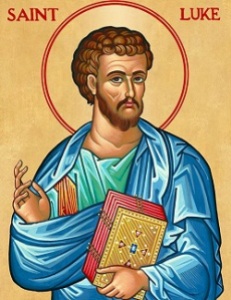
The Bible – New Testament

2 Timothy

Index

1. 2. 3. 4.

2 Timothy

Chapter 4

1

1 I charge you in the presence of God and of Christ Jesus, who willjudge the living and the dead, and by his appearing and his kingly power:

2

proclaim the word; be persistent whether it is convenient or inconvenient; convince, reprimand, encourage through all patience and teaching.

3

For the time will come when people will not tolerate sound doctrine but, following their own desires and insatiable curiosity, 2 will accumulate teachers

4

and will stop listening to the truth and will be diverted to myths.

5

But you, be self-possessed in all circumstances; put up with hardship; perform the work of an evangelist; fulfill your ministry.

6

3 For I am already being poured out like a libation, and the time of my departure is at hand.

7

4 I have competed well; I have finished the race; I have kept the faith.

8

5 From now on the crown of righteousness awaits me, which the Lord, the just judge, will award to me on that day, and not only to me, but to all who have longed for his appearance.

9

6 Try to join me soon,

10

for Demas, enamored of the present world, deserted me and went to Thessalonica, Crescens to Galatia, 7 and Titus to Dalmatia.

11

Luke is the only one with me. Get Mark and bring him with you, for he is helpful to me in the ministry.

12

I have sent Tychicus to Ephesus.

13

When you come, bring the cloak I left with Carpus in Troas, the papyrus rolls, and especially the parchments.

14

Alexander 8 the coppersmith did me a great deal of harm; the Lord will repay him according to his deeds.

15

You too be on guard against him, for he has strongly resisted our preaching.

16

At my first defense no one appeared on my behalf, but everyone deserted me. May it not be held against them!

17

But the Lord stood by me and gave me strength, so that through me the proclamation might be completed and all the Gentiles might hear it. And I was rescued from the lion’s mouth.

18

The Lord will rescue me from every evil threat and will bring me safe to his heavenly kingdom. To him be glory forever and ever. Amen.

19

Greet Prisca and Aquila 9 and the family of Onesiphorus.

20

Erastus 10 remained in Corinth, while I left Trophimus sick at Miletus.

21

Try to get here before winter. Eubulus, Pudens, Linus, 11 Claudia, and all the brothers send greetings.

22

The Lord be with your spirit. Grace be with all of you.

1 [1-5] The gravity of the obligation incumbent on Timothy to preach the word can be gauged from the solemn adjuration: in the presence of God, and of Christ coming as universal judge, and by his appearance and his kingly power (⇒ 2 Tim 4:1). Patience, courage, constancy, and endurance are required despite the opposition, hostility, indifference, and defection of many to whom the truth has been preached (⇒ 2 Tim 4:2-5).
2 [3] Insatiable curiosity: literally, “with itching ears.”
3 [6] The apostle recognizes his death through martyrdom to be imminent. He regards it as an act of worship in which his blood will be poured out in sacrifice; cf ⇒ Exodus 29:38-40; ⇒ Philippians 2:17.
4 [7] At the close of his life Paul could testify to the accomplishment of what Christ himself foretold concerning him at the time of his conversion, “I will show him what he will have to suffer for my name” (⇒ Acts 9:16).
5 [8] When the world is judged at the parousia, all who have eagerly looked for the Lord’s appearing and have sought to live according to his teachings will be rewarded. The crown is a reference to the laurel wreath placed on the heads of victorious athletes and conquerors in war; cf ⇒ 2 Tim 2:5; ⇒ 1 Cor 9:25.
6 [9-13] Demas either abandoned the work of the ministry for worldly affairs or, perhaps, gave up the faith itself (⇒ 2 Tim 4:10). Luke (⇒ 2 Tim 4:11) may have accompanied Paul on parts of his second and third missionary journeys (⇒ Acts 16:10-12; ⇒ 20:5-7). Notice the presence of the first personal pronoun “we” in these Acts passages, suggesting to some that Luke (or at least some traveling companion of Paul’s) was the author of Acts. Mark, once rejected by Paul (⇒ Acts 13:13; ⇒ 15:39), is now to render him a great service (⇒ 2 Tim 4:11); cf ⇒ Col 4:10; ⇒ Philemon 1:24. For Tychicus, see ⇒ Eph 6:21; cf also ⇒ Acts 20:4; ⇒ Col 4:7.
7 [10] Galatia: some manuscripts read “Gaul” or “Gallia.”
8 [14-18] Alexander: an opponent of Paul’s preaching (⇒ 2 Tim 4:14-15), perhaps the one who is mentioned in ⇒ 1 Tim 1:20. Despite Paul’s abandonment by his friends in the province of Asia (cf ⇒ 2 Tim 1:15-16), the divine assistance brought this first trial to a successful issue, even to the point of making the gospel message known to those who participated in or witnessed the trial (⇒ 2 Tim 4:16-17).
9 [19] Prisca and Aquila: they assisted Paul in his ministry in Corinth (⇒ Acts 18:2-3) and Ephesus (⇒ Acts 18:19, ⇒ 26; ⇒ 1 Cor 16:19). They risked death to save his life, and all the Gentile communities are indebted to them (⇒ Romans 16:3-5).
10 [20] Erastus: he was the treasurer of the city of Corinth (⇒ Romans 16:24); cf also ⇒ Acts 19:22. Trophimus: from the province of Asia, he accompanied Paul from Greece to Troas (⇒ Acts 20:4-5).
11 [21] Linus: Western tradition sometimes identified this Linus with the supposed successor of Peter as bishop of Rome, and Claudia as the mother of Linus (Apostolic Constitutions, fourth century).

Index

1. 2. 3. 4.

The Bible – New Testament

Saint Luke

Chapter 11

1

1 2 He was praying in a certain place, and when he had finished, one of his disciples said to him, “Lord, teach us to pray just as John taught his disciples.”

2

3 He said to them, “When you pray, say: Father, hallowed be your name, your kingdom come.

3

Give us each day our daily bread 4

4

and forgive us our sins for we ourselves forgive everyone in debt to us, and do not subject us to the final test.”

5

And he said to them, “Suppose one of you has a friend to whom he goes at midnight and says, ‘Friend, lend me three loaves of bread,

6

for a friend of mine has arrived at my house from a journey and I have nothing to offer him,’

7

and he says in reply from within, ‘Do not bother me; the door has already been locked and my children and I are already in bed. I cannot get up to give you anything.’

8

I tell you, if he does not get up to give him the loaves because of their friendship, he will get up to give him whatever he needs because of his persistence.

9

“And I tell you, ask and you will receive; seek and you will find; knock and the door will be opened to you.

10

For everyone who asks, receives; and the one who seeks, finds; and to the one who knocks, the door will be opened.

11

What father among you would hand his son a snake when he asks for a fish?

12

Or hand him a scorpion when he asks for an egg?

13

If you then, who are wicked, know how to give good gifts to your children, how much more will the Father in heaven give the holy Spirit 5 to those who ask him?”

14

He was driving out a demon (that was) mute, and when the demon had gone out, the mute person spoke and the crowds were amazed.

15

Some of them said, “By the power of Beelzebul, the prince of demons, he drives out demons.”

16

Others, to test him, asked him for a sign from heaven.

17

But he knew their thoughts and said to them, “Every kingdom divided against itself will be laid waste and house will fall against house.

18

And if Satan is divided against himself, how will his kingdom stand? For you say that it is by Beelzebul that I drive out demons.

19

If I, then, drive out demons by Beelzebul, by whom do your own people 6 drive them out? Therefore they will be your judges.

20

But if it is by the finger of God that (I) drive out demons, then the kingdom of God has come upon you.

21

When a strong man fully armed guards his palace, his possessions are safe.

22

But when one stronger 7 than he attacks and overcomes him, he takes away the armor on which he relied and distributes the spoils.

23

Whoever is not with me is against me, and whoever does not gather with me scatters.

24

“When an unclean spirit goes out of someone, it roams through arid regions searching for rest but, finding none, it says, ‘I shall return to my home from which I came.’

25

But upon returning, it finds it swept clean and put in order.

26

Then it goes and brings back seven other spirits more wicked than itself who move in and dwell there, and the last condition of that person is worse than the first.”

27

8 While he was speaking, a woman from the crowd called out and said to him, “Blessed is the womb that carried you and the breasts at which you nursed.”

28

He replied, “Rather, blessed are those who hear the word of God and observe it.”

29

9 While still more people gathered in the crowd, he said to them, “This generation is an evil generation; it seeks a sign, but no sign will be given it, except the sign of Jonah.

30

Just as Jonah became a sign to the Ninevites, so will the Son of Man be to this generation.

31

At the judgment the queen of the south will rise with the men of this generation and she will condemn them, because she came from the ends of the earth to hear the wisdom of Solomon, and there is something greater than Solomon here.

32

At the judgment the men of Nineveh will arise with this generation and condemn it, because at the preaching of Jonah they repented, and there is something greater than Jonah here.

33

“No one who lights a lamp hides it away or places it (under a bushel basket), but on a lampstand so that those who enter might see the light.

34

The lamp of the body is your eye. When your eye is sound, then your whole body is filled with light, but when it is bad, then your body is in darkness.

35

Take care, then, that the light in you not become darkness.

36

If your whole body is full of light, and no part of it is in darkness, then it will be as full of light as a lamp illuminating you with its brightness.”

37

10 After he had spoken, a Pharisee invited him to dine at his home. He entered and reclined at table to eat.

38

The Pharisee was amazed to see that he did not observe the prescribed washing before the meal.

39

The Lord said to him, “Oh you Pharisees! Although you cleanse the outside of the cup and the dish, inside you are filled with plunder and evil.

40

You fools! Did not the maker of the outside also make the inside?

41

But as to what is within, give alms, and behold, everything will be clean for you.

42

Woe to you Pharisees! You pay tithes of mint and of rue and of every garden herb, but you pay no attention to judgment and to love for God. These you should have done, without overlooking the others.

43

Woe to you Pharisees! You love the seat of honor in synagogues and greetings in marketplaces.

44

Woe to you! You are like unseen graves 11 over which people unknowingly walk.”

45

Then one of the scholars of the law 12 said to him in reply, “Teacher, by saying this you are insulting us too.”

46

And he said, “Woe also to you scholars of the law! You impose on people burdens hard to carry, but you yourselves do not lift one finger to touch them.

47

Woe to you! You build the memorials of the prophets whom your ancestors killed.

48

Consequently, you bear witness and give consent to the deeds of your ancestors, for they killed them and you do the building.

49

Therefore, the wisdom of God said, ‘I will send to them prophets and apostles; 13 some of them they will kill and persecute’

50

in order that this generation might be charged with the blood of all the prophets shed since the foundation of the world,

51

from the blood of Abel to the blood of Zechariah 14 who died between the altar and the temple building. Yes, I tell you, this generation will be charged with their blood!

52

Woe to you, scholars of the law! You have taken away the key of knowledge. You yourselves did not enter and you stopped those trying to enter.”

53

When he left, the scribes and Pharisees began to act with hostility toward him and to interrogate him about many things,

54

for they were plotting to catch him at something he might say.

1 [1-13] Luke presents three episodes concerned with prayer. The first ( Luke 11:1-4) recounts Jesus teaching his disciples the Christian communal prayer, the “Our Father”; the second ( Luke 11:5-8), the importance of persistence in prayer; the third ( Luke 11:9-13), the effectiveness of prayer.
2 [1-4] The Matthean form of the “Our Father” occurs in the “Sermon on the Mount” (⇒ Matthew 6:9-15); the shorter Lucan version is presented while Jesus is at prayer (see the note on ⇒ Luke 3:21) and his disciples ask him to teach them to pray just as John taught his disciples to pray. In answer to their question, Jesus presents them with an example of a Christian communal prayer that stresses the fatherhood of God and acknowledges him as the one to whom the Christian disciple owes daily sustenance (⇒ Luke 11:3), forgiveness (⇒ Luke 11:4), and deliverance from the final trial (⇒ Luke 11:4). See also the notes on ⇒ Matthew 6:9-13.
3 [2] Your kingdom come: in place of this petition, some early church Fathers record: “May your holy Spirit come upon us and cleanse us,” a petition that may reflect the use of the “Our Father” in a baptismal liturgy.
4 [3-4] Daily bread: see the note on ⇒ Matthew 6:11. The final test: see the note on ⇒ Matthew 6:13.
5 [13] The holy Spirit: this is a Lucan editorial alteration of a traditional saying of Jesus (see ⇒ Matthew 7:11). Luke presents the gift of the holy Spirit as the response of the Father to the prayer of the Christian disciple.
6 [19] Your own people: the Greek reads “your sons.” Other Jewish exorcists (see ⇒ Acts 19:13-20), who recognize that the power of God is active in the exorcism, would themselves convict the accusers of Jesus. See also the note on ⇒ Matthew 12:27.
7 [22] One stronger: i.e., Jesus. Cf ⇒ Luke 3:16 where John the Baptist identifies Jesus as “more powerful than I.”
8 [27-28] The beatitude in ⇒ Luke 11:28 should not be interpreted as a rebuke of the mother of Jesus; see the note on ⇒ Luke 8:21. Rather, it emphasizes (like ⇒ Luke 2:35) that attentiveness to God’s word is more important than biological relationship to Jesus.
9 [29-32] The “sign of Jonah” in Luke is the preaching of the need for repentance by a prophet who comes from afar. Cf ⇒ Matthew 12:38-42 (and see the notes there) where the “sign of Jonah” is interpreted by Jesus as his death and resurrection.
10 [37-54] This denunciation of the Pharisees (⇒ Luke 11:39-44) and the scholars of the law (⇒ Luke 11:45-52) is set by Luke in the context of Jesus’ dining at the home of a Pharisee. Controversies with or reprimands of Pharisees are regularly set by Luke within the context of Jesus’ eating with Pharisees (see ⇒ Luke 5:29-39; ⇒ 7:36-50; ⇒ 14:1-24). A different compilation of similar sayings is found in Matthew 23 (see also the notes there).
11 [44] Unseen graves: contact with the dead or with human bones or graves (see ⇒ Numbers 19:16) brought ritual impurity. Jesus presents the Pharisees as those who insidiously lead others astray through their seeming attention to the law.
12 [45] Scholars of the law: see the note on ⇒ Luke 10:25.
13 [49] I will send to them prophets and apostles: Jesus connects the mission of the church (apostles) with the mission of the Old Testament prophets who often suffered the rebuke of their contemporaries.
14 [51] From the blood of Abel to the blood of Zechariah: the murder of Abel is the first murder recounted in the Old Testament (⇒ Genesis 4:8). The Zechariah mentioned here may be the Zechariah whose murder is recounted in ⇒ 2 Chron 24:20-22, the last murder presented in the Hebrew canon of the Old Testament.

The Bible – New Testament

Ephesians

Index

1. 2. 3. 4. 5. 6.

Chapter 1

1

1 Paul, an apostle of Christ Jesus by the will of God, to the holy ones who are (in Ephesus) 2 faithful in Christ Jesus:

2

grace to you and peace from God our Father and the Lord Jesus Christ.

3

3 Blessed be the God and Father of our Lord Jesus Christ, who has blessed us in Christ with every spiritual blessing in the heavens, 4

4

as he chose us in him, before the foundation of the world, to be holy and without blemish before him. In love

5

he destined us for adoption to himself through Jesus Christ, in accord with the favor of his will,

6

for the praise of the glory of his grace that he granted us in the beloved.

7

In him we have redemption by his blood, the forgiveness of transgressions, in accord with the riches of his grace

8

that he lavished upon us. In all wisdom and insight,

9

he has made known to us the mystery 5 of his will in accord with his favor that he set forth in him

10

as a plan for the fullness of times, to sum up all things in Christ, in heaven and on earth.

11

In him we were also chosen, destined in accord with the purpose of the one who accomplishes all things according to the intention of his will,

12

so that we might exist for the praise of his glory, we who first hoped 6 in Christ.

13

In him you also, who have heard the word of truth, the gospel of your salvation, and have believed in him, were sealed 7 with the promised holy Spirit,

14

which is the first installment 8 of our inheritance toward redemption as God’s possession, to the praise of his glory.

15

9 Therefore, I, too, hearing of your faith in the Lord Jesus and of your love 10 for all the holy ones,

16

do not cease giving thanks for you, remembering you in my prayers,

17

that the God of our Lord Jesus Christ, the Father of glory, may give you a spirit of wisdom and revelation resulting in knowledge of him.

18

May the eyes of (your) hearts be enlightened, that you may know what is the hope that belongs to his call, what are the riches of glory in his inheritance among the holy ones,

19

and what is the surpassing greatness of his power for us who believe, in accord with the exercise of his great might,

20

which he worked in Christ, raising him from the dead and seating him at his right hand in the heavens,

21

far above every principality, authority, power, and dominion, and every name that is named not only in this age but also in the one to come.

22

And he put all things beneath his feet and gave him as head over all things to the church,

23

which is his body, 11 the fullness of the one who fills all things in every way.

1 [1-2] For the epistolary form used at the beginning of letters, see the note on  Romans 1:1-7. Twenty-two of the thirty Greek words in  Eph 1:1-2 also occur in  Col 1:1-2.
2 [1] [In Ephesus]: the phrase is lacking in important early witnesses such as P46 (3rd cent.), and Sinaiticus and Vaticanus (4th cent.), appearing in the latter two as a fifth-century addition. Basil and Origen mention its absence from manuscripts. See Introduction. Without the phrase, the Greek can be rendered, as in ⇒ Col 1:2, “to the holy ones and faithful brothers in Christ.”
3 [3-14] While a Pauline letter usually continues after the greeting with a prayer of thanksgiving, as in ⇒ Eph 1:15-23 below, Ephesians first inserts a blessing of God for the blessings Christians have experienced, as in ⇒ 2 Cor 1:3-4 and ⇒ 1 Peter 1:3-12. The blessing here, akin to a Jewish berakah, is rich in images almost certainly drawn from hymns and liturgy. Many ideas here are also found in ⇒ Col 1:3-23. Certain phrases are frequently repeated, such as in Christ (⇒ Eph 1:3, ⇒ 10, ⇒ 12) or in him (⇒ Eph 1:4, 7, 9, ⇒ 11, ⇒ 13) or in the Beloved (⇒ Eph 1:6) and (for) the praise of (his) glory (⇒ Eph 1:6, ⇒ 12, ⇒ 14). Some terms like chose (⇒ Eph 1:4) and destined (⇒ Eph 1:5) reflect Old Testament theology (⇒ Deut 7:7; ⇒ 9:4-6; ⇒ 23:5) or Pauline themes (redemption, ⇒ Eph 1:7, ⇒ 14; grace, ⇒ Eph 1:6, 7) or specific emphases in Col (forgiveness, ⇒ Col 1:14). A triadic structure is discernible in ⇒ Eph 1:3-14: God the Father (⇒ Eph 1:3-6, 8, ⇒ 11), Christ (⇒ Eph 1:3, 5, ⇒ 7-10, ⇒ 12), and the Spirit (⇒ Eph 1:13-14). The spiritual blessings Christians have received through Christ (⇒ Eph 1:3) are gratefully enumerated: the call to holiness (⇒ Eph 1:4; cf ⇒ Col 1:22); the gift of divine adoption establishing a unique spiritual relationship with God the Father through Christ (⇒ Eph 1:5; cf ⇒ Gal 4:5); liberation from sin through Christ’s sacrificial death (⇒ Eph 1:7); revelation of God’s plan of salvation in Christ (⇒ Eph 1:9; cf ⇒ Eph 3:3-4; ⇒ Romans 16:25); the gift of election and faith in Christ bestowed upon Jewish Christians (see the note on ⇒ Eph 1:12, we who first hoped in Christ); and finally, the same gift granted to Gentiles (⇒ Eph 1:13, you also). In the Christ-centered faith and existence of the Christian communities the apostle sees the predetermined plan of God to bring all creation under the final rule of Christ (⇒ Eph 1:4-5, ⇒ 9-10) being made known (⇒ Eph 1:9) and carried through, to God’s glory (⇒ Eph 1:6, ⇒ 12, ⇒ 14).
4 [3] In the heavens: literally, “in the heavenlies” or “in the heavenly places,” a term in Eph for the divine realm.
5 [9] Mystery: as in ⇒ Romans 16:25; ⇒ Col 1:26, ⇒ 27 and elsewhere, a secret of God now revealed in the plan to save and sum up all things in Christ (⇒ Eph 1:10); cf ⇒ Eph 3:3-6.
6 [12] We who first hoped: probably Jewish Christians (contrast ⇒ Eph 1:13, you, the Gentiles); possibly the people of Israel, “we who already enjoyed the hope of Christ,” or perhaps present hope in contrast to future redemption (cf ⇒ Eph 1:14).
7 [13] Sealed: by God, in baptism; cf ⇒ Eph 4:30; ⇒ 2 Cor 1:22.
8 [14] First installment: down payment by God on full salvation, as at ⇒ 2 Cor 1:22.
9 [15-23] See the note on ⇒ Romans 1:8 for the thanksgiving form in a letter. Much of the content parallels thoughts in ⇒ Col 1:3-20. The prayer moves from God and Christ (⇒ Eph 1:17, ⇒ 20-21) to the Ephesians (⇒ Eph 1:17-19) and the church (⇒ Eph 1:22-23). Paul asks that the blessing imparted by God the Father (⇒ Eph 1:3) to the Ephesians will be strengthened in them through the message of the gospel (⇒ Eph 1:13, ⇒ 17-19). Those blessings are seen in the context of God’s might in establishing the sovereignty of Christ over all other creatures (⇒ Eph 1:19-21) and in appointing him head of the church (⇒ Eph 1:22-23). For the allusion to angelic spirits in ⇒ Eph 1:21, see ⇒ Romans 8:38 and ⇒ Col 1:16. Here, as in ⇒ 1 Cor 15:24-25 and ⇒ Col 2:15, every such principality and power is made subject to Christ.
10 [15] Your faith . . . your love: some manuscripts omit the latter phrase, but cf ⇒ Col 1:4.
11 [23] His body: the church (⇒ Eph 1:22); cf the note on ⇒ Col 1:18. Only in Eph and Col is Christ the head of the body, in contrast to the view in 1 Cor 12 and ⇒ Romans 12:4-8 where Christ is equated with the entire body or community. Fullness: see the note on ⇒ Col 1:19. Some take the one who fills as God, others as Christ (cf ⇒ Eph 4:10). If in Christ “dwells the fullness of the deity bodily” (⇒ Col 2:9), then, as God “fills” Christ, Christ in turn fills the church and the believer (⇒ Eph 3:19; ⇒ 5:18). But the difficult phrases here may also allow the church to be viewed as the “complement” of Christ who is “being filled” as God’s plan for the universe is carried out through the church (cf ⇒ Eph 3:9-10).

Index

1. 2. 3. 4. 5. 6.

The Bible – Old Testament

 1 Chronicles

Index

1. 2. 3. 4. 5. 6. 7. 8. 9. 10. 11. 12. 13. 14. 15. 16.

17. 18. 19. 20. 21. 22. 23. 24. 25. 26. 27. 28. 29.

1 Chronicles

Chapter 26

1

As for the classes of gatekeepers. Of the Korahites was Meshelemiah, the son of Kore, one of the sons of Abiasaph.

2

Meshelemiah’s sons: Zechariah, the first-born, Jediael, the second son, Zebadiah, the third, Jathniel, the fourth,

3

Elam, the fifth, Jehohanan, the sixth, Eliehoenai, the seventh.

4

Obed-edom’s sons: Shemaiah, the first-born, Jehozabad, a second son, Joah, the third, Sachar, the fourth, Nethanel, the fifth,

5

Ammiel, the sixth, Issachar, the seventh, Peullethai, the eighth, for God blessed him.

6

To his son Shemaiah were born sons who ruled over their family, for they were warriors.

7

The sons of Shemaiah were Othni, Rephael, Obed, and Elzabad; also his brethren who were men of might, Elihu and Semachiah.

8

All these were the sons of Obed-edom, who, together with their sons and their brethren, were mighty men, fit for the service. Of Obed-edom, sixty-two.

9

Of Meshelemiah, eighteen sons and brethren, mighty men.

10

Hosah, a descendant of Merari, had these sons: Shimri, the chief (for though he was not the first-born, his father made him chief),

11

Hilkiah, the second son, Tebaliah, the third, Zechariah, the fourth. All the sons and brethren of Hosah were thirteen.

12

To these classes of gatekeepers, under their chief men, were assigned watches in the service of the house of the LORD, for each group in the same way.

13

They cast lots for each gate, the small and the large families alike.

14

When the lot was cast for the east side, it fell to Meshelemiah. Then they cast lots for his son Zechariah, a prudent counselor, and the north side fell to his lot.

15

To Obed-edom fell the south side, and to his sons the storehouse.

16

To Hosah fell the west side with the Shallecheth gate at the ascending highway. For each family, watches were established.

17

On the east, six watched each day, on the north, four each day, on the south, four each day, and at the storehouse they were two and two;

18

1 as for the large building on the west, there were four at the highway and two at the large building.

19

These were the classes of the gatekeepers, descendants of Kore and Merari.

20

Their brother Levites superintended the stores for the house of God and the stores of votive offerings.

21

Among the descendants of Ladan the Gershonite, the family heads were descendants of Jehiel: the descendants of Jehiel,

22

Zetham and his brother Joel, who superintended the treasures of the house of the LORD.

23

From the Amramites, Izharites, Hebronites, and Uzzielites,

24

Shubael, son of Gershon, son of Moses, was chief superintendent over the treasures.

25

His associate pertained to Eliezer, whose son was Rehabiah, whose son was Jeshaiah, whose son was Joram, whose son was Zichri, whose son was Shelomith.

26

This Shelomith and his brethren superintended all the stores of the votive offerings dedicated by King David, the heads of the families, the commanders of thousands and of hundreds, and the commanders of the army,

27

from the booty they had taken in the wars, for the enhancement of the house of the LORD.

28

Also, whatever Samuel the seer, Saul, son of Kish, Abner, son of Ner, Joab, son of Zeruiah, and all others had consecrated, was under the charge of Shelomith and his brethren.

29

Among the Izharites, Chenaniah and his sons were in charge of Israel’s civil affairs as officials and judges.

30

Among the Hebronites, Hashabiah and his brethren, one thousand seven hundred police officers, had the administration of Israel on the western side of the Jordan in all the work of the LORD and in the service of the king.

31

Among the Hebronites, Jerijah was their chief according to their family records. In the fortieth year of David’s reign search was made, and there were found among them outstanding officers at Jazer of Gilead.

32

His brethren were also police officers, two thousand seven hundred heads of families. King David appointed them to the administration of the Reubenites, the Gadites, and the half-tribe of Manasseh in everything pertaining to God and to the king.


1 [18] The large building (in the Hebrew text Parbar): see note on ⇒ 2 Kings 23:11.


Index

1. 2. 3. 4. 5. 6. 7. 8. 9.

10. 11. 12. 13. 14. 15.

16. 17. 18. 19. 20. 21. 22.

23. 24. 25. 26. 27. 28. 29.


The Bible – Old Testament

 1 Chronicles

Index

1. 2. 3. 4. 5. 6. 7. 8. 9. 10. 11. 12. 13. 14. 15. 16.

17. 18. 19. 20. 21. 22. 23. 24. 25. 26. 27. 28. 29.

1 Chronicles

Chapter 15

1

David built houses for himself in the City of David and prepared a place for the ark of God, pitching a tent for it there.

2

At that time he said, “No one may carry the ark of God except the Levites, for the LORD chose them to carry the ark of the LORD and to minister to him forever.”

3

Then David assembled all Israel in Jerusalem to bring the ark of the LORD to the place which he had prepared for it.

4

David also called together the sons of Aaron and the Levites:

5

of the sons of Kohath, Uriel, their chief, and one hundred and twenty of his brethren;

6

of the sons of Merari, Asaiah, their chief, and two hundred and twenty of his brethren;

7

of the sons of Gershon, Joel, their chief, and one hundred and thirty of his brethren;

8

of the sons of Elizaphan, Shemaiah, their chief, and two hundred of his brethren;

9

of the sons of Hebron, Eliel, their chief, and eighty of his brethren;

10

of the sons of Uzziel, Amminadab, their chief, and one hundred and twelve of his brethren.

11

David summoned the priests Zadok and Abiathar, and the Levites Uriel, Asaiah, Joel, Shemaiah, Eliel, and Amminadab,

12

and said to them: “You, the heads of the levitical families, must sanctify yourselves along with your brethren and bring the ark of the LORD, the God of Israel, to the place which I have prepared for it.

13

Because you were not with us the first time, the wrath of the LORD our God burst upon us, for we did not seek him aright.”

14

Accordingly, the priests and the Levites sanctified themselves to bring up the ark of the LORD, the God of Israel.

15

The Levites bore the ark of God on their shoulders with poles, as Moses had ordained according to the word of the LORD.

16

David commanded the chiefs of the Levites to appoint their brethren as chanters, to play on musical instruments, harps, lyres, and cymbals, to make a loud sound of rejoicing.

17

Therefore the Levites appointed Heman, son of Joel, and, among his brethren, Asaph, son of Berechiah; and among the sons of Merari, their brethren, Ethan, son of Kushaiah;

18

and, together with these, their brethren of the second rank: the gatekeepers Zechariah, Uzziel, Shemiramoth, Jehiel, Unni, Eliab, Benaiah, Maaseiah, Mattithiah, Eliphelehu, Mikneiah, Obed-edom, and Jeiel.

19

The chanters, Heman, Asaph, and Ethan, sounded brass cymbals.

20

1 Zechariah, Uzziel, Shemiramoth, Jehiel, Unni, Eliab, Maaseiah, and Benaiah played on harps set to “Alamoth.”

21

But Mattithiah, Eliphelehu, Mikneiah, Obed-edom, and Jeiel led the chant on lyres set to “the eighth.”

22

Chenaniah was the chief of the Levites in the chanting; he directed the chanting, for he was skillful.

23

Berechiah and Elkanah were gatekeepers before the ark.

24

The priests, Shebaniah, Joshaphat, Nethanel, Amasai, Zechariah, Benaiah, and Eliezer, sounded the trumpets before the ark of God. Obed-edom and Jeiel were also gatekeepers before the ark.

25

Thus David, the elders of Israel, and the commanders of thousands went to bring up the ark of the covenant of the LORD with joy from the house of Obed-edom.

26

While the Levites, with God’s help, were bearing the ark of the covenant of the LORD, seven bulls and seven rams were sacrificed.

27

David was clothed in a robe of fine linen, as were all the Levites who carried the ark, the singers, and Chenaniah, the leader of the chant; David was also wearing a linen ephod.

28

Thus all Israel brought back the ark of the covenant of the LORD with joyful shouting, to the sound of horns, trumpets, and cymbals, and the music of harps and lyres.

29

But as the ark of the covenant of the LORD was entering the City of David, Michal, daughter of Saul, looked down from her window, and when she saw King David leaping and dancing, she despised him in her heart.

1 [20] Alamoth: a musical term (literally, “young women”) of uncertain meaning, occurring also in ⇒ Psalm 46:1 where it is rendered as virgins. Perhaps it may mean something like “soprano,” whereas the term “eighth” (Hebrew sheminith, ⇒ 1 Chron 15:21) may then mean “bass”; cf ⇒ Psalm 6:1; ⇒ 12:1.

Index

1. 2. 3. 4. 5. 6. 7. 8. 9.

10. 11. 12. 13. 14. 15.

16. 17. 18. 19. 20. 21. 22.

23. 24. 25. 26. 27. 28. 29.

Galatians – Chapter 1

The Bible – New Testament Galatians Index 1. 2. 3. 4. 5. 6. Chapter 1 1 1 2 Paul, an apostle not from human beings nor through a human being but through Jesus Christ and God the Father who raised him from the dead, 2 3 and all the brothers who are with me, to the churches of… Continue reading Galatians – Chapter 1

Published
Categorised as GALATIANS

The Bible – Old Testament

Job

Index

Int. 1. 2. 3. 4. 5. 6. 7. 8. 9. 10. 11. 12. 

13. 14. 15. 16. 17. 18. 19. 20. 21. 22.

23. 24. 25. 26. 27. 28. 29. 30. 31. 32.

33. 34. 35. 36. 37. 38. 39. 40. 41. 42.

Job

Chapter 19

1

Then Job answered and said:

2

How long will you vex my soul, grind me down with words?

3

These ten times you have reviled me, have assailed me without shame!

4

Be it indeed that I am at fault and that my fault remains with me,

5

Even so, if you would vaunt yourselves against me and cast up to me any reproach,

6

Know then that God has dealt unfairly with me, and compassed me round with his net.

7

If I cry out “Injustice!” I am not heard. I cry for help, but there is no redress.

8

He has barred my way and I cannot pass; he has veiled my path in darkness;

9

He has stripped me of my glory, and taken the diadem from my brow.

10

He breaks me down on every side, and I am gone; my hope he has uprooted like a tree.

11

His wrath he has kindled against me; he counts me among his enemies.

12

His troops advance as one man; they build up their road to attack me, and they encamp around my tent.

13

My brethren have withdrawn from me, and my friends are wholly estranged.

14

My kinsfolk and companions neglect me, and my guests have forgotten me.

15

Even my handmaids treat me as a stranger; I am an alien in their sight.

16

I call my servant, but he gives no answer, though in my speech I plead with him.

17

My breath is abhorred by my wife; I am loathsome to the men of my family.

18

The young children, too, despise me; when I appear, they speak against me.

19

All my intimate friends hold me in horror; those whom I loved have turned against me!

20

1 My bones cleave to my skin, and I have escaped with my flesh between my teeth.

21

Pity me, pity me, O you my friends, for the hand of God has struck me!

22

2 Why do you hound me as though you were divine, and insatiably prey upon me?

23

3 Oh, would that my words were written down! Would that they were inscribed in a record:

24

That with an iron chisel and with lead they were cut in the rock forever!

25

4 But as for me, I know that my Vindicator lives, and that he will at last stand forth upon the dust;

26

And from my flesh I shall see God; my inmost being is consumed with longing.

27

Whom I myself shall see: my own eyes, not another’s, shall behold him,

28

But you who say, “How shall we persecute him, seeing that the root of the matter is found in him?”

29

Be afraid of the sword for yourselves, for these crimes deserve the sword; that you may know that there is a judgment.

Amanecer-2-X

1 [20] With my flesh between my teeth: meaning perhaps that Job has been reduced to such an extremity that he scarcely has thin lips over his teeth. But the current Hebrew text of this line is probably corrupt.
2 [22] Divine: possessing God’s attributes of judgment and authority to punish.
3 [23-24] Job regards what he is about to say as so important that he wishes it recorded in a permanent manner.
4 [25, 27] The meaning of this passage is obscure because the original text has been poorly preserved and the ancient versions do not agree among themselves. It is certain that Job expresses his belief in a future vindication by God (called here in the Hebrew “Goel”), but the time and manner of this vindication are undefined. In the Vulgate Job is made to indicate a belief in physical resurrection after death, but the Hebrew and the other ancient versions are less specific.

Amanecer-2-X

Index

Int. 1. 2. 3. 4. 5. 6. 7. 8. 9. 10. 11. 12. 

13. 14. 15. 16. 17. 18. 19. 20. 21. 22.

23. 24. 25. 26. 27. 28. 29. 30. 31. 32.

33. 34. 35. 36. 37. 38. 39. 40. 41. 42.

Amanecer-2-X

Saint Matthew – Chapter 18

The Bible – New Testament Saint Matthew Index 1. 2. 3. 4. 5. 6. 7. 8. 9. 10. 11. 12. 13. 14. 15. 16. 17. 18. 19. 20. 21. 22. 23. 24. 25. 26. 27. 28. Chapter 18 1 1 At that time the disciples 2 approached Jesus and said, “Who is the greatest in the kingdom of heaven?” 2 He called a child over, placed it in… Continue reading Saint Matthew – Chapter 18

error: Content is protected !!