The Bible – New Testament

Saint Matthew

Index

1. 2. 3. 4. 5. 6. 7. 8. 9. 10. 11. 12. 13. 14. 15. 16.

17. 18. 19. 2021. 22. 23. 24. 25. 26. 27. 28.

Chapter 12

1

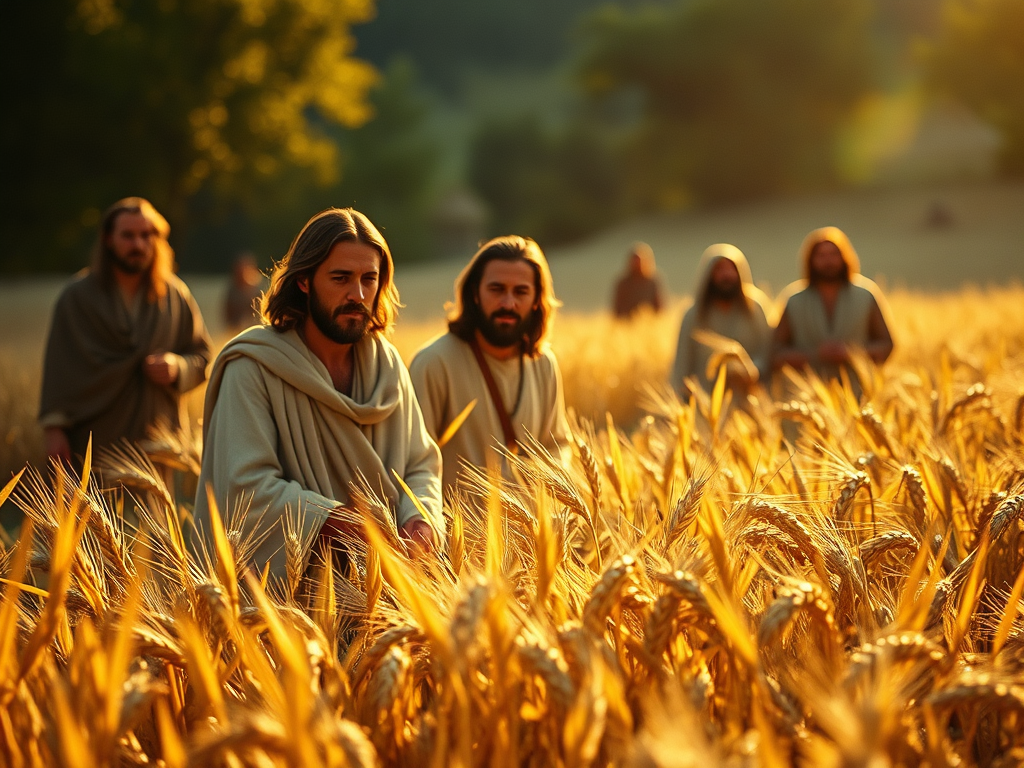
1 At that time Jesus was going through a field of grain on the sabbath. His disciples were hungry and began to pick the heads 2 of grain and eat them.

2

When the Pharisees saw this, they said to him, “See, your disciples are doing what is unlawful to do on the sabbath.”

3

He said to them, 3 “Have you not read what David did when he and his companions were hungry,

4

how he went into the house of God and ate the bread of offering, which neither he nor his companions but only the priests could lawfully eat?

5

4 Or have you not read in the law that on the sabbath the priests serving in the temple violate the sabbath and are innocent?

6

I say to you, something greater than the temple is here.

7

5 If you knew what this meant, ‘I desire mercy, not sacrifice,’ you would not have condemned these innocent men.

8

6 For the Son of Man is Lord of the sabbath.”

9

Moving on from there, he went into their synagogue.

10

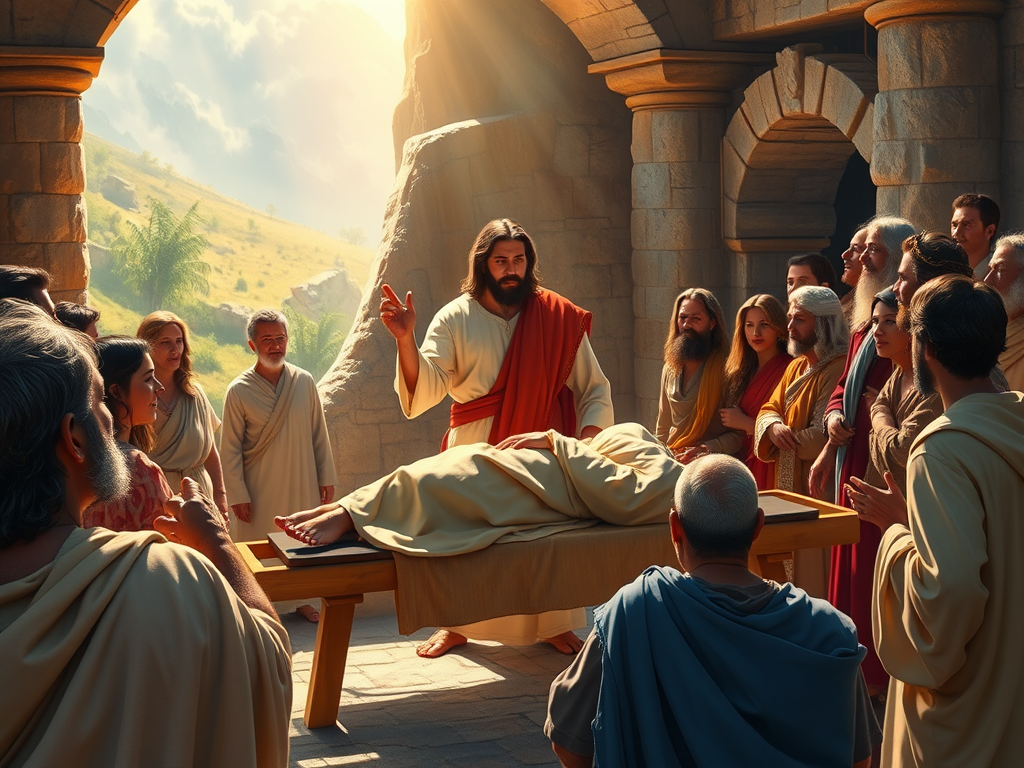
And behold, there was a man there who had a withered hand. They questioned him, “Is it lawful to cure on the sabbath?” 7 so that they might accuse him.

11

8 He said to them, “Which one of you who has a sheep that falls into a pit on the sabbath will not take hold of it and lift it out?

12

How much more valuable a person is than a sheep. So it is lawful to do good on the sabbath.”

13

Then he said to the man, “Stretch out your hand.” He stretched it out, and it was restored as sound as the other.

14

But the Pharisees 9 went out and took counsel against him to put him to death.

15

10 11 When Jesus realized this, he withdrew from that place. Many (people) followed him, and he cured them all,

16

but he warned them not to make him known.

17

This was to fulfill what had been spoken through Isaiah the prophet:

18

“Behold, my servant whom I have chosen, my beloved in whom I delight; I shall place my spirit upon him, and he will proclaim justice to the Gentiles.

19

He will not contend 12 or cry out, nor will anyone hear his voice in the streets.

20

A bruised reed he will not break, a smoldering wick he will not quench, until he brings justice to victory.

21

And in his name the Gentiles will hope.” 13

22

14 Then they brought to him a demoniac who was blind and mute. He cured the mute person so that he could speak and see.

23

15 All the crowd was astounded, and said, “Could this perhaps be the Son of David?”

24

16 But when the Pharisees heard this, they said, “This man drives out demons only by the power of Beelzebul, the prince of demons.”

25

But he knew what they were thinking and said to them, 17 “Every kingdom divided against itself will be laid waste, and no town or house divided against itself will stand.

26

And if Satan drives out Satan, he is divided against himself; how, then, will his kingdom stand?

27

And if I drive out demons by Beelzebul, by whom do your own people 18 drive them out? Therefore they will be your judges.

28

19 But if it is by the Spirit of God that I drive out demons, then the kingdom of God has come upon you.

29

20 How can anyone enter a strong man’s house and steal his property, unless he first ties up the strong man? Then he can plunder his house.

30

21 Whoever is not with me is against me, and whoever does not gather with me scatters.

31

Therefore, I say to you, every sin and blasphemy will be forgiven people, but blasphemy against the Spirit 22 will not be forgiven.

32

And whoever speaks a word against the Son of Man will be forgiven; but whoever speaks against the holy Spirit will not be forgiven, either in this age or in the age to come.

33

“Either declare 23 the tree good and its fruit is good, or declare the tree rotten and its fruit is rotten, for a tree is known by its fruit.

34

24 You brood of vipers, how can you say good things when you are evil? For from the fullness of the heart the mouth speaks.

35

A good person brings forth good out of a store of goodness, but an evil person brings forth evil out of a store of evil.

36

25 I tell you, on the day of judgment people will render an account for every careless word they speak.

37

By your words you will be acquitted, and by your words you will be condemned.”

38

26 Then some of the scribes and Pharisees said to him, “Teacher, 27 we wish to see a sign from you.”

39

He said to them in reply, “An evil and unfaithful 28 generation seeks a sign, but no sign will be given it except the sign of Jonah the prophet.

40

Just as Jonah was in the belly of the whale three days and three nights, 29 so will the Son of Man be in the heart of the earth three days and three nights.

41

30 At the judgment, the men of Nineveh will arise with this generation and condemn it, because they repented at the preaching of Jonah; and there is something greater than Jonah here.

42

At the judgment the queen of the south will arise with this generation and condemn it, because she came from the ends of the earth to hear the wisdom of Solomon; and there is something greater than Solomon here.

43

31 “When an unclean spirit goes out of a person it roams through arid regions searching for rest but finds none.

44

Then it says, ‘I will return to my home from which I came.’ But upon returning, it finds it empty, swept clean, and put in order.

45

Then it goes and brings back with itself seven other spirits more evil than itself, and they move in and dwell there; and the last condition of that person is worse than the first. Thus it will be with this evil generation.”

46

32 While he was still speaking to the crowds, his mother and his brothers appeared outside, wishing to speak with him.

47

(Someone told him, “Your mother and your brothers are standing outside, asking to speak with you.”) 33

48

But he said in reply to the one who told him, “Who is my mother? Who are my brothers?”

49

And stretching out his hand toward his disciples, he said, “Here are my mother and my brothers.

50

For whoever does the will of my heavenly Father is my brother, and sister, and mother.”

1 [1-14] Matthew here returns to the Marcan order that he left in ⇒ Matthew 9:18. The two stories depend on ⇒ Mark 2:23-28; ⇒ 3:1-6 respectively, and are the only places in either gospel that deal explicitly with Jesus’ attitude toward sabbath observance.
2 [1-2] The picking of the heads of grain is here equated with reaping, which was forbidden on the sabbath (⇒ Exodus 34:21).
3 [3-4] See ⇒ 1 Sam 21:2-7. In the Marcan parallel (⇒ Mark 2:25-26) the high priest is called Abiathar, although in 1 Sam this action is attributed to Ahimelech. The Old Testament story is not about a violation of the sabbath rest; its pertinence to this dispute is that a violation of the law was permissible because of David’s men being without food.
4 [5-6] This and the following argument (⇒ Matthew 12:7) are peculiar to Matthew. The temple service seems to be the changing of the showbread on the sabbath (⇒ Lev 24:8) and the doubling on the sabbath of the usual daily holocausts (⇒ Numbers 28:9-10). The argument is that the law itself requires work that breaks the sabbath rest, because of the higher duty of temple service. If temple duties outweigh the sabbath law, how much more does the presence of Jesus, with his proclamation of the kingdom (something greater than the temple), justify the conduct of his disciples.
5 [7] See the note on ⇒ Matthew 9:13.
6 [8] The ultimate justification for the disciples’ violation of the sabbath rest is that Jesus, the Son of Man, has supreme authority over the law.
Rabbinic tradition later than the gospels allowed relief to be given to a sufferer on the sabbath if life was in danger. This may also have been the view of Jesus’ Pharisaic contemporaries. But the case here is not about one in danger of death.
8 [11] Matthew omits the question posed by Jesus in ⇒ Mark 3:4 and substitutes one about rescuing a sheep on the sabbath, similar to that in ⇒ Luke 14:5.
9 [14] See ⇒ Mark 3:6. Here the plan to bring about Jesus’ death is attributed to the Pharisees only. This is probably due to the situation of Matthew’s church, when the sole opponents were the Pharisees.
10 [15-21] Matthew follows ⇒ Mark 3:7-12 but summarizes his source in two verses (⇒ Matthew 12:15, ⇒ 16) that pick up the withdrawal, the healings, and the command for silence. To this he adds a fulfillment citation from the first Servant Song (⇒ Isaiah 42:1-4) that does not correspond exactly to either the Hebrew or the LXX of that passage. It is the longest Old Testament citation in this gospel, emphasizing the meekness of Jesus, the Servant of the Lord, and foretelling the extension of his mission to the Gentiles.
11 [15] Jesus’ knowledge of the Pharisees’ plot and his healing all are peculiar to Matthew.
12 [19] The servant’s not contending is seen as fulfilled in Jesus’ withdrawal from the disputes narrated in ⇒ Matthew 12:1-14.
13 [21] Except for a minor detail, Matthew here follows the LXX, although the meaning of the Hebrew (“the coastlands will wait for his teaching”) is similar.
14 [22-32] For the exorcism, see the note on ⇒ Matthew 9:32-34. The long discussion combines Marcan and Q material (⇒ Mark 3:22-30; ⇒ Luke 11:19-20, ⇒ 23; ⇒ 12:10). ⇒ Mark 3:20-21 is omitted, with a consequent lessening of the sharpness of ⇒ Matthew 12:48.
15 [23] See the note on ⇒ Matthew 9:27.
16 [24] See the note on ⇒ Matthew 10:25.
17 [25-26] Jesus’ first response to the Pharisees’ charge is that if it were true, Satan would be destroying his own kingdom.
18 [27] Besides pointing out the absurdity of the charge, Jesus asks how the work of Jewish exorcists (your own people) is to be interpreted. Are they, too, to be charged with collusion with Beelzebul? For an example of Jewish exorcism see Josephus, Antiquities 8,2,5, 42-49.
19 [28] The Q parallel (⇒ Luke 11:20) speaks of the “finger” rather than of the “spirit” of God. While the difference is probably due to Matthew’s editing, he retains the kingdom of God rather than changing it to his usual “kingdom of heaven.” Has come upon you: see ⇒ Matthew 4:17.
20 [29] A short parable illustrates what Jesus is doing. The strong man is Satan, whom Jesus has tied up and whose house he is plundering. Jewish expectation was that Satan would be chained up in the last days (⇒ Rev 20:2); Jesus’ exorcisms indicate that those days have begun.
21 [30] This saying, already attached to the preceding verses in Q (see ⇒ Luke 11:23), warns that there can be no neutrality where Jesus is concerned. Its pertinence in a context where Jesus is addressing not the neutral but the bitterly opposed is not clear. The accusation of scattering, however, does fit the situation. Jesus is the shepherd of God’s people (⇒ Matthew 2:6), his mission is to the lost sheep of Israel (⇒ Matthew 15:24); the Pharisees, who oppose him, are guilty of scattering the sheep.
22 [31] Blasphemy against the Spirit: the sin of attributing to Satan (⇒ Matthew 12:24) what is the work of the Spirit of God (⇒ Matthew 12:28).
23 [33] Declare: literally, “make.” The meaning of this verse is obscure. Possibly it is a challenge to the Pharisees either to declare Jesus and his exorcisms good or both of them bad. A tree is known by its fruit; if the fruit is good, so must the tree be. If the driving out of demons is good, so must its source be.
24 [34] The admission of Jesus’ goodness cannot be made by the Pharisees, for they are evil, and the words that proceed from their evil hearts cannot be good.
25 [36-37] If on the day of judgment people will be held accountable for even their careless words, the vicious accusations of the Pharisees will surely lead to their condemnation.
26 [38-42] This section is mainly from Q (see ⇒ Luke 11:29-32). ⇒ Mark 8:11-12, which Matthew has followed in ⇒ Matthew 16:1-4, has a similar demand for a sign. The scribes and Pharisees refuse to accept the exorcisms of Jesus as authentication of his claims and demand a sign that will end all possibility of doubt. Jesus’ response is that no such sign will be given. Because his opponents are evil and see him as an agent of Satan, nothing will convince them.
27 [38] Teacher: see the note on ⇒ Matthew 8:19. In ⇒ Matthew 16:1 the request is for a sign “from heaven” (⇒ Mark 8:11).
28 [39] Unfaithful: literally, “adulterous.” The covenant between God and Israel was portrayed as a marriage bond, and unfaithfulness to the covenant as adultery; cf ⇒ Hosea 2:4-14; ⇒ Jeremiah 3:6-10.
29 [40] See ⇒ Jonah 2:1. While in Q the sign was simply Jonah’s preaching to the Ninevites (⇒ Luke 11:30, ⇒ 32), Matthew here adds Jonah’s sojourn in the belly of the whale for three days and three nights, a prefigurement of Jesus’ sojourn in the abode of the dead and, implicitly, of his resurrection.
30 [41-42] The Ninevites who repented (see ⇒ Jonah 3:1-10) and the queen of the south (i.e., of Sheba; see ⇒ 1 Kings 10:1-13) were pagans who responded to lesser opportunities than have been offered to Israel in the ministry of Jesus, something greater than Jonah or Solomon. At the final judgment they will condemn the faithless generation that has rejected him.
31 [43-45] Another Q passage; cf ⇒ Matthew 11:24-26. Jesus’ ministry has broken Satan’s hold over Israel, but the refusal of this evil generation to accept him will lead to a worse situation than what preceded his coming.
32 [46-50] See ⇒ Mark 3:31-35. Matthew has omitted ⇒ Mark 3:20-21 which is taken up in ⇒ Mark 3:31 (see the note on ⇒ Matthew 12:22-32), yet the point of the story is the same in both gospels: natural kinship with Jesus counts for nothing; only one who does the will of his heavenly Father belongs to his true family.
33 [47] This verse is omitted in some important textual witnesses, including Codex Sinaiticus (original reading) and Codex Vaticanus.

The Bible – New Testament

Saint Matthew

Index

1. 2. 3. 4. 5. 6. 7. 8. 9. 10. 11.

12. 13. 14. 15. 16. 17. 18. 19. 20

21. 22. 23. 24. 25. 26. 27. 28.

OLD TESTAMENT

THE GOSPELS

NEW TESTAMENT

The Bible – New Testament

Saint Matthew

Index

1. 2. 3. 4. 5. 6. 7. 8. 9. 10. 11. 12. 13. 14. 15. 16.

17. 18. 19. 2021. 22. 23. 24. 25. 26. 27. 28.

Chapter 6

1

1 “(But) take care not to perform righteous deeds in order that people may see them; otherwise, you will have no recompense from your heavenly Father.

2

When you give alms, do not blow a trumpet before you, as the hypocrites 2 do in the synagogues and in the streets to win the praise of others. Amen, I say to you, they have received their reward.

3

But when you give alms, do not let your left hand know what your right is doing,

4

so that your almsgiving may be secret. And your Father who sees in secret will repay you.

5

“When you pray, do not be like the hypocrites, who love to stand and pray in the synagogues and on street corners so that others may see them. Amen, I say to you, they have received their reward.

6

But when you pray, go to your inner room, close the door, and pray to your Father in secret. And your Father who sees in secret will repay you.

7

3 4 In praying, do not babble like the pagans, who think that they will be heard because of their many words.

8

Do not be like them. Your Father knows what you need before you ask him.

9

5 6 “This is how you are to pray: Our Father in heaven, hallowed be your name,

10

your kingdom come, 7 your will be done, on earth as in heaven.

11

8 Give us today our daily bread;

12

and forgive us our debts, 9 as we forgive our debtors;

13

and do not subject us to the final test, 10 but deliver us from the evil one.

14

11 If you forgive others their transgressions, your heavenly Father will forgive you.

15

But if you do not forgive others, neither will your Father forgive your transgressions.

16

“When you fast, 12 do not look gloomy like the hypocrites. They neglect their appearance, so that they may appear to others to be fasting. Amen, I say to you, they have received their reward.

17

But when you fast, anoint your head and wash your face,

18

so that you may not appear to be fasting, except to your Father who is hidden. And your Father who sees what is hidden will repay you.

19

13 “Do not store up for yourselves treasures on earth, where moth and decay destroy, and thieves break in and steal.

20

But store up treasures in heaven, where neither moth nor decay destroys, nor thieves break in and steal.

21

For where your treasure is, there also will your heart be.

22

14 “The lamp of the body is the eye. If your eye is sound, your whole body will be filled with light;

23

but if your eye is bad, your whole body will be in darkness. And if the light in you is darkness, how great will the darkness be.

24

15 “No one can serve two masters. He will either hate one and love the other, or be devoted to one and despise the other. You cannot serve God and mammon.

25

16 “Therefore I tell you, do not worry about your life, what you will eat (or drink), or about your body, what you will wear. Is not life more than food and the body more than clothing?

26

Look at the birds in the sky; they do not sow or reap, they gather nothing into barns, yet your heavenly Father feeds them. Are not you more important than they?

27

Can any of you by worrying add a single moment to your life-span? 17

28

Why are you anxious about clothes? Learn from the way the wild flowers grow. They do not work or spin.

29

But I tell you that not even Solomon in all his splendor was clothed like one of them.

30

18 If God so clothes the grass of the field, which grows today and is thrown into the oven tomorrow, will he not much more provide for you, O you of little faith?

31

So do not worry and say, ‘What are we to eat?’ or ‘What are we to drink?’ or ‘What are we to wear?’

32

All these things the pagans seek. Your heavenly Father knows that you need them all.

33

But seek first the kingdom (of God) and his righteousness, 19 and all these things will be given you besides.

34

Do not worry about tomorrow; tomorrow will take care of itself. Sufficient for a day is its own evil.

1 [1-18] The sermon continues with a warning against doing good in order to be seen and gives three examples, almsgiving (⇒ Matthew 6:2-4), prayer (⇒ Matthew 6:5-15), and fasting (⇒ Matthew 6:16-18). In each, the conduct of the hypocrites (⇒ Matthew 6:2) is contrasted with that demanded of the disciples. The sayings about reward found here and elsewhere (⇒ Matthew 5:12, ⇒ 46; ⇒ 10:41-42) show that this is a genuine element of Christian moral exhortation. Possibly to underline the difference between the Christian idea of reward and that of the hypocrites, the evangelist uses two different Greek verbs to express the rewarding of the disciples and that of the hypocrites; in the latter case it is the verb apecho, a commercial term for giving a receipt for what has been paid in full (⇒ Matthew 6:2, 5, ⇒ 16).
2 [2] The hypocrites: the scribes and Pharisees, see ⇒ Matthew 23:13, ⇒ 15, ⇒ 23, ⇒ 25, ⇒ 27, ⇒ 29. The designation reflects an attitude resulting not only from the controversies at the time of Jesus’ ministry but from the opposition between Pharisaic Judaism and the church of Matthew. They have received their reward: they desire praise and have received what they were looking for.
3 [7-15] Matthew inserts into his basic traditional material an expansion of the material on prayer that includes the model prayer, the “Our Father.” That prayer is found in ⇒ Luke 11:2-4 in a different context and in a different form.
4 [7] The example of what Christian prayer should be like contrasts it now not with the prayer of the hypocrites but with that of the pagans. Their babbling probably means their reciting a long list of divine names, hoping that one of them will force a response from the deity.
5 [9-13] Matthew’s form of the “Our Father” follows the liturgical tradition of his church. Luke’s less developed form also represents the liturgical tradition known to him, but it is probably closer than Matthew’s to the original words of Jesus.
6 [9] Our Father in heaven: this invocation is found in many rabbinic prayers of the post-New Testament period. Hallowed be your name: though the “hallowing” of the divine name could be understood as reverence done to God by human praise and by obedience to his will, this is more probably a petition that God hallow his own name, i.e., that he manifest his glory by an act of power (cf ⇒ Ezekiel 36:23), in this case, by the establishment of his kingdom in its fullness.
7 [10] Your kingdom come: this petition sets the tone of the prayer, and inclines the balance toward divine rather than human action in the petitions that immediately precede and follow it. Your will be done, on earth as in heaven: a petition that the divine purpose to establish the kingdom, a purpose present now in heaven, be executed on earth.
8 [11] Give us today our daily bread: the rare Greek word epiousios, here daily, occurs in the New Testament only here and in ⇒ Luke 11:3. A single occurrence of the word outside of these texts and of literature dependent on them has been claimed, but the claim is highly doubtful. The word may mean daily or “future” (other meanings have also been proposed). The latter would conform better to the eschatological tone of the whole prayer. So understood, the petition would be for a speedy coming of the kingdom (today), which is often portrayed in both the Old Testament and the New under the image of a feast (⇒ Isaiah 25:6; ⇒ Matthew 8:11; ⇒ 22:1-10; ⇒ Luke 13:29; ⇒ 14:15-24).
9 [12] Forgive us our debts: the word debts is used metaphorically of sins, “debts” owed to God (see ⇒ Luke 11:4). The request is probably for forgiveness at the final judgment.
10 [13] Jewish apocalyptic writings speak of a period of severe trial before the end of the age, sometimes called the “messianic woes.” This petition asks that the disciples be spared that final test.
11 [14-15] These verses reflect a set pattern called “Principles of Holy Law.” Human action now will be met by a corresponding action of God at the final judgment.
12 [16] The only fast prescribed in the Mosaic law was that of the Day of Atonement (⇒ Lev 16:31), but the practice of regular fasting was common in later Judaism; cf Didache ⇒ Matthew 9:1.
13 [19-34] The remaining material of this chapter is taken almost entirely from Q. It deals principally with worldly possessions, and the controlling thought is summed up in ⇒ Matthew 6:24, the disciple can serve only one master and must choose between God and wealth (mammon). See further the note on ⇒ Luke 16:9.
14 [22-23] In this context the parable probably points to the need for the disciple to be enlightened by Jesus’ teaching on the transitory nature of earthly riches.
15 [24] Mammon: an Aramaic word meaning wealth or property.
16 [25-34] Jesus does not deny the reality of human needs (⇒ Matthew 6:32), but forbids making them the object of anxious care and, in effect, becoming their slave.
17 [27] Life-span: the Greek word can also mean “stature.” If it is taken in that sense, the word here translated moment (literally, “cubit”) must be translated literally as a unit not of time but of spatial measure. The cubit is about eighteen inches.
18 [30] Of little faith: except for the parallel in ⇒ Luke 12:28, the word translated of little faith is found in the New Testament only in Matthew. It is used by him of those who are disciples of Jesus but whose faith in him is not as deep as it should be (see ⇒ Matthew 8:26; ⇒ 14:31; ⇒ 16:8 and the cognate noun in ⇒ Matthew 17:20).
19 [33] Righteousness: see the note on ⇒ Matthew 3:14-15.

The Bible – New Testament

Saint Matthew

Index

1. 2. 3. 4. 5. 6. 7. 8. 9. 10. 11.

12. 13. 14. 15. 16. 17. 18. 19. 20

21. 22. 23. 24. 25. 26. 27. 28.

Saint Matthew – Chapter 28

The Bible – New Testament Saint Matthew Chapter 28 1 1 After the sabbath, as the first day of the week was dawning, 2 Mary Magdalene and the other Mary came to see the tomb. 2 3 And behold, there was a great earthquake; for an angel of the Lord descended from heaven, approached, rolled back the stone, and… Continue reading Saint Matthew – Chapter 28

Saint Matthew – Chapter 21

The Bible – New Testament Saint Matthew Index 1. 2. 3. 4. 5. 6. 7. 8. 9. 10. 11. 12. 13. 14. 15. 16. 17. 18. 19. 20. 21. 22. 23. 24. 25. 26. 27. 28. Chapter 21 1 1 When they drew near Jerusalem and came to Bethphage 2 on the Mount of Olives, Jesus sent two disciples, 2 saying to them, “Go into the village opposite… Continue reading Saint Matthew – Chapter 21

Saint Matthew – Chapter 1

The Bible – New Testament Saint Matthew Index 1. 2. 3. 4. 5. 6. 7. 8. 9. 10. 11. 12. 13. 14. 15. 16. 17. 18. 19. 20. 21. 22. 23. 24. 25. 26. 27. 28. Chapter 1 1 1 2 The book of the genealogy of Jesus Christ, the son of David, the son of Abraham. 2 Abraham became the father of Isaac, Isaac the father… Continue reading Saint Matthew – Chapter 1

Saint Matthew – Chapter 23

The Bible – New Testament Saint Matthew  Index  1. 2. 3. 4. 5. 6. 7. 8. 9. 10. 11. 12. 13. 14. 15. 16. 17. 18. 19. 20. 21. 22. 23. 24. 25. 26. 27. 28. Chapter 23 1 1 Then Jesus spoke to the crowds and to his disciples, 2 2 saying, “The scribes and the Pharisees have taken their seat on the chair of Moses.… Continue reading Saint Matthew – Chapter 23

Saint Matthew – Chapter 16

The Bible – New Testament Saint Matthew Index 1. 2. 3. 4. 5. 6. 7. 8. 9. 10. 11. 12. 13. 14. 15. 16. 17. 18. 19. 20. 21. 22. 23. 24. 25. 26. 27. 28 Chapter 16 1 1 The Pharisees and Sadducees came and, to test him, asked him to show them a sign from heaven. 2 2 He said to them in reply, “(In… Continue reading Saint Matthew – Chapter 16

The Bible – New Testament

Saint Matthew

Chapter 24

1

1 Jesus left the temple area and was going away, when his disciples approached him to point out the temple buildings.

2

2 He said to them in reply, “You see all these things, do you not? Amen, I say to you, there will not be left here a stone upon another stone that will not be thrown down.”

3

As he was sitting on the Mount of Olives, 3 the disciples approached him privately and said, “Tell us, when will this happen, and what sign will there be of your coming, and of the end of the age?”

4

4 Jesus said to them in reply, “See that no one deceives you.

5

For many will come in my name, saying, ‘I am the Messiah,’ and they will deceive many.

6

You will hear of wars 5 and reports of wars; see that you are not alarmed, for these things must happen, but it will not yet be the end.

7

Nation will rise against nation, and kingdom against kingdom; there will be famines and earthquakes from place to place.

8

6 All these are the beginning of the labor pains.

9

7 Then they will hand you over to persecution, and they will kill you. You will be hated by all nations because of my name.

10

And then many will be led into sin; they will betray and hate one another.

11

Many false prophets will arise and deceive many;

12

and because of the increase of evildoing, the love of many will grow cold.

13

But the one who perseveres to the end will be saved.

14

And this gospel of the kingdom will be preached throughout the world as a witness to all nations, 8 and then the end will come.

15

9 “When you see the desolating abomination 10 spoken of through Daniel the prophet standing in the holy place (let the reader understand),

16

then those in Judea must flee 11 to the mountains,

17

12 a person on the housetop must not go down to get things out of his house,

18

a person in the field must not return to get his cloak.

19

Woe to pregnant women and nursing mothers in those days.

20

13 Pray that your flight not be in winter or on the sabbath,

21

14 for at that time there will be great tribulation, such as has not been since the beginning of the world until now, nor ever will be.

22

And if those days had not been shortened, no one would be saved; but for the sake of the elect they will be shortened.

23

If anyone says to you then, ‘Look, here is the Messiah!’ or, ‘There he is!’ do not believe it.

24

False messiahs and false prophets will arise, and they will perform signs and wonders so great as to deceive, if that were possible, even the elect.

25

Behold, I have told it to you beforehand.

26

So if they say to you, ‘He is in the desert,’ do not go out there; if they say, ‘He is in the inner rooms,’ do not believe it. 15

27

For just as lightning comes from the east and is seen as far as the west, so will the coming of the Son of Man be.

28

Wherever the corpse is, there the vultures will gather.

29

16 “Immediately after the tribulation of those days, the sun will be darkened, and the moon will not give its light, and the stars will fall from the sky, and the powers of the heavens will be shaken.

30

And then the sign of the Son of Man 17 will appear in heaven, and all the tribes of the earth will mourn, and they will see the Son of Man coming upon the clouds of heaven with power and great glory.

31

And he will send out his angels 18 with a trumpet blast, and they will gather his elect from the four winds, from one end of the heavens to the other.

32

19 “Learn a lesson from the fig tree. When its branch becomes tender and sprouts leaves, you know that summer is near.

33

In the same way, when you see all these things, know that he is near, at the gates.

34

Amen, I say to you, this generation 20 will not pass away until all these things have taken place.

35

Heaven and earth will pass away, but my words will not pass away.

36

21 “But of that day and hour no one knows, neither the angels of heaven, nor the Son, 22 but the Father alone.

37

23 For as it was in the days of Noah, so it will be at the coming of the Son of Man.

38

In (those) days before the flood, they were eating and drinking, marrying and giving in marriage, up to the day that Noah entered the ark.

39

They did not know until the flood came and carried them all away. So will it be (also) at the coming of the Son of Man.

40

24 Two men will be out in the field; one will be taken, and one will be left.

41

Two women will be grinding at the mill; one will be taken, and one will be left.

42

25 Therefore, stay awake! For you do not know on which day your Lord will come.

43

Be sure of this: if the master of the house had known the hour of night when the thief was coming, he would have stayed awake and not let his house be broken into.

44

So too, you also must be prepared, for at an hour you do not expect, the Son of Man will come.

45

26 27 “Who, then, is the faithful and prudent servant, whom the master has put in charge of his household to distribute to them their food at the proper time?

46

Blessed is that servant whom his master on his arrival finds doing so.

47

Amen, I say to you, he will put him in charge of all his property.

48

28 But if that wicked servant says to himself, ‘My master is long delayed,’

49

and begins to beat his fellow servants, and eat and drink with drunkards,

50

the servant’s master will come on an unexpected day and at an unknown hour

51

and will punish him severely 29 and assign him a place with the hypocrites, where there will be wailing and grinding of teeth.

1 [1-⇒ 25:46] The discourse of the fifth book, the last of the five around which the gospel is structured. It is called the “escha tological” discourse since it deals with the coming of the new age (the eschaton) in its fullness, with events that will precede it, and with how the disciples are to conduct themselves while awaiting an event that is as certain as its exact time is unknown to all but the Father (⇒ Matthew 24:36). The discourse may be divided into two parts, ⇒ Matthew 24:1-44 and ⇒ Matthew 24:45-⇒ 25:46. In the first, Matthew follows his Marcan source (⇒ Mark 13:1-37) closely. The second is drawn from Q and from the evangelist’s own traditional material. Both parts show Matthew’s editing of his sources by deletions, additions, and modifications. The vigilant waiting that is emphasized in the second part does not mean a cessation of ordinary activity and concentration only on what is to come, but a faithful accomplishment of duties at hand, with awareness that the end, for which the disciples must always be ready, will entail the great judgment by which the everlasting destiny of all will be determined.
2 [2] As in Mark, Jesus predicts the destruction of the temple. By omitting the Marcan story of the widow’s contribution (⇒ Mark 12:41-44) that immediately precedes the prediction in that gospel, Matthew has established a close connection between it and ⇒ Matthew 23:38, “. . . your house will be abandoned desolate.”
3 [3] The Mount of Olives: see the note on ⇒ Matthew 21:1. The disciples: cf ⇒ Mark 13:3-4 where only Peter, James, John, and Andrew put the question that is answered by the discourse. In both gospels, however, the question is put privately: the ensuing discourse is only for those who are disciples of Jesus. When will this happen . . . end of the age?: Matthew distinguishes carefully between the destruction of the temple (this) and the coming of Jesus that will bring the end of the age. In Mark the two events are more closely connected, a fact that may be explained by Mark’s believing that the one would immediately succeed the other. Coming: this translates the Greek word parousia, which is used in the gospels only here and in ⇒ Matthew 24:27, ⇒ 37, ⇒ 39. It designated the official visit of a ruler to a city or the manifestation of a saving deity, and it was used by christians to refer to the final coming of Jesus in glory, a term first found in the New Testament with that meaning in ⇒ 1 Thes 2:19. The end of the age: see the note on ⇒ Matthew 13:39.
4 [4-14] This section of the discourse deals with calamities in the world (⇒ Matthew 24:6-7) and in the church (⇒ Matthew 24:9-12). The former must happen before the end comes (⇒ Matthew 24:6), but they are only the beginning of the labor pains (⇒ Matthew 24:8). (It may be noted that the Greek word translated the end in ⇒ Matthew 24:6 and in ⇒ Matthew 24:13-14 is not the same as the phrase “the end of the age” in ⇒ Matthew 24:3 although the meaning is the same.) The latter are sufferings of the church, both from within and without, that will last until the gospel is preached . . . to all nations. Then the end will come and those who have endured the sufferings with fidelity will be saved (⇒ Matthew 24:13-14).
5 [6-7] The disturbances mentioned here are a commonplace of apocalyptic language, as is the assurance that they must happen (see ⇒ Daniel 2:28 LXX), for that is the plan of God. Kingdom against kingdom: see ⇒ Isaiah 19:2.
6 [8] The labor pains: the tribulations leading up to the end of the age are compared to the pains of a woman about to give birth. There is much attestation for rabbinic use of the phrase “the woes (or birth pains) of the Messiah” after the New Testament period, but in at least one instance it is attributed to a rabbi who lived in the late first century A.D. In this Jewish usage it meant the distress of the time preceding the coming of the Messiah; here, the labor pains precede the coming of the Son of Man in glory.
7 [9-12] Matthew has used ⇒ Mark 13:9-12 in his missionary discourse (⇒ Matthew 10:17-21) and omits it here. Besides the sufferings, including death, and the hatred of all nations that the disciples will have to endure, there will be worse affliction within the church itself. This is described in ⇒ Matthew 24:10-12, which are peculiar to Matthew. Will be led into sin: literally, “will be scandalized,” probably meaning that they will become apostates; see ⇒ Matthew 13:21 where “fall away” translates the same Greek word as here. Betray: in the Greek this is the same word as the hand over of ⇒ Matthew 24:9. The handing over to persecution and hatred from outside will have their counterpart within the church. False prophets: these are Christians; see the note on ⇒ Matthew 7:15-20. Evildoing: see ⇒ Matthew 7:23. Because of the apocalyptic nature of much of this discourse, the literal meaning of this description of the church should not be pressed too hard. However, there is reason to think that Matthew’s addition of these verses reflects in some measure the condition of his community.
8 [14] Except for the last part (and then the end will come), this verse substantially repeats ⇒ Mark 13:10. The Matthean addition raises a problem since what follows in ⇒ Matthew 24:15-23 refers to the horrors of the First Jewish Revolt including the destruction of the temple, and Matthew, writing after that time, knew that the parousia of Jesus was still in the future. A solution may be that the evangelist saw the events of those verses as foreshadowing the cosmic disturbances that he associates with the parousia (⇒ Matthew 24:29) so that the period in which the former took place could be understood as belonging to the end.
9 [15-28] Cf ⇒ Mark 13:14-23; ⇒ Luke 17:23-24, ⇒ 37. A further stage in the tribulations that will precede the coming of the Son of Man, and an answer to the question of ⇒ Matthew 24:3a, “when will this (the destruction of the temple) happen?”
10 [15] The desolating abomination: in 167 B.C. the Syrian king Antiochus IV Epiphanes desecrated the temple by setting up in it a statue of Zeus Olympios (see ⇒ 1 Macc 1:54). That event is referred to in ⇒ Daniel 12:11 LXX as the “desolating abomination” (NAB “horrible abomination”) and the same Greek term is used here; cf also ⇒ Daniel 9:27; ⇒ 11:31. Although the desecration had taken place before Dn was written, it is presented there as a future event, and Matthew sees that “prophecy” fulfilled in the desecration of the temple by the Romans. In the holy place: the temple; more precise than Mark’s where he should not (⇒ Mark 13:14). Let the reader understand: this parenthetical remark, taken from ⇒ Mark 13:14 invites the reader to realize the meaning of Daniel’s “prophecy.”
11 [16] The tradition that the Christians of Jerusalem fled from that city to Pella, a city of Transjordan, at the time of the First Jewish Revolt is found in Eusebius (Ecclesiastical History, 3, 5, 3), who attributes the flight to “a certain oracle given by revelation before the war.” The tradition is not improbable but the Matthean command, derived from its Marcan source, is vague in respect to the place of flight (to the mountains), although some scholars see it as applicable to the flight to Pella.
12 [17-19] Haste is essential, and the journey will be particularly difficult for women who are burdened with unborn or infant children.
13 [20] On the sabbath: this addition to in winter (cf ⇒ Mark 13:18) has been understood as an indication that Matthew was addressed to a church still observing the Mosaic law of sabbath rest and the scribal limitations upon the length of journeys that might lawfully be made on that day. That interpretation conflicts with Matthew’s view on sabbath observance (cf ⇒ Matthew 12:1-14). The meaning of the addition may be that those undertaking on the sabbath a journey such as the one here ordered would be offending the sensibilities of law-observant Jews and would incur their hostility.
14 [21] For the unparalleled distress of that time, see ⇒ Daniel 12:1.
15 [26-28] Claims that the Messiah is to be found in some distant or secret place must be ignored. The coming of the Son of Man will be as clear as lightning is to all and as the corpse of an animal is to vultures; cf ⇒ Luke 17:24, ⇒ 37. Here there is clear identification of the Son of Man and the Messiah; cf ⇒ Matthew 24:23.
16 [29] The answer to the question of ⇒ Matthew 24:3b “What will be the sign of your coming?” Immediately after . . . those days: the shortening of time between the preceding tribulation and the parousia has been explained as Matthew’s use of a supposed device of Old Testament prophecy whereby certainty that a predicted event will occur is expressed by depicting it as imminent. While it is questionable that that is an acceptable understanding of the Old Testament predictions, it may be applicable here, for Matthew knew that the parousia had not come immediately after the fall of Jerusalem, and it is unlikely that he is attributing a mistaken calculation of time to Jesus. The sun . . . be shaken: cf ⇒ Isaiah 13:10, ⇒ 13.
17 [30] The sign of the Son of Man: perhaps this means the sign that is the glorious appearance of the Son of Man; cf ⇒ Matthew 12:39-40 where “the sign of Jonah” is Jonah’s being in the “belly of the whale.” Tribes of the earth will mourn: peculiar to Matthew; cf ⇒ Zechariah 12:12-14. Coming upon the clouds . . . glory: cf ⇒ Daniel 7:13 although there the “one like a son of man” comes to God to receive kingship; here the Son of Man comes from heaven for judgment.
18 [31] Send out his angels: cf ⇒ Matthew 13:41 where they are sent out to collect the wicked for punishment. Trumpet blast: cf ⇒ Isaiah 27:13; ⇒ 1 Thes 4:16.
19 [32-35] Cf ⇒ Mark 13:28-31.
20 [34] The difficulty raised by this verse cannot be satisfactorily removed by the supposition that this generation means the Jewish people throughout the course of their history, much less the entire human race. Perhaps for Matthew it means the generation to which he and his community belonged.
21 [36-44] The statement of ⇒ Matthew 24:34 is now counterbalanced by one that declares that the exact time of the parousia is known only to the Father (⇒ Matthew 24:36), and the disciples are warned to be always ready for it. This section is drawn from Mark and Q (cf ⇒ Luke 17:26-27, ⇒ 34-35; ⇒ 12:39-40).
22 [36] Many textual witnesses omit nor the Son, which follows ⇒ Mark 13:32. Since its omission can be explained by reluctance to attribute this ignorance to the Son, the reading that includes it is probably original.
23 [37-39] Cf ⇒ Luke 17:26-27. In the days of Noah: the Old Testament account of the flood lays no emphasis upon what is central for Matthew, i.e., the unexpected coming of the flood upon those who were unprepared for it.
24 [40-41] Cf ⇒ Luke 17:34-35. Taken . . . left: the former probably means taken into the kingdom; the latter, left for destruction. People in the same situation will be dealt with in opposite ways. In this context, the discrimination between them will be based on their readiness for the coming of the Son of Man.
25 [42-44] Cf ⇒ Luke 12:39-40. The theme of vigilance and readiness is continued with the bold comparison of the Son of Man to a thief who comes to break into a house.
26 [45-51] The second part of the discourse (see the note on ⇒ Matthew 24:1-⇒ 25:46) begins with this parable of the faithful or unfaithful servant; cf ⇒ Luke 12:41-46. It is addressed to the leaders of Matthew’s church; the servant has been put in charge of his master’s household (⇒ Matthew 24:45) even though that household is composed of those who are his fellow servants (⇒ Matthew 24:49).
27 [45] To distribute . . . proper time: readiness for the master’s return means a vigilance that is accompanied by faithful performance of the duty assigned.
28 [48] My master . . . delayed: the note of delay is found also in the other parables of this section; cf ⇒ Matthew 25:5, ⇒ 19.
29 [51] Punish him severely: the Greek verb, found in the New Testament only here and in the Lucan parallel (⇒ Luke 12:46), means, literally, “cut in two.” With the hypocrites: see the note on ⇒ Matthew 6:2. Matthew classes the unfaithful Christian leader with the unbelieving leaders of Judaism. Wailing and grinding of teeth: see the note on ⇒ Matthew 8:11-12.

Saint Matthew – Chapter 18

The Bible – New Testament Saint Matthew Index 1. 2. 3. 4. 5. 6. 7. 8. 9. 10. 11. 12. 13. 14. 15. 16. 17. 18. 19. 20. 21. 22. 23. 24. 25. 26. 27. 28. Chapter 18 1 1 At that time the disciples 2 approached Jesus and said, “Who is the greatest in the kingdom of heaven?” 2 He called a child over, placed it in… Continue reading Saint Matthew – Chapter 18

The Bible – New Testament

Saint Matthew

Index

1. 2. 3. 4. 5. 6. 7. 8. 9. 10. 11. 12. 13. 14. 15. 16.

17. 18. 19. 2021. 22. 23. 24. 25. 26. 27. 28.

Chapter 19

1

1 When Jesus 2 finished these words, 3 he left Galilee and went to the district of Judea across the Jordan.

2

Great crowds followed him, and he cured them there.

3

Some Pharisees approached him, and tested him, 4 saying, “Is it lawful for a man to divorce his wife for any cause whatever?”

4

5 He said in reply, “Have you not read that from the beginning the Creator ‘made them male and female’

5

and said, ‘For this reason a man shall leave his father and mother and be joined to his wife, and the two shall become one flesh’?

6

So they are no longer two, but one flesh. Therefore, what God has joined together, no human being must separate.”

7

6 They said to him, “Then why did Moses command that the man give the woman a bill of divorce and dismiss (her)?”

8

He said to them, “Because of the hardness of your hearts Moses allowed you to divorce your wives, but from the beginning it was not so.

9

I say to you, 7 whoever divorces his wife (unless the marriage is unlawful) and marries another commits adultery.”

10

[His] disciples said to him, “If that is the case of a man with his wife, it is better not to marry.”

11

He answered, “Not all can accept [this] word, 8 but only those to whom that is granted.

12

Some are incapable of marriage because they were born so; some, because they were made so by others; some, because they have renounced marriage 9 for the sake of the kingdom of heaven. Whoever can accept this ought to accept it.”

13

10 Then children were brought to him that he might lay his hands on them and pray. The disciples rebuked them,

14

but Jesus said, “Let the children come to me, and do not prevent them; for the kingdom of heaven belongs to such as these.”

15

After he placed his hands on them, he went away.

16

11 12 Now someone approached him and said, “Teacher, what good must I do to gain eternal life?”

17

He answered him, “Why do you ask me about the good? There is only One who is good. 13 If you wish to enter into life, keep the commandments.”

18

14 He asked him, “Which ones?” And Jesus replied, ” ‘You shall not kill; you shall not commit adultery; you shall not steal; you shall not bear false witness;

19

honor your father and your mother’; and ‘you shall love your neighbor as yourself.'”

20

15 The young man said to him, “All of these I have observed. What do I still lack?”

21

Jesus said to him, “If you wish to be perfect, 16 go, sell what you have and give to (the) poor, and you will have treasure in heaven. Then come, follow me.”

22

When the young man heard this statement, he went away sad, for he had many possessions.

23

17 Then Jesus said to his disciples, “Amen, I say to you, it will be hard for one who is rich to enter the kingdom of heaven.

24

Again I say to you, it is easier for a camel to pass through the eye of a needle than for one who is rich to enter the kingdom of God.”

25

18 When the disciples heard this, they were greatly astonished and said, “Who then can be saved?”

26

Jesus looked at them and said, “For human beings this is impossible, but for God all things are possible.”

27

Then Peter said to him in reply, “We have given up everything and followed you. What will there be for us?”

28

19 Jesus said to them, “Amen, I say to you that you who have followed me, in the new age, when the Son of Man is seated on his throne of glory, will yourselves sit on twelve thrones, judging the twelve tribes of Israel.

29

And everyone who has given up houses or brothers or sisters or father or mother or children or lands for the sake of my name will receive a hundred times more, and will inherit eternal life.

30

20 But many who are first will be last, and the last will be first.

1 [1-⇒ 23:39] The narrative section of the fifth book of the gospel. The first part (⇒ Matthew 19:1-⇒ 20:34) has for its setting the journey of Jesus from Galilee to Jerusalem; the second (⇒ Matthew 21:1-⇒ 23:39) deals with Jesus’ ministry in Jerusalem up to the final great discourse of the gospel (Matthew 24-25). Matthew follows the Marcan sequence of events, though adding material both special to this gospel and drawn from Q. The second part ends with the denunciation of the scribes and Pharisees (⇒ Matthew 23:1-36) followed by Jesus’ lament over Jerusalem (⇒ Matthew 23:37-39). This long and important speech raises a problem for the view that Matthew is structured around five other discourses of Jesus (see Introduction) and that this one has no such function in the gospel. However, it is to be noted that this speech lacks the customary concluding formula that follows the five discourses (see the note on ⇒ Matthew 7:28), and that those discourses are all addressed either exclusively (Matthew 10;18;24;25) or primarily (Matthew 5-7;13) to the disciples, whereas this is addressed primarily to the scribes and Pharisees (Matthew 13-36). Consequently, it seems plausible to maintain that the evangelist did not intend to give it the structural importance of the five other discourses, and that, in spite of its being composed of sayings-material, it belongs to the narrative section of this book. In that regard, it is similar to the sayings-material of ⇒ Matthew 11:7-30. Some have proposed that Matthew wished to regard it as part of the final discourse of Matthew 24-25, but the intervening material (⇒ Matthew 24:1-4) and the change in matter and style of those chapters do not support that view.
2 [1] In giving Jesus’ teaching on divorce (⇒ Matthew 19:3-9), Matthew here follows his Marcan source (⇒ Mark 10:2-12) as he does Q in ⇒ Matthew 5:31-32 (cf ⇒ Luke 16:18). ⇒ Matthew 19:10-12 are peculiar to Matthew.
3 [1] When Jesus finished these words: see the note on ⇒ Matthew 7:28-29. The district of Judea across the Jordan: an inexact designation of the territory. Judea did not extend across the Jordan; the territory east of the river was Perea. The route to Jerusalem by way of Perea avoided passage through Samaria.
4 [3] Tested him: the verb is used of attempts of Jesus’ opponents to embarrass him by challenging him to do something they think impossible (⇒ Matthew 16:1; ⇒ Mark 8:11; ⇒ Luke 11:16) or by having him say something that they can use against him (⇒ Matthew 22:18, ⇒ 35; ⇒ Mark 10:2; ⇒ 12:15). For any cause whatever: this is peculiar to Matthew and has been interpreted by some as meaning that Jesus was being asked to take sides in the dispute between the schools of Hillel and Shammai on the reasons for divorce, the latter holding a stricter position than the former. It is unlikely, however, that to ask Jesus’ opinion about the differing views of two Jewish schools, both highly respected, could be described as “testing” him, for the reason indicated above.
5 [4-6] Matthew recasts his Marcan source, omitting Jesus’ question about Moses’ command (⇒ Mark 10:3) and having him recall at once two Genesis texts that show the will and purpose of the Creator in making human beings male and female (⇒ Genesis 1:27), namely, that a man may be joined to his wife in marriage in the intimacy of one flesh (⇒ Genesis 2:24). What God has thus joined must not be separated by any human being. (The NAB translation of the Hebrew basar of ⇒ Genesis 2:24 as “body” rather than “flesh” obscures the reference of Matthew to that text.)
6 [7] See ⇒ Deut 24:1-4
7 [9] Moses’ concession to human sinfulness (the hardness of your hearts, ⇒ Matthew 19:8) is repudiated by Jesus, and the original will of the Creator is reaffirmed against that concession. (Unless the marriage is unlawful): see the note on ⇒ Matthew 5:31-32. There is some evidence suggesting that Jesus’ absolute prohibition of divorce was paralleled in the Qumran community (see 11QTemple 57:17-19; CD 4:12b-5:14). Matthew removes Mark’s setting of this verse as spoken to the disciples alone “in the house” (⇒ Mark 10:10) and also his extension of the divorce prohibition to the case of a woman’s divorcing her husband (⇒ Matthew 10:12), probably because in Palestine, unlike the places where Roman and Greek law prevailed, the woman was not allowed to initiate the divorce.
8 [11] [This] word: probably the disciples’ “it is better not to marry” (⇒ Matthew 19:10). Jesus agrees but says that celibacy is not for all but only for those to whom that is granted by God.
9 [12] Incapable of marriage: literally, “eunuchs.” Three classes are mentioned, eunuchs from birth, eunuchs by castration, and those who have voluntarily renounced marriage (literally, “have made themselves eunuchs”) for the sake of the kingdom, i.e., to devote themselves entirely to its service. Some scholars take the last class to be those who have been divorced by their spouses and have refused to enter another marriage. But it is more likely that it is rather those who have chosen never to marry, since that suits better the optional nature of the decision: whoever can . . . ought to accept it.
10 [13-15] This account is understood by some as intended to justify the practice of infant baptism. That interpretation is based principally on the command not to prevent the children from coming, since that word sometimes has a baptismal connotation in the New Testament; see ⇒ Acts 8:36.
11 [16-30] Cf ⇒ Mark 10:17-31. This story does not set up a “two-tier” morality, that of those who seek (only) eternal life (⇒ Matthew 19:16) and that of those who wish to be perfect (⇒ Matthew 16:21). It speaks rather of the obstacle that riches constitute for the following of Jesus and of the impossibility, humanly speaking, for one who has many possessions (⇒ Matthew 16:22) to enter the kingdom (⇒ Matthew 16:24). Actual renunciation of riches is not demanded of all; Matthew counts the rich Joseph of Arimathea as a disciple of Jesus (⇒ Matthew 27:57). But only the poor in spirit (⇒ Matthew 5:3) can enter the kingdom and, as here, such poverty may entail the sacrifice of one’s possessions. The Twelve, who have given up everything (⇒ Matthew 16:27) to follow Jesus, will have as their reward a share in Jesus’ (the Son of Man’s) judging the twelve tribes of Israel (⇒ Matthew 16:28), and all who have similarly sacrificed family or property for his sake will inherit eternal life (Matthew 16:29).
12 [16] Gain eternal life: this is equivalent to “entering into life” (⇒ Matthew 19:17) and “being saved” (⇒ Matthew 16:25); the life is that of the new age after the final judgment (see ⇒ Matthew 25:46). It probably is also equivalent here to “entering the kingdom of heaven” (⇒ Matthew 19:23) or “the kingdom of God” (⇒ Matthew 19:24), but see the notes on ⇒ Matthew 3:2; ⇒ 4:17; ⇒ 18:1 for the wider reference of the kingdom in Matthew.
13 [17] By Matthew’s reformulation of the Marcan question and reply (⇒ Mark 10:17-18) Jesus’ repudiation of the term “good” for himself has been softened. Yet the Marcan assertion that “no one is good but God alone” stands, with only unimportant verbal modification.
14 [18-19] The first five commandments cited are from the Decalogue (see ⇒ Exodus 20:12-16; ⇒ Deut 5:16-20). Matthew omits Mark’s “you shall not defraud” (⇒ Matthew 10:19; see ⇒ Deut 24:14) and adds ⇒ Lev 19:18. This combination of commandments of the Decalogue with ⇒ Lev 19:18 is partially the same as Paul’s enumeration of the demands of Christian morality in ⇒ Romans 13:9.
15 [20] Young man: in Matthew alone of the synoptics the questioner is said to be a young man; thus the Marcan “from my youth” (⇒ Matthew 10:20) is omitted.
16 [21] If you wish to be perfect: to be perfect is demanded of all Christians; see ⇒ Matthew 5:48. In the case of this man, it involves selling his possessions and giving to the poor; only so can he follow Jesus.
17 [23-24] Riches are an obstacle to entering the kingdom that cannot be overcome by human power. The comparison with the impossibility of a camel’s passing through the eye of a needle should not be mitigated by such suppositions as that the eye of a needle means a low or narrow gate. The kingdom of God: as in ⇒ Matthew 12:28; ⇒ 21:31, ⇒ 43 instead of Matthew’s usual kingdom of heaven.
18 [25-26] See the note on ⇒ Mark 10:23-27.
19 [28] This saying, directed to the Twelve, is from Q; see ⇒ Luke 22:29-30. The new age: the Greek word here translated “new age” occurs in the New Testament only here and in ⇒ Titus 3:5. Literally, it means “rebirth” or “regeneration,” and is used in Titus of spiritual rebirth through baptism. Here it means the “rebirth” effected by the coming of the kingdom. Since that coming has various stages (see the notes on ⇒ Matthew 3:2; ⇒ 4:17), the new age could be taken as referring to the time after the resurrection when the Twelve will govern the true Israel, i.e., the church of Jesus. (For “judge” in the sense of “govern,” cf ⇒ Judges 12:8, 9, ⇒ 11; ⇒ 15:20; ⇒ 16:31; ⇒ Psalm 2:10). But since it is connected here with the time when the Son of Man will be seated on his throne of glory, language that Matthew uses in ⇒ Matthew 25:31 for the time of final judgment, it is more likely that what the Twelve are promised is that they will be joined with Jesus then in judging the people of Israel.
20 [30] Different interpretations have been given to this saying, which comes from ⇒ Mark 10:31. In view of Matthew’s associating it with the following parable (⇒ Matthew 20:1-15) and substantially repeating it (in reverse order) at the end of that parable (⇒ Matthew 20:16), it may be that his meaning is that all who respond to the call of Jesus, at whatever time (first or last), will be the same in respect to inheriting the benefits of the kingdom, which is the gift of God.

Index

1. 2. 3. 4. 5. 6. 7. 8. 9. 10. 11.

12. 13. 14. 15. 16. 17. 18. 19. 20

21. 22. 23. 24. 25. 26. 27. 28.


error: Content is protected !!